1 Day in Port: Fascinating Halong Bay Vietnam

Junk Boats, Hidden Caves, and Local Culture
This post is part of a series on what to do when you have one day in port on a Cruise. You can find more posts from this series on my page,
How To Spend One Day In Port.
Only in port for a day, and don’t want to spend it on a bus to Hanoi? You’re in the right mindset. When our cruise docked in Halong Bay, we took one look at the 3.5–4-hour ride into the capital and decided to stay put. That was the best decision we made on this leg of the trip. We plan to visit Hanoi on our own later for a more extended stay.
Instead of the Hanoi hustle, we booked a private tour of Halong Bay through Nom Nom Travel. We spent the day surrounded by emerald waters, limestone karsts, and secret caves. If you’re into UNESCO sites, surreal landscapes, and the kind of stillness you can’t get in a city, read on.
This article may contain affiliate links. We may earn a commission if you use these links to buy products or services. Please see our disclosure policy for full details. Thanks.
Cruise Port Logistics: Where You Dock and What to Expect
We were on the Celebrity Millennium, doing a Southeast Asia cruise. As we approached Vietnam (our next three stops), we received a notice from the ship stating that we were required to submit our passports to Guest Relations by 5:00 pm the day before entering Vietnamese waters. This is to facilitate the Customs and Immigration check by the Vietnamese officials.
The Immigration officials actually came on board the ship very early on the day we arrived in Halong Bay. They verified all passengers’ information and that they had the correct visa for entering Vietnam. This way, the cruisers did not have to go through immigration one by one. I talk about how to obtain your visa in “Cruising Vietnam.”
Our ship used a tender to bring passengers ashore to Hon Gai Port, located on the Halong City side of the bay. Disembarkation began early, and we were off the ship and meeting our guide by 8:30 am.
Why Halong Bay Is A UNESCO World Heritage Site
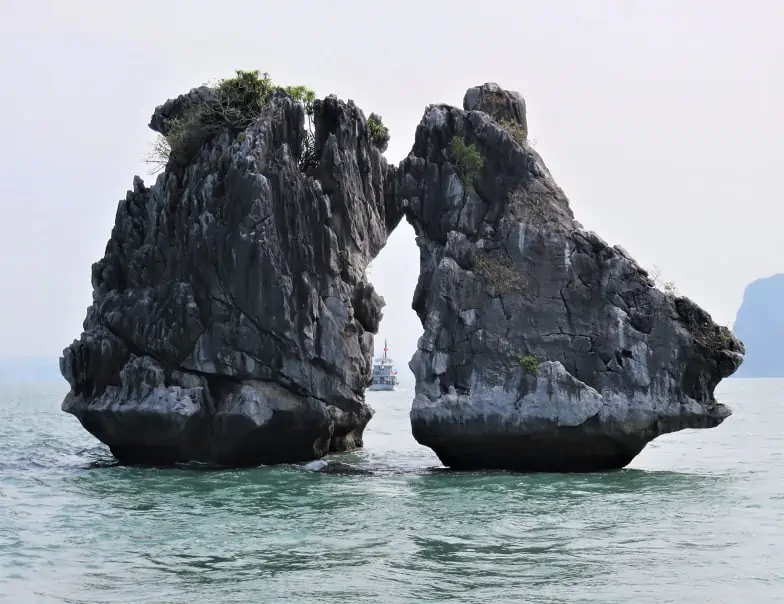
Halong Bay was designated a UNESCO World Heritage site in 1994 for its exceptional scenic beauty and rich biodiversity. With nearly 2,000 limestone islands and islets rising from emerald waters, the bay is an otherworldly seascape shaped by millions of years of geological evolution. It’s Vietnam’s most photographed natural wonder—and for good reason.
Legend has it that when Vietnam was a newly formed country, Halong Bay was the site of numerous naval battles against the Mongols and other northern invaders by sea. The gods watched from the heavens before sending the Mother Dragon and her children to aid the Vietnamese people in defending their country.
Dragons descended to the bay, incinerating the invaders, and spat jewels of emerald and jade that, upon hitting the sea, turned into great islands and islets that formed invincible defensive walls the invaders could not overcome.
A pretty nifty legend to explain all of the limestone karsts and islands!
A Timeline Of Our Stay in Halong Bay
Our ship overnighted in Halong Bay, so we have two different tours. Day 1 On Halong Bay and Day 2 in Halong City.
Day 1:
- 8:00 am – Depart our cruise ship on the tender to go ashore
- 8:30 am – We meet our guide at Hon Gai Port
- 9:00 am – Depart on the Junk boat
- 9:00 am – 3:30 pm – Cruise Halong Bay, visit three caves and enjoy lunch onboard
- 4:00 pm – Return to port
- 4:30 pm – Return to the ship
Day 2:
- 8:00 am – Depart our cruise ship on the tender to go ashore
- 8:30 am – We meet up with Alex and hire a cab to the city
- 9:00 am – 1:00 pm – Breakfast & Coffee in Halong, visit Long Tien Pagoda and the Quang Ninh Museum
- 1:00 pm – Return to port
- 1:30 pm – Return to ship
Meeting Our Guide And Sailing Halong Bay By Junk Boat: Day 1
Alex, Our Local Guide (and Street-Crossing Coach)
The port terminal was basic—no shops or currency exchange—so bring Vietnamese dong in advance if you plan to make purchases. However, this is your meeting point for tours, local cabs, and virtually everything else.
Alex, our guide from a young local company called Nom Nom Travel, met us at the dock. He’d taken the overnight train from Hanoi to show us around—talk about hospitality.
Before we even reached our boat, Alex gave us our first and most essential lesson: how to cross the street in Vietnam. It’s not for the faint of heart.
“Just start walking. Don’t speed up, don’t slow down, and absolutely do not change direction,”
At first, it felt like playing Frogger in real life—but it works. Traffic flows like water around you. Scooters, bikes, pedestrians, cars—they’re all part of a kinetic ballet.
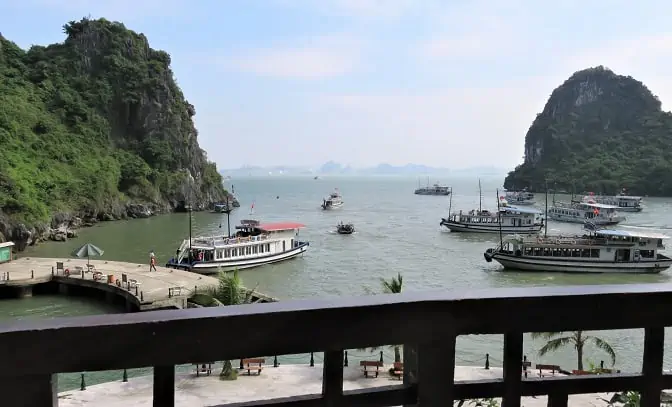
From the port, it’s a quick stroll to where our Junk boat is docked, about one-quarter mile away. These traditional-style vessels resemble floating pagodas and are the best way to explore the bay.
Our all-day cruise included lunch onboard and three cave stops:
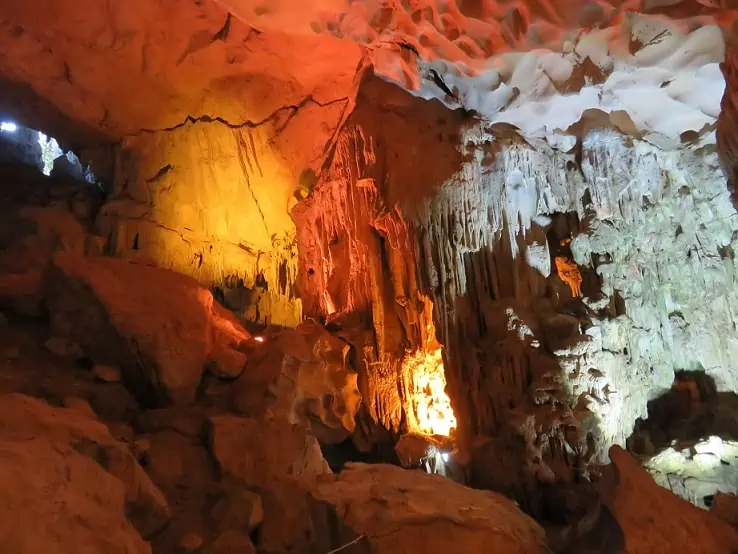
- Thien Cung Cave (Heavenly Palace Cave) – Known for its dramatic stalactites and colorful lighting.
- Dau Go Cave (Wooden Stakes Cave) – Steeped in legend from Vietnam’s 13th-century victory over Mongol invaders.
- Sung Sot Cave (Surprise Cave) – The largest in the bay, with cathedral-like chambers and a lofty viewpoint.
If You’re Considering This Trip, Here Are A Few Notes
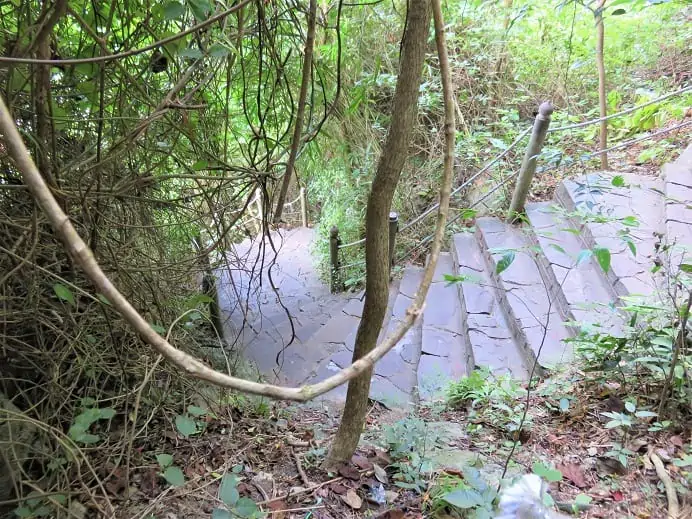
- Yes, it’s physical. Each cave involves stairs—lots of them—and some tight walkways.
- No, there are no elevators. The Vietnamese take a more minimalist approach to park infrastructure.
- It’s slippery. The humidity is intense, and the paths can be slick. Bring walking sticks if you’ve got them.
But wow. The views from the peaks, the surreal dripstone formations in the caves, and the serene sail between towering karsts—pure magic. My Fitbit logged over 50 flights of stairs that day, and I’d do it again in a heartbeat.
We ended the cruise stretched out on the top deck of the Junk, drifting back to port under that dreamy afternoon light.
While we chose a private Junk for the day, shared group tours are widely available and can be booked online or at the port. Just be sure your tour returns well before your ship’s all-aboard time.
Morning in Halong City: Noodles, Coffee, and Culture
The next morning, Alex took us deeper into local life. First stop: breakfast. Bun (vermicelli noodle soup with grilled pork and fresh herbs) started our day, followed by Vietnamese coffee. This kind drips slowly over sweetened condensed milk and comes with a tea chaser.
Vietnamese people take their coffee seriously. Morning cafés buzz with conversation and people-watching. It’s an experience not to be missed.
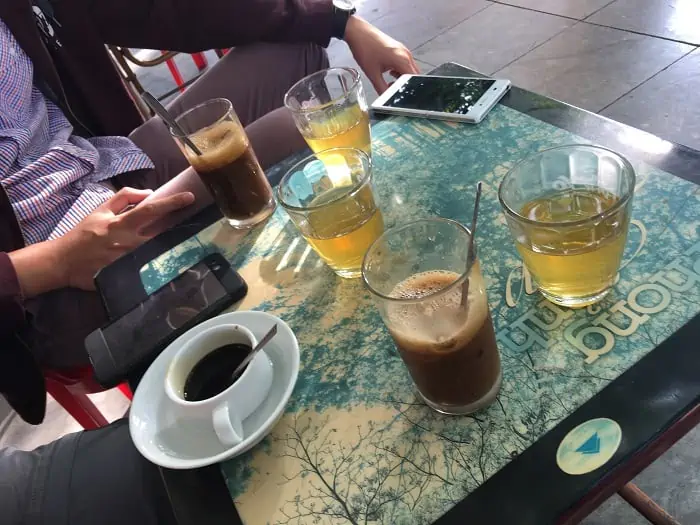
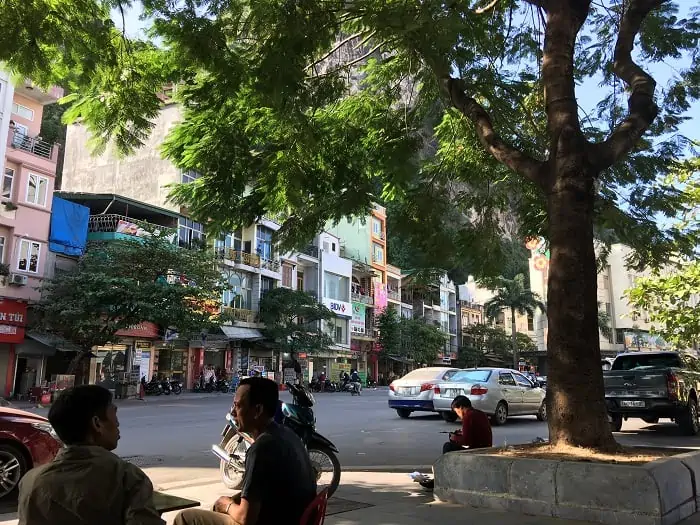
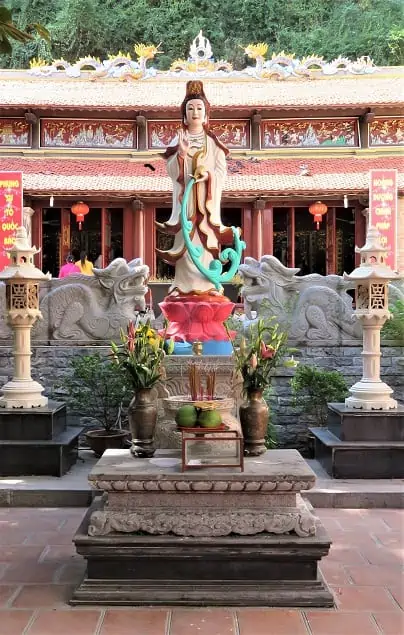
After coffee and some well-chosen treats, we walk through town to the Long Tien Pagoda, a serene temple at the foot of Bai Tho Mountain. It’s a peaceful spot full of incense, offerings, and locals paying their respects.
We wrapped up the morning at the Quang Ninh Museum, a sleek modern building with exhibits on natural history, regional culture, and life on the bay. The museum features several exhibits that chronicle Vietnamese history from its earliest days to the present.
Included in the exhibits is a well-thought-out display for the “American War,” the name the Vietnamese use for what we call “The War in Vietnam.” The school kids swarming the halls reminded us that this place isn’t just for tourists.
Final Thoughts: Halong Bay Without The Haul To Hanoi
If your ship overnights at Halong Bay, consider skipping the bus to Hanoi and exploring the local area instead. This World Heritage site delivers visual drama, cultural insight, and delicious eats—all without the time-suck of a 7-hour round trip.
The caves, the karsts, the street scenes—they stay with you. You’ll leave Halong with legs a little sore from stairs, a nose full of incense and fresh herbs, and a heart wide open.
Practical Tips for Your Day in Halong Bay
- Book a private tour for maximum flexibility. We used Nom Nom Travel.
- Wear sturdy shoes—you’ll climb a lot.
- Bring walking sticks if you use them; caves can be slippery.
- Hydrate—Vietnam’s humidity is no joke.
- Try the coffee—no explanation needed.
- Exchange currency in advance—few facilities are available at the port.
Coming next: 1 Day in Hue from Chan May – Vietnam’s Imperial Heartbeat