
1 Day in Port: Colombo, Sri Lanka – Fishing Villages, sacred Buddhist Temples, Life In And Beyond the Capital

This post is part of a series on what to do when you have one day in port on a Cruise. You can find more posts from this series on my page,
How To Spend One Day In Port.
After ten unforgettable days exploring India, our cruise crossed the Indian Ocean and arrived in a new country: Sri Lanka.
Technically, Colombo was our first port in Sri Lanka, but because our ship stayed overnight, we experienced far more than just the capital city. So we didn’t have 1 Day in Port Colombo, Sri Lanka, but two. Over two days, we explored a fishing village, cruised through a wildlife-filled lagoon, visited a historic Catholic church, walked through a traditional Sri Lankan village, and made offerings at one of the country’s most sacred Buddhist temples.
This article may contain affiliate links. We may earn a commission if you use these links to buy products or services. Please see our disclosure policy for full details. Thanks.
Because our ship was scheduled for an overnight stay, we booked a private guide, Priyangi Kodithuwakku, and split our visit into two distinct experiences. The first day would take us north to the coastal fishing community of Negombo. The second would focus on Colombo itself, including several sites that offered a glimpse into both Sri Lanka’s ancient traditions and its rapidly developing future.
Before stepping ashore, however, there was one important detail to take care of.
What to Know Before Visiting Sri Lanka
Unlike many cruise ports, Sri Lanka requires travelers to obtain an Electronic Travel Authorization (ETA) before arriving in the country. The application process was straightforward and could be completed online or on your phone a few days before arrival. Travelers should verify this requirement well in advance of their cruise, as entry requirements can change.
With our visas approved and Priyangi waiting at the pier, we set out for our first day of exploration.
🚢 Port Snapshot
💰 Currency: Sri Lankan Rupee (LKR)
📍 Capital: Colombo
🗣️ Languages: Sinhala and Tamil
🛕 Main Religion: Buddhism
🕒 Time Zone: UTC +5:30
📄 Visa Required: Yes (ETA)
⭐ Known For: Tea, spices, wildlife, beaches, and ancient Buddhist sites
Day One – Discovering Negombo’s Fishing Heritage
While Colombo is Sri Lanka’s capital, our first day ashore took us about 25 miles north to Negombo, a coastal city known for its fishing industry, lagoons, and strong colonial influences.
The drive itself offered our first glimpse of everyday life in Sri Lanka. Colorful storefronts lined the roads, tuk-tuks darted through traffic, and small shrines and churches appeared between homes and businesses. It felt noticeably different from India, yet familiar in some ways—a reminder that these neighboring countries have long shared trade routes and cultural connections while maintaining their own distinct identities.
The Fish Market Awakens
Our first stop was Negombo’s famous fish market, one of the largest in Sri Lanka.
Even before we stepped from the vehicle, we could smell the ocean. Fishing boats lined the shore while workers unloaded the morning’s catch. Vendors sorted fish into baskets, buyers negotiated prices, and fishermen moved quickly through the organized chaos that accompanies a working harbor.
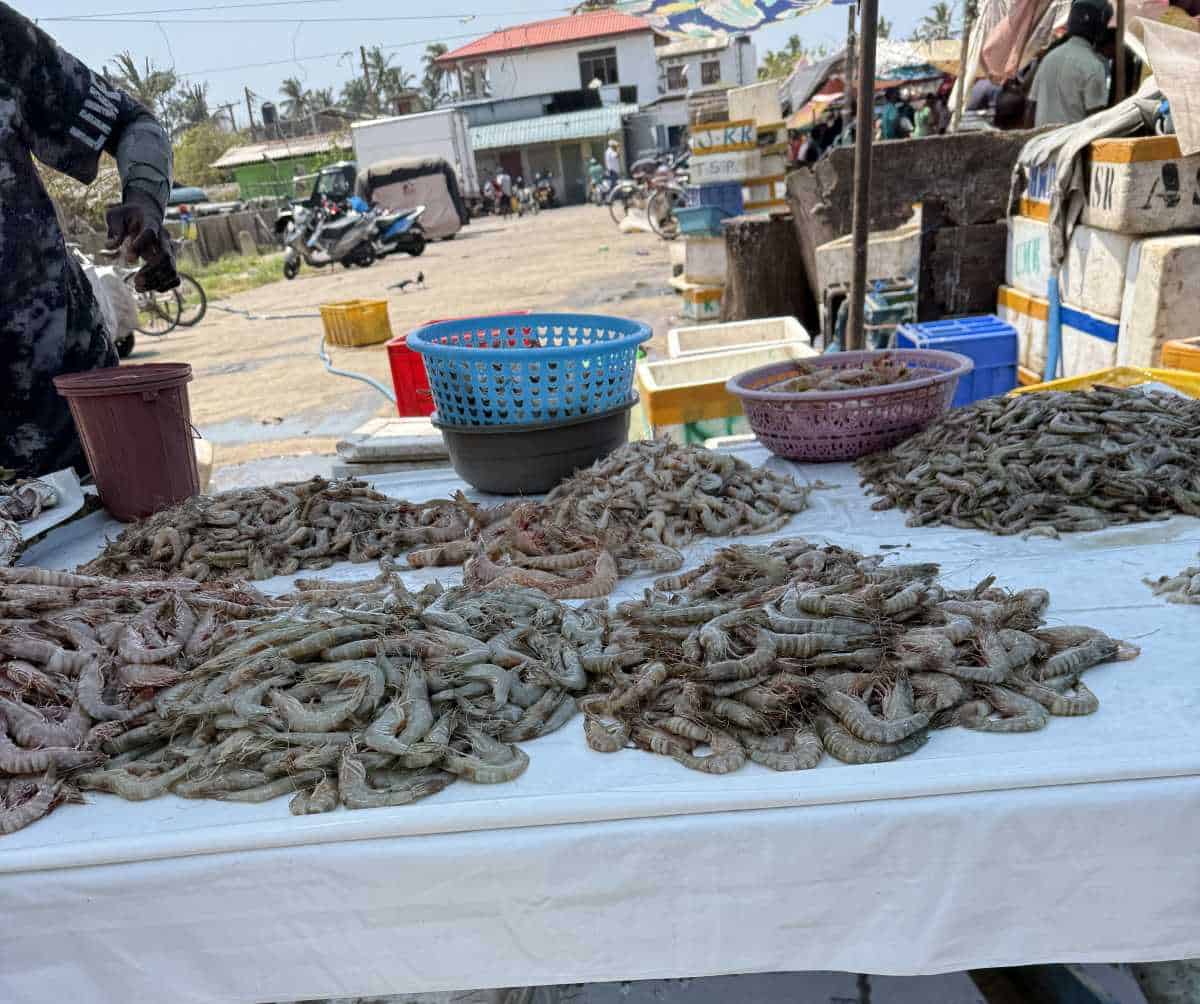
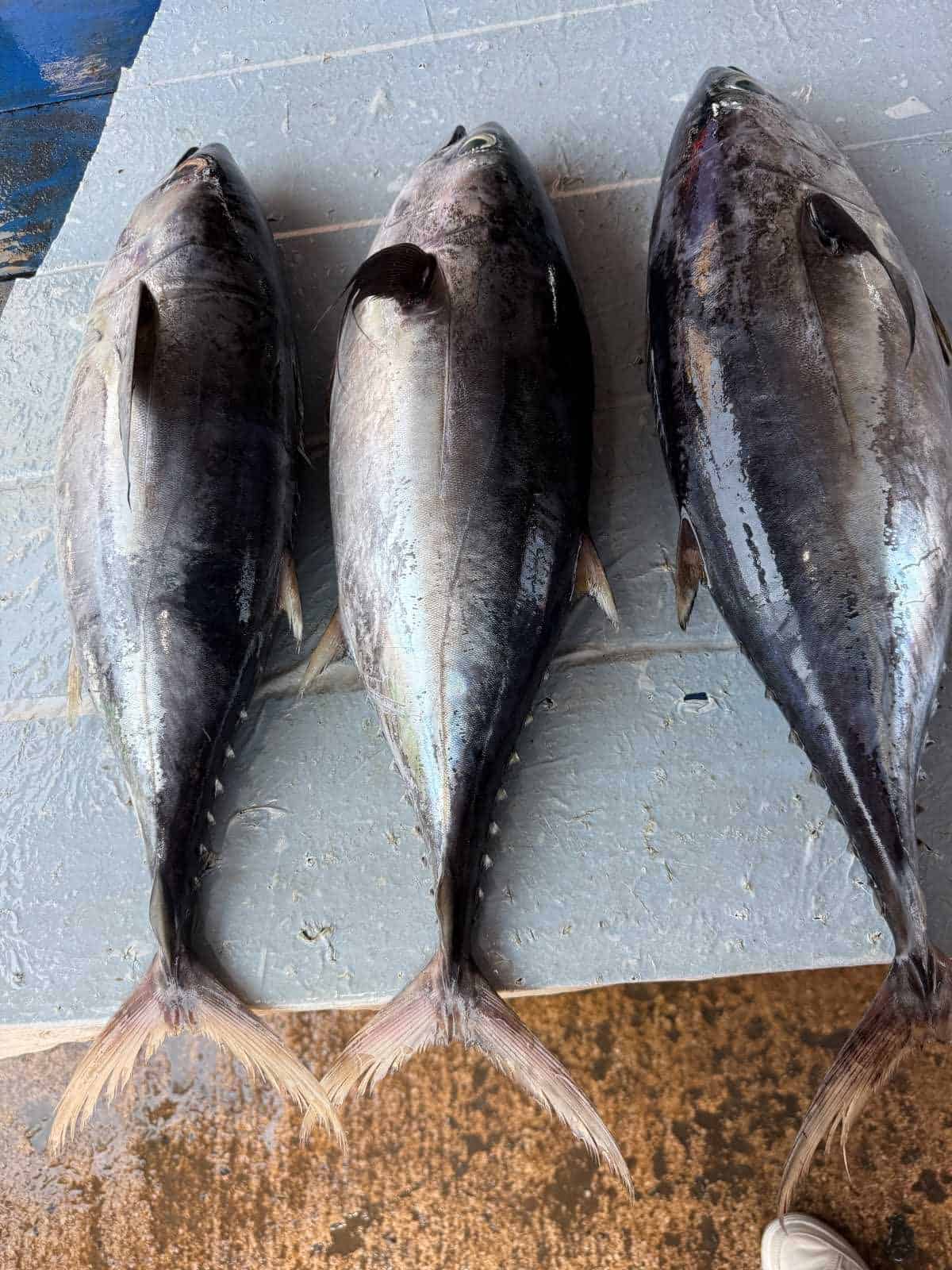
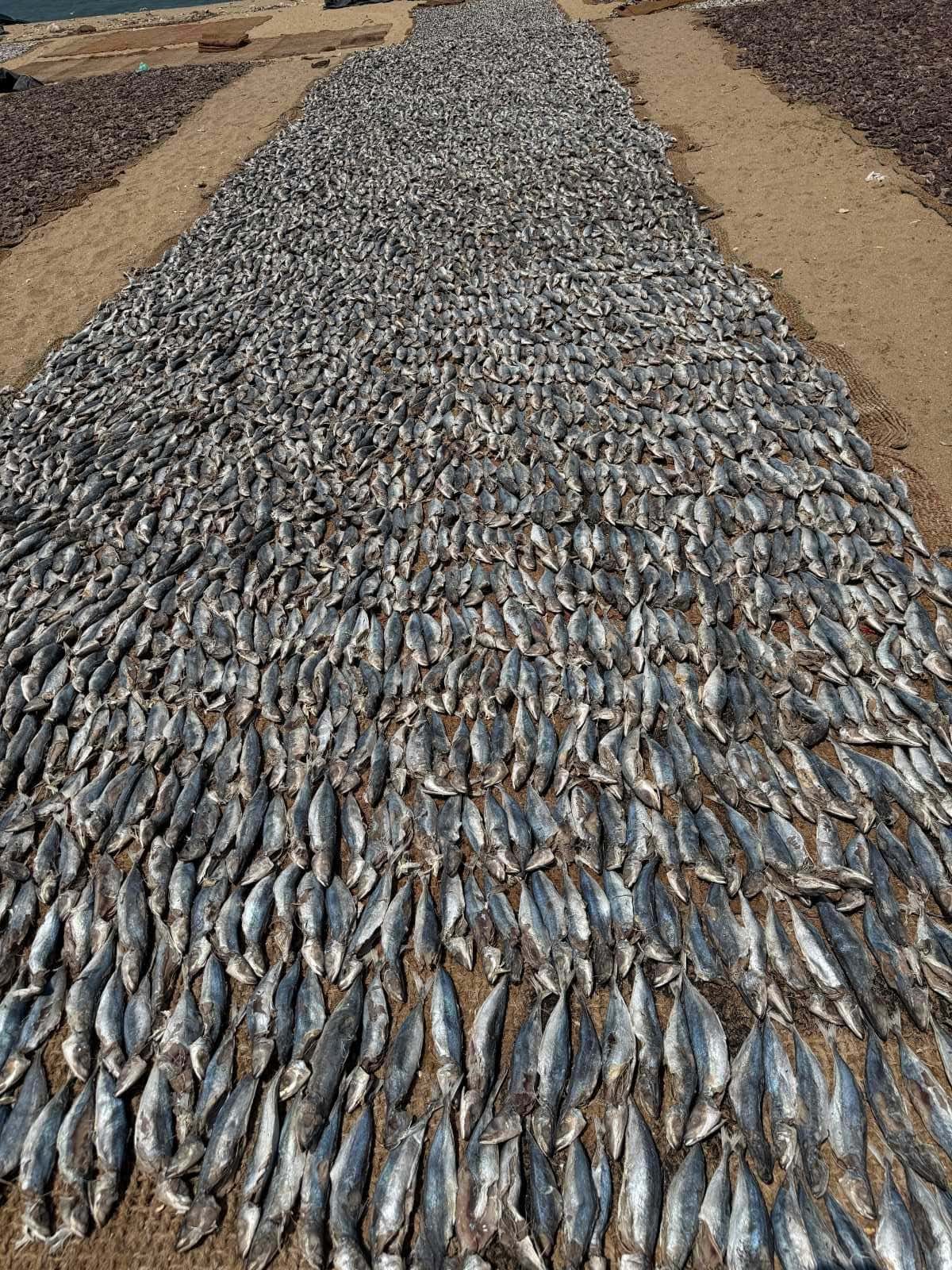
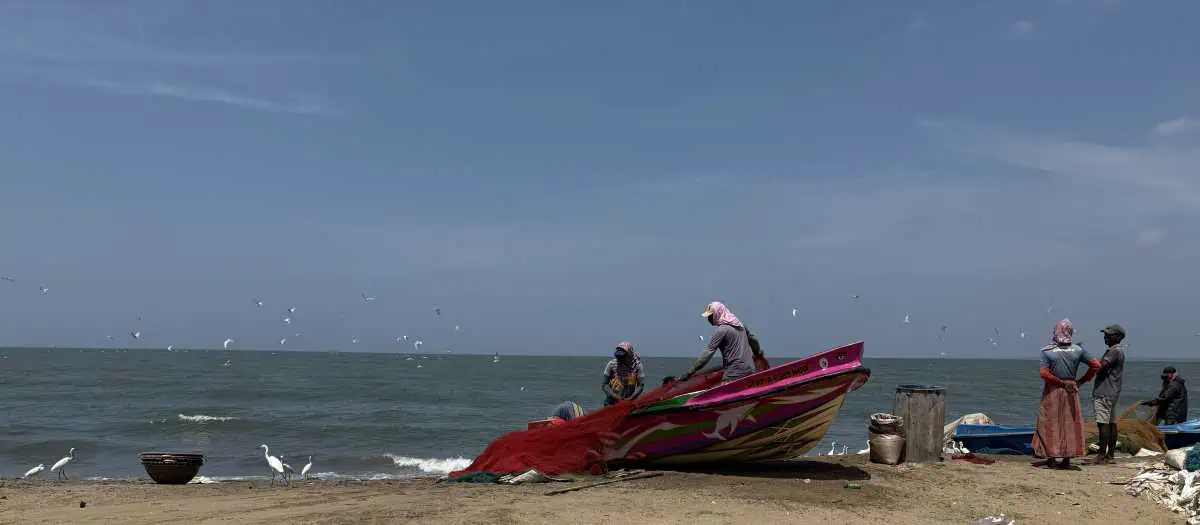
This fish market is a place where people earn a living, not a tourist attraction. We were simply guests observing a daily routine that has sustained families here for generations.
Beyond the covered market, rows of fish lay drying under the tropical sun. The scene was both fascinating and humbling—a reminder of how closely tied many coastal communities remain to the sea.
Following the Spice Trail
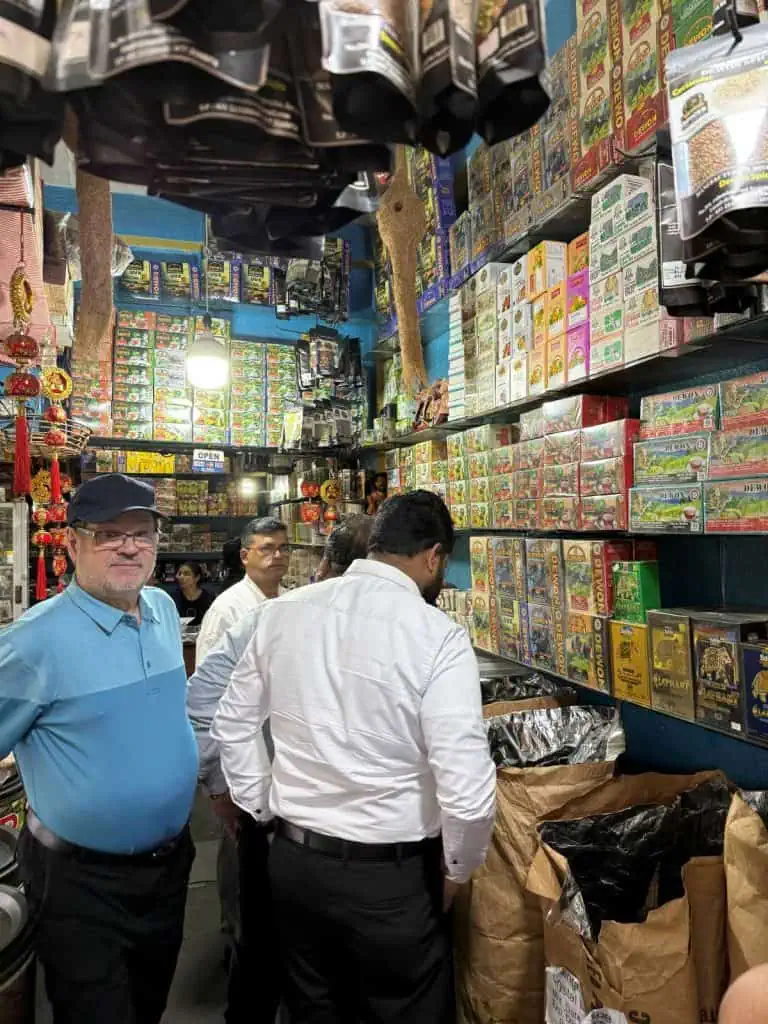
Leaving the market behind, we stopped at a local spice shop. Shelves were lined with cinnamon, cardamom, cloves, pepper, fragrant oils, and traditional remedies. Sri Lanka’s role in the spice trade stretches back centuries, and the stop provided a small glimpse into an industry that helped shape the island’s history.
Lunch Overlooking Negombo Lagoon: 1 Day in Port: Colombo, Sri Lanka
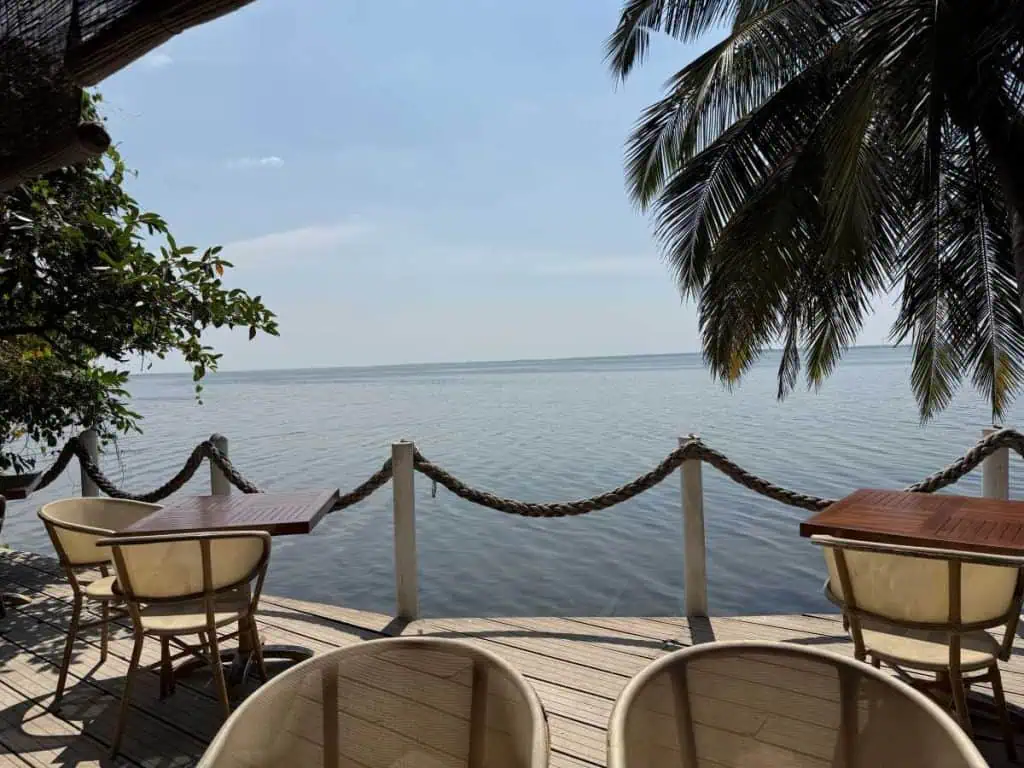
By midday, we arrived at a restaurant overlooking Negombo Lagoon.
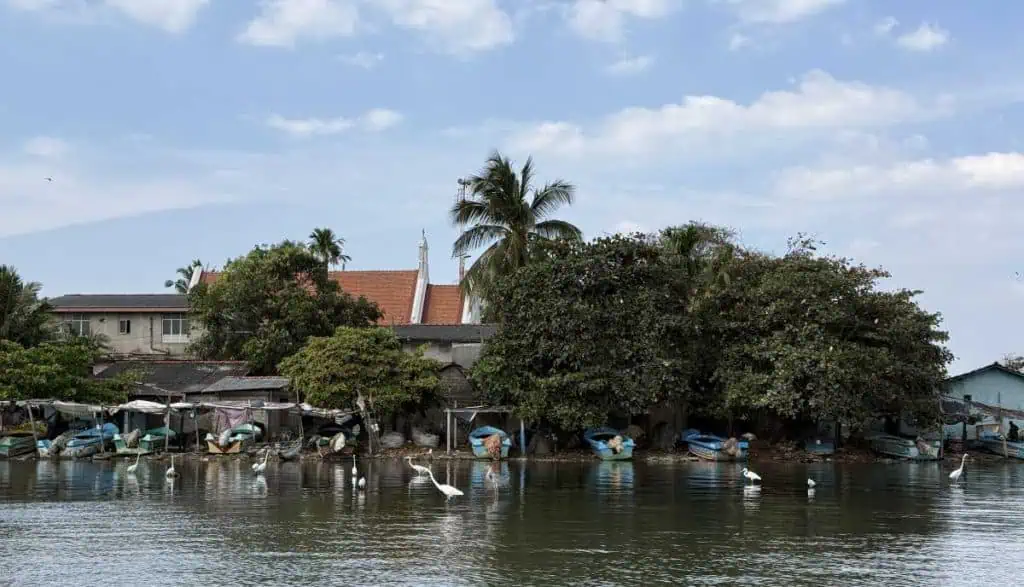
After the bustle of the fish market and town, the setting felt wonderfully peaceful. Boats drifted across the water while birds moved among the mangroves along the shoreline.
As it turned out, the lagoon would become one of the highlights of our day.
Wildlife on the Waters of Negombo Lagoon
After lunch, we made our way to Kings Island Resort, where a small boat was waiting to take us out onto Negombo Lagoon.
At first glance, the lagoon seemed a world apart from the busy fish market we had visited that morning. The water was calm, the pace slower, and the city’s sounds faded quickly as we moved deeper into the network of waterways.
Negombo Lagoon spans more than 12,000 acres and sustains a rich ecosystem of mangroves, fish, and birdlife. As our boat glided through the channels, we passed fishermen tending their nets and small boats moored along the shoreline. Wading birds stalked the shallows, while others perched quietly in the trees overhead.
As we traveled through the lagoon, our pilot pointed out several species, turning the ride into an informal wildlife tour.
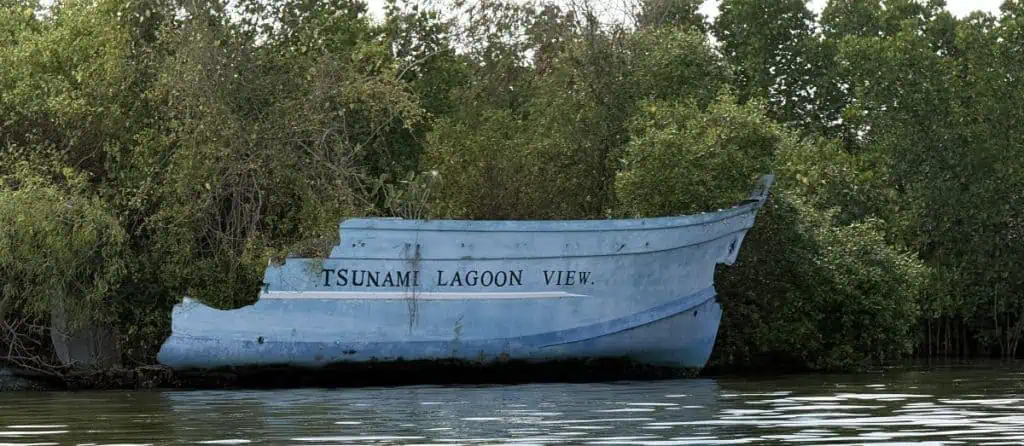
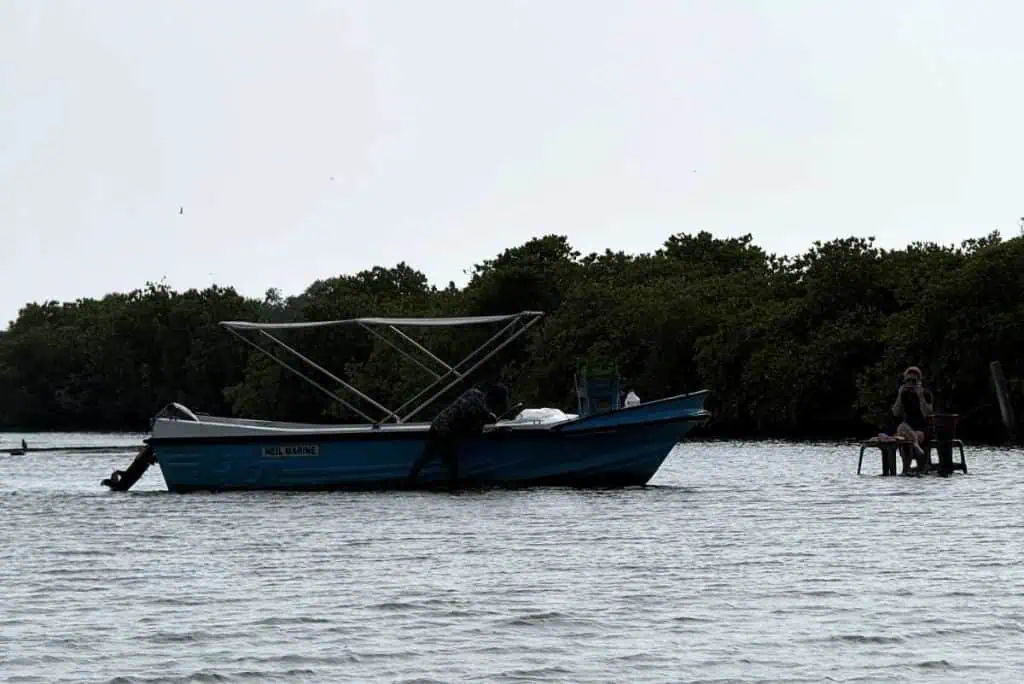
When we were a fair way into the lagoon, we noticed a sandbar. The boat’s pilot jumped into the water and indicated we could do the same, but we declined. We also saw other boats near the sandbar, and even a few tables and chairs set up there, with tourists enjoying an afternoon snack.
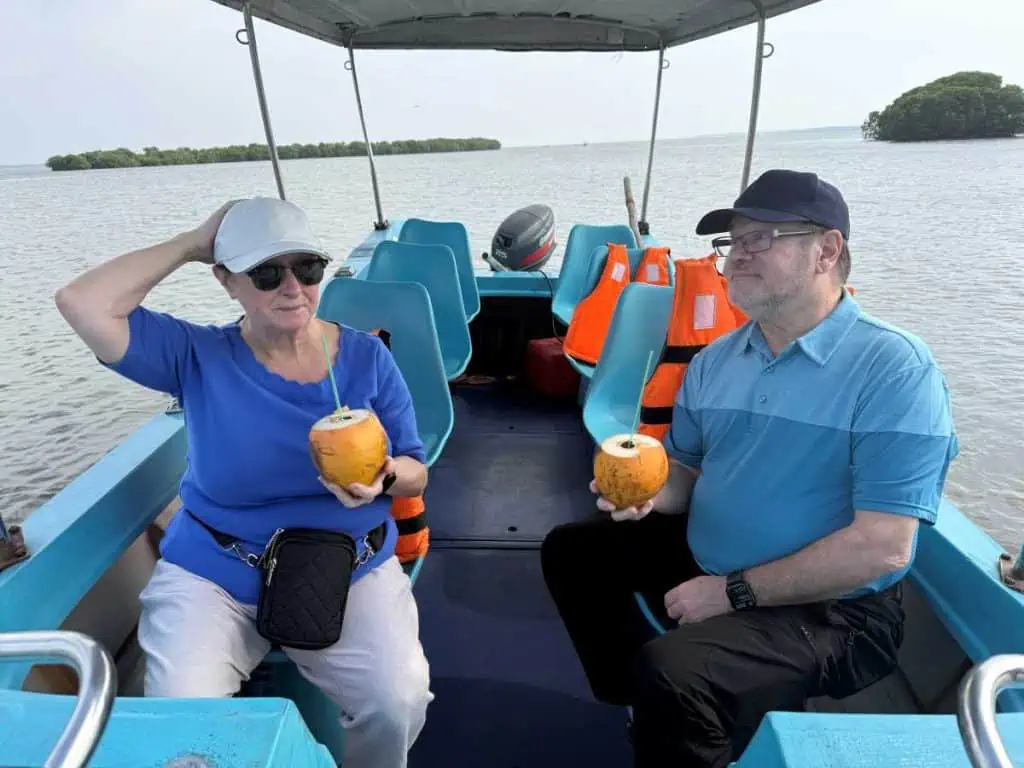
Since we declined a walk to the sandbar, our pilot pulled out the coconuts he had been saving for our snack, opened them, stuck a straw in each, and presented them to us as a refreshment.
Then came the surprise.
Without warning, several monkeys appeared in the trees above us. Before we fully grasped what was happening, one of them leaped onto the canopy covering our boat. A second quickly followed, using the overhead frame as if it were a jungle gym.
Our pilot laughed, clearly familiar with these uninvited passengers, and produced a few bananas. Within moments, the monkeys were happily helping themselves while balancing overhead with remarkable ease.
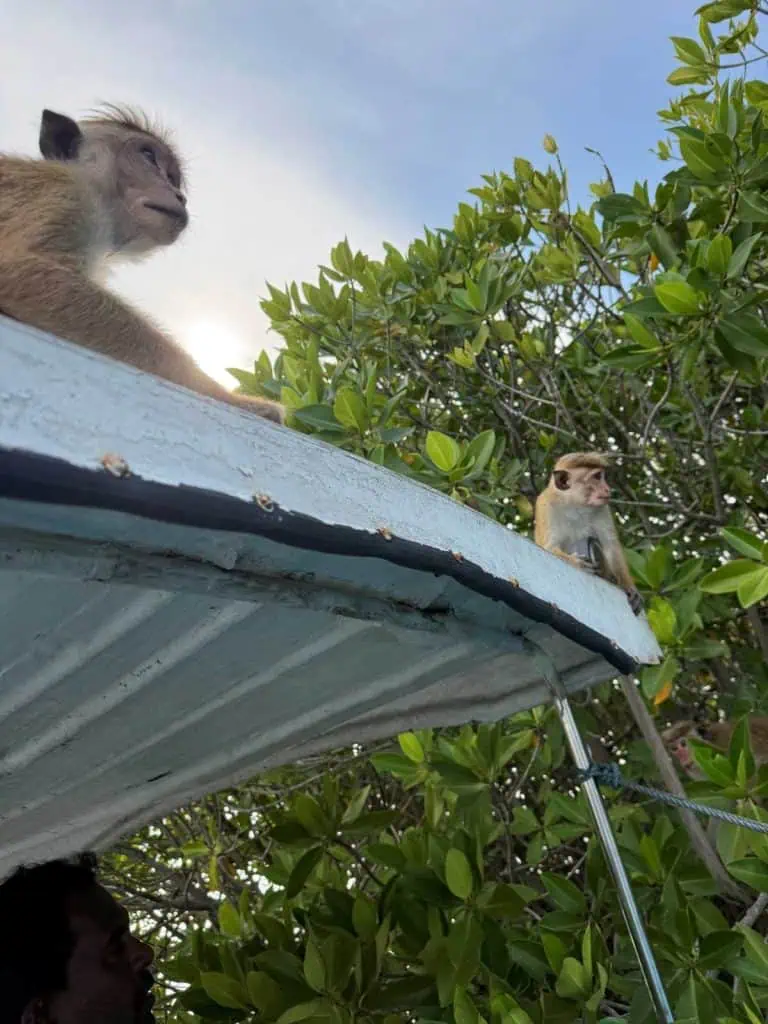
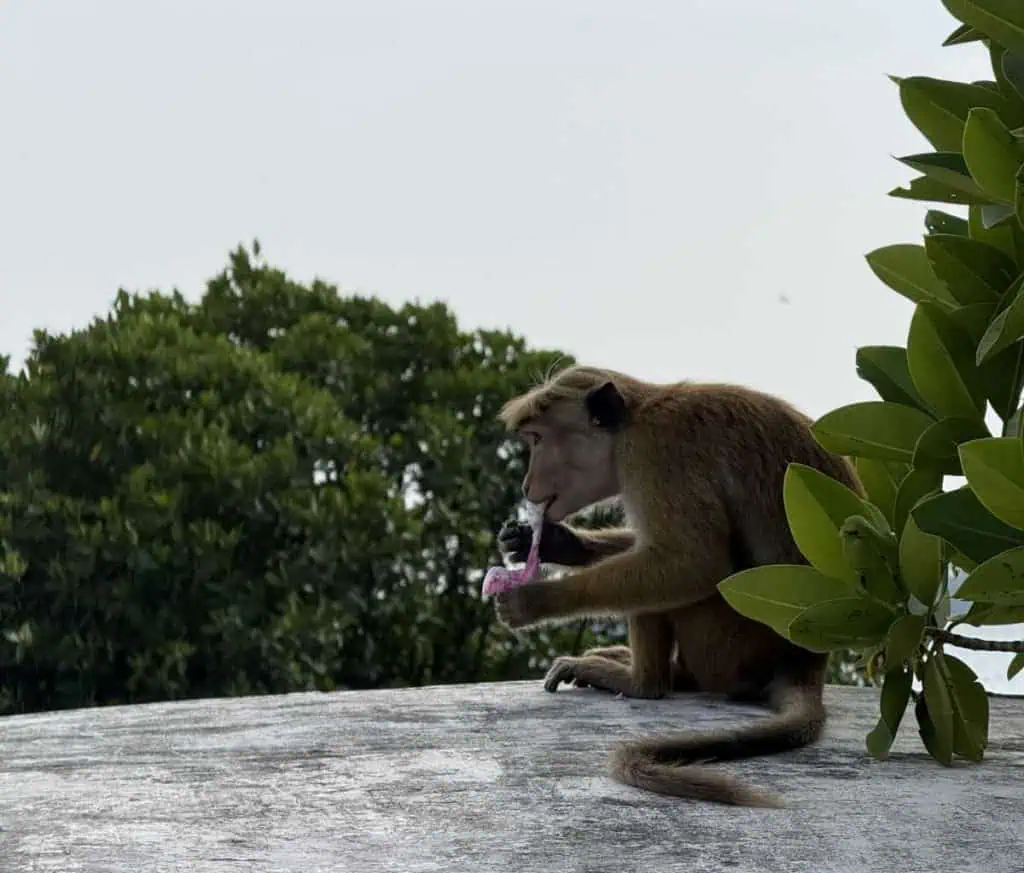
For several minutes, we watched, amused and enthralled, as they climbed, jumped, and posed for photographs before disappearing back into the trees as quickly as they had arrived.
As the afternoon light began to soften, we returned to shore and continued our exploration of Negombo.
St. Mary’s Church
Our final stop in Negombo was St. Mary’s Church, one of the city’s most recognizable landmarks.
At first glance, it seemed almost surprising to find such a prominent Catholic church in Sri Lanka. While the country is best known for its Buddhist heritage, centuries of Portuguese, Dutch, and British influence left their mark on many coastal communities, especially here in Negombo.
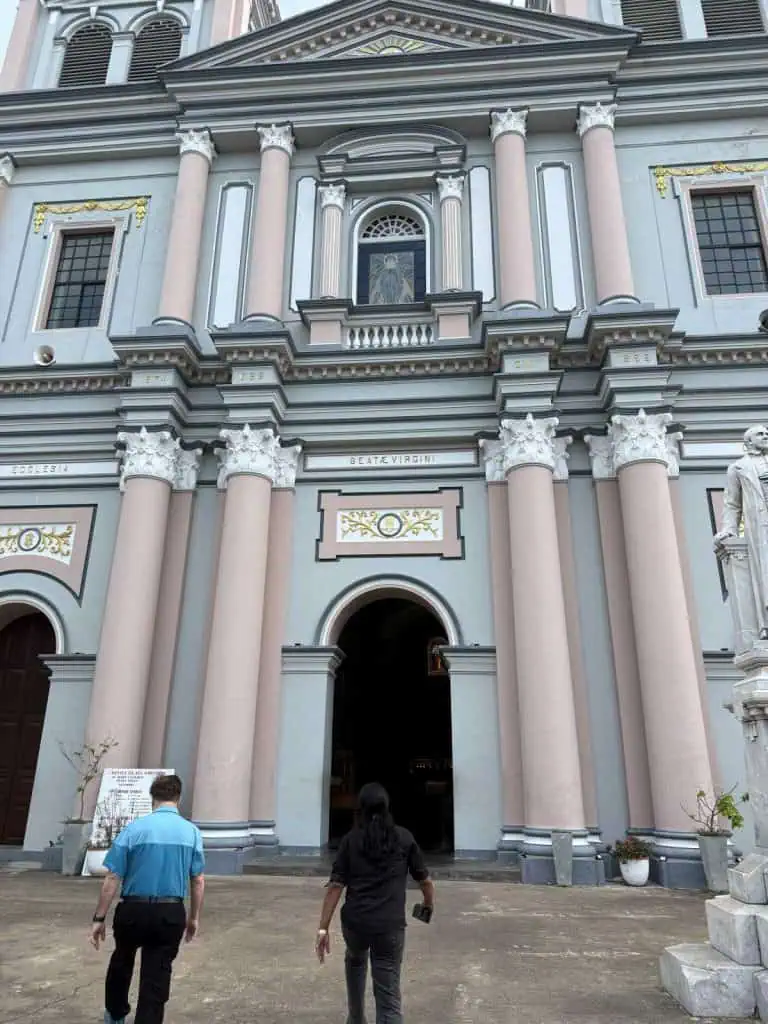
The interior felt both grand and welcoming. Sunlight filtered through stained-glass windows as worshippers moved quietly through the sanctuary.
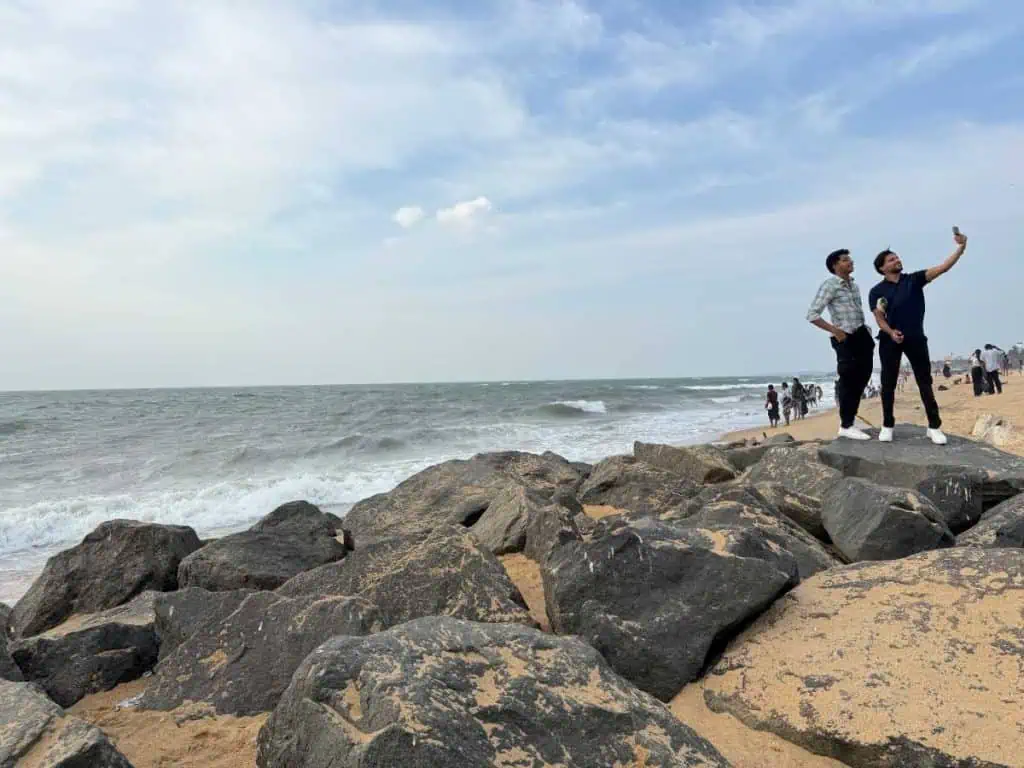
As the sun began to set over the Laccadive Sea, we made our way back to the coast for one final look at Negombo. Fishing boats drifted across the horizon as the sky turned shades of orange and gold. Soon afterward, we returned to Colombo and the ship, reflecting on a day that had revealed a side of Sri Lanka many cruise passengers never experience.
Day Two – Exploring Colombo
If Negombo introduced us to Sri Lanka’s coastal traditions, our second day would reveal a nation balancing its past with its future.
A Morning Walk Along Diyawanna Lake
Our first stop was Diyawanna Lake, a large artificial lake on the outskirts of Colombo that surrounds Sri Lanka’s Parliament Building.
The setting was unexpectedly peaceful. Walking paths traced the shoreline, residents exercised along the water, and birds moved among the reeds and wetlands surrounding the lake.
Across the water stood the Parliament Building, one of the country’s most important government structures.
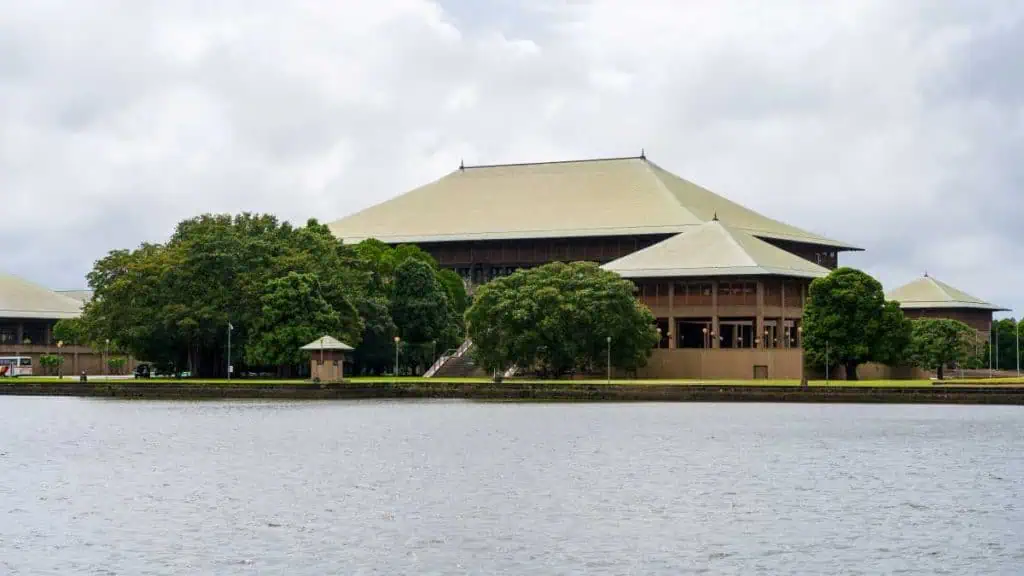
Although we are in the heart of Sri Lanka’s largest city, a sign by the lake told us that you are never too far from wildlife here. There were signs around the lake warning us to beware of crocodiles!
Stepping Back in Time at Ape Gama
From Parliament, we traveled to Ape Gama, a cultural village designed to preserve traditional Sri Lankan life.
Traditional homes, workshops, and exhibits offered a glimpse into how people lived before modern development transformed much of the country. Artisans demonstrated skills passed down through generations, while displays highlighted the agricultural traditions that shaped daily life for centuries.
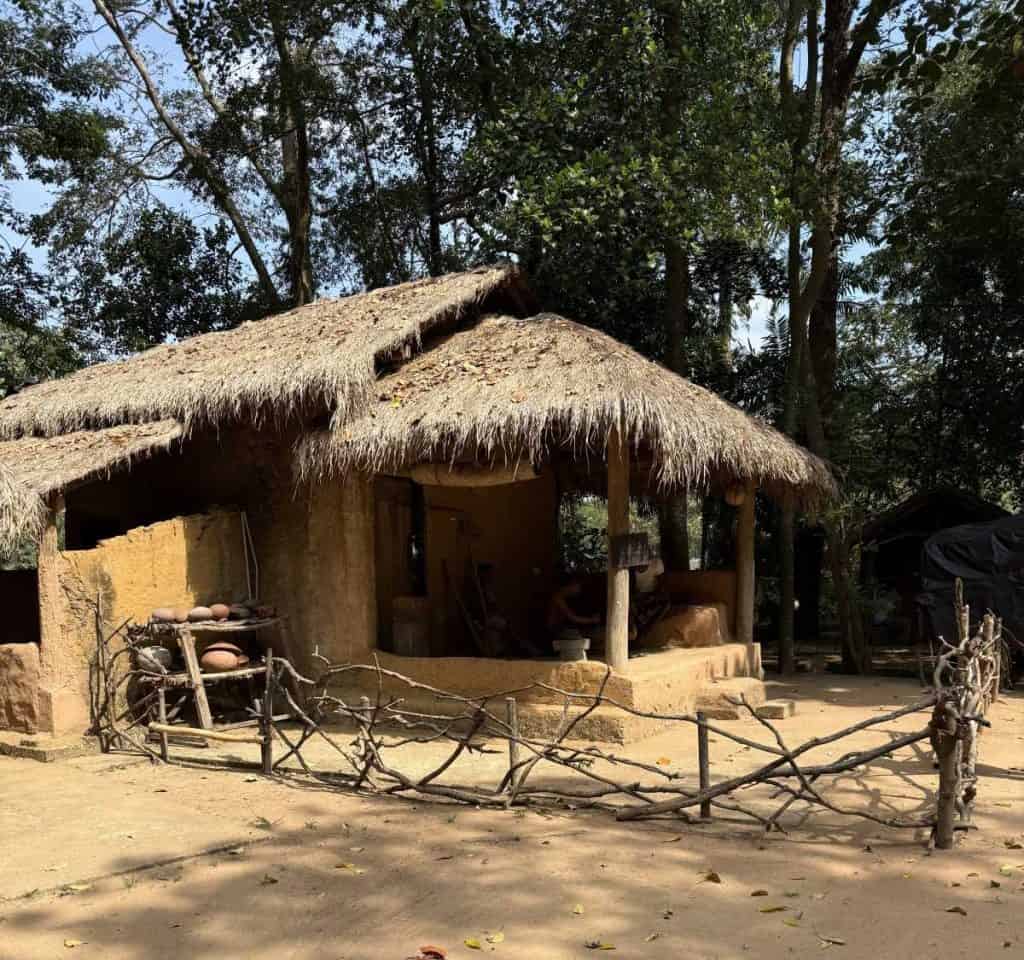
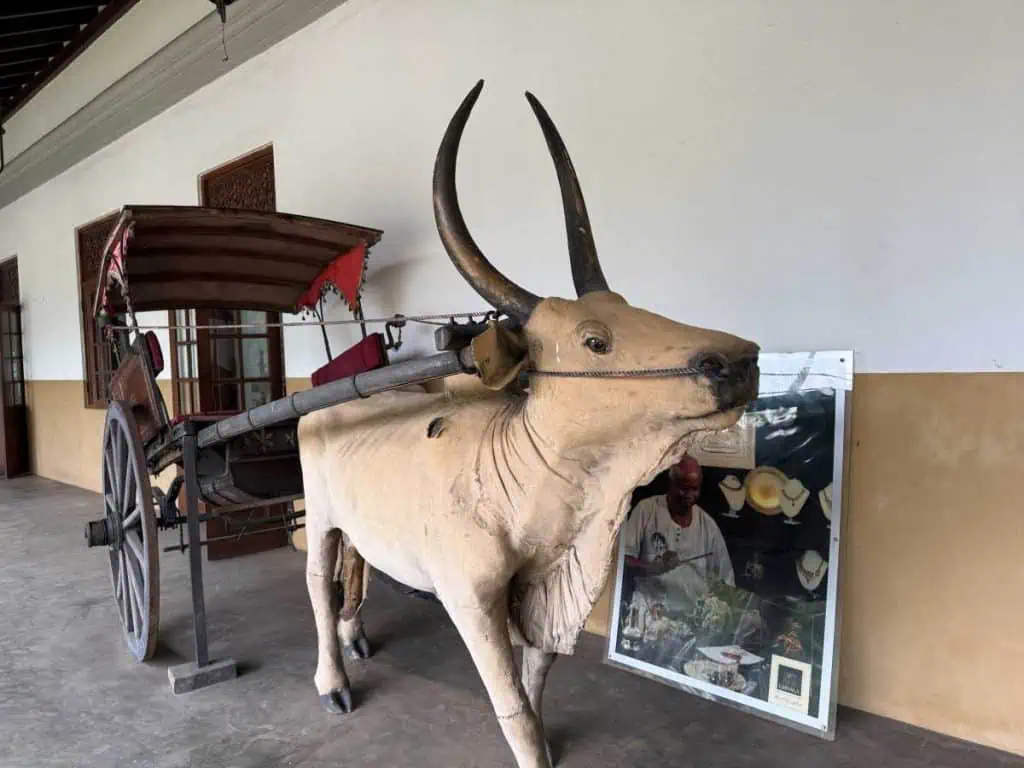
Leaving Ape Gama, we traded centuries-old traditions for one of Colombo’s most recognizable modern landmarks.
Colombo’s Modern Face: Lotus Tower and Linear Park
Leaving Ape Gama behind, we were once again reminded of how quickly Sri Lanka can shift between past and present.
Our next stop was Linear Park and the nearby Lotus Tower, one of Colombo’s most recognizable landmarks. Soaring above the city skyline, the tower has become a symbol of modern Sri Lanka and its ambitions for the future.
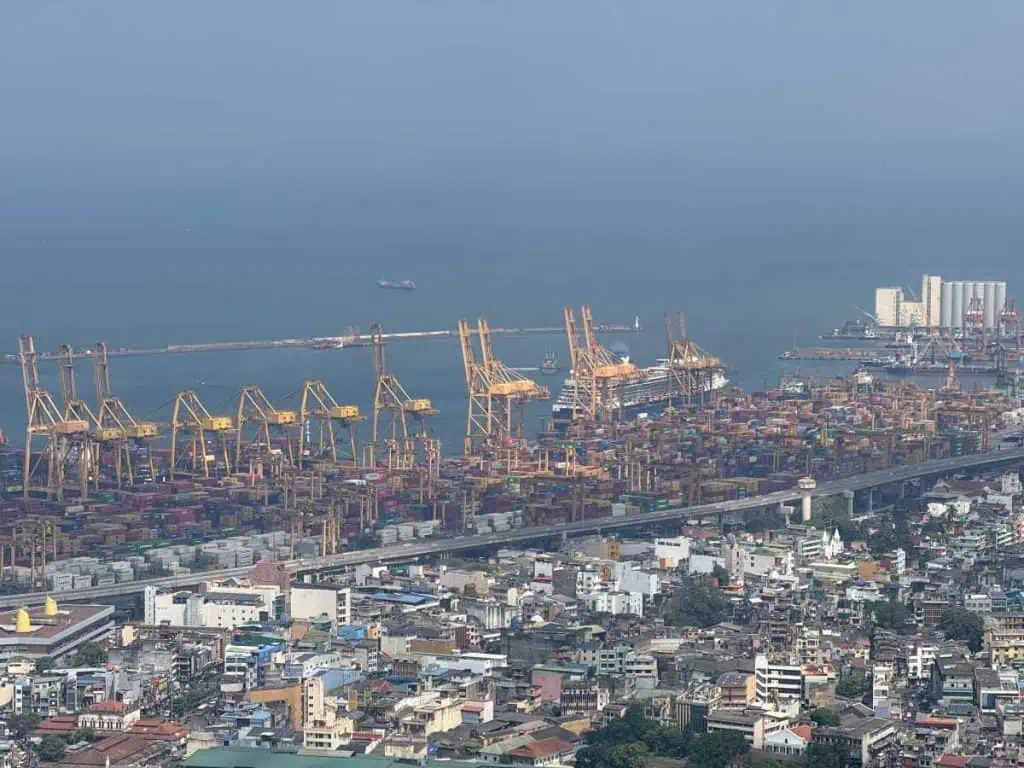
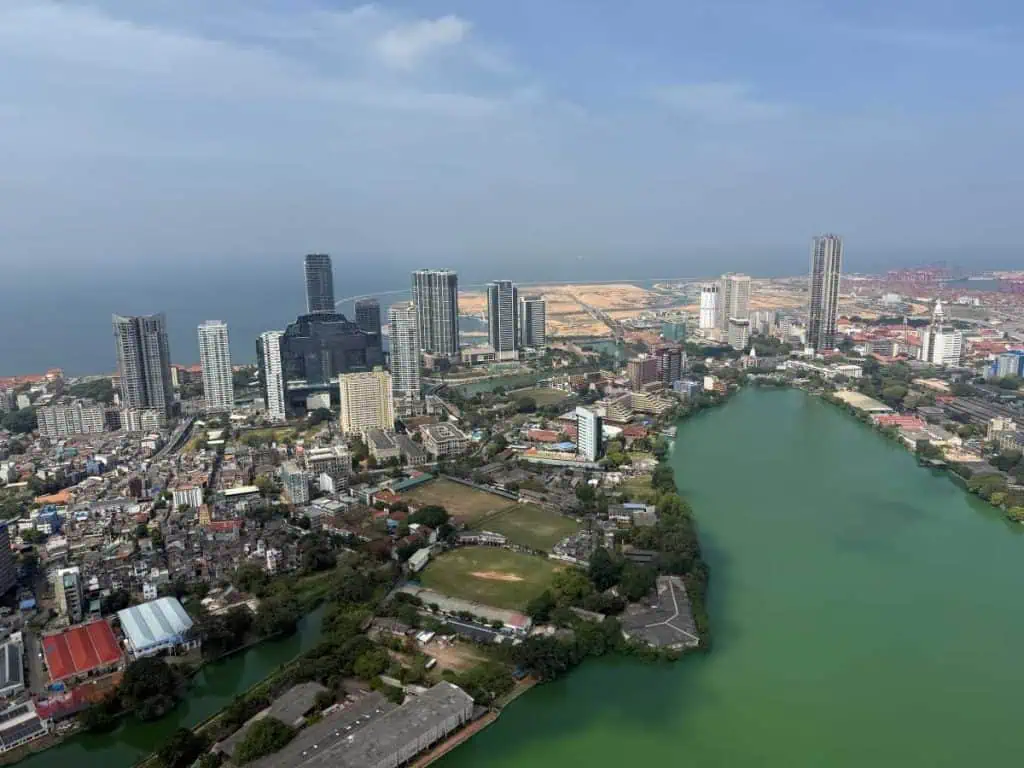
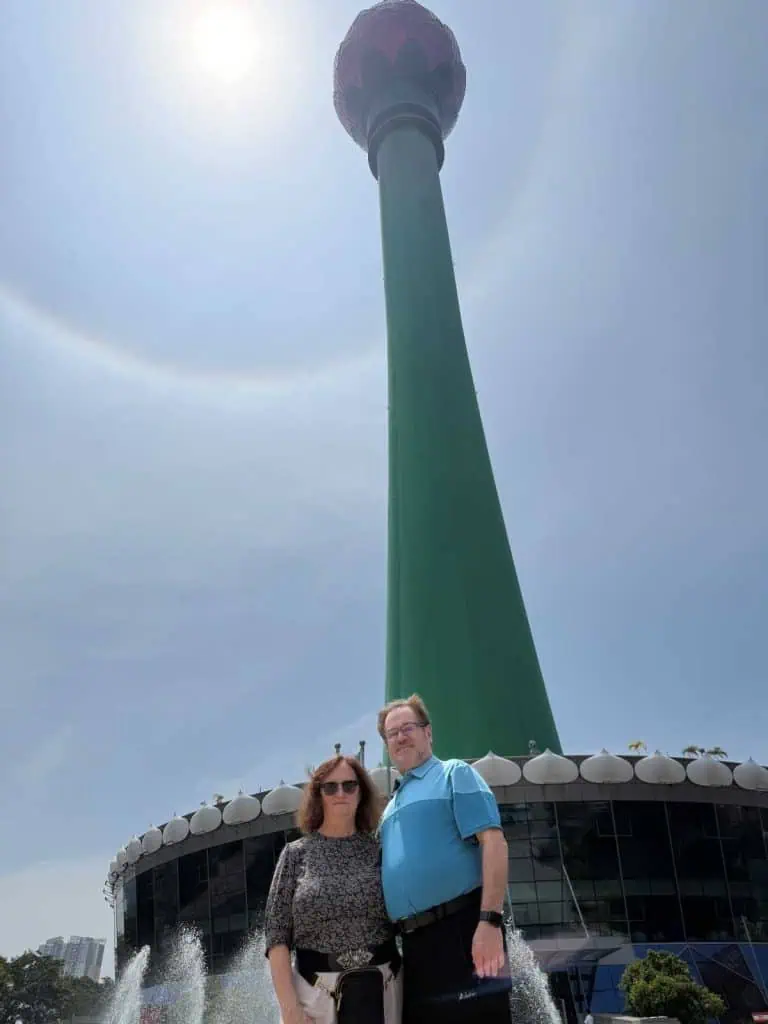
We immediately headed to the top of the tower to enjoy the incredible 360⁰ views from its observation deck. After taking in the city from a bird’s-eye view, we took the elevator back to the ground floor, where we entered “Pixel Bloom,” an immersive, interactive digital art experience. This exhibit brings out the child in each of us, encouraging you to interact with the art.


A Sacred Visit to Kelaniya Raja Maha Viharaya
If the Lotus Tower represented modern Sri Lanka, Kelaniya Raja Maha Viharaya connected us with the island’s ancient spiritual roots.
Located just outside Colombo, the temple is among Sri Lanka’s most important Buddhist sites. According to tradition, it commemorates the Buddha’s visit more than two thousand years ago.
Before entering, Priyangi explained the tradition of making floral offerings. Like many visitors, we bought fresh flowers to offer at the temple. The flowers serve as a reminder of both beauty and impermanence—an important concept in Buddhist teachings.
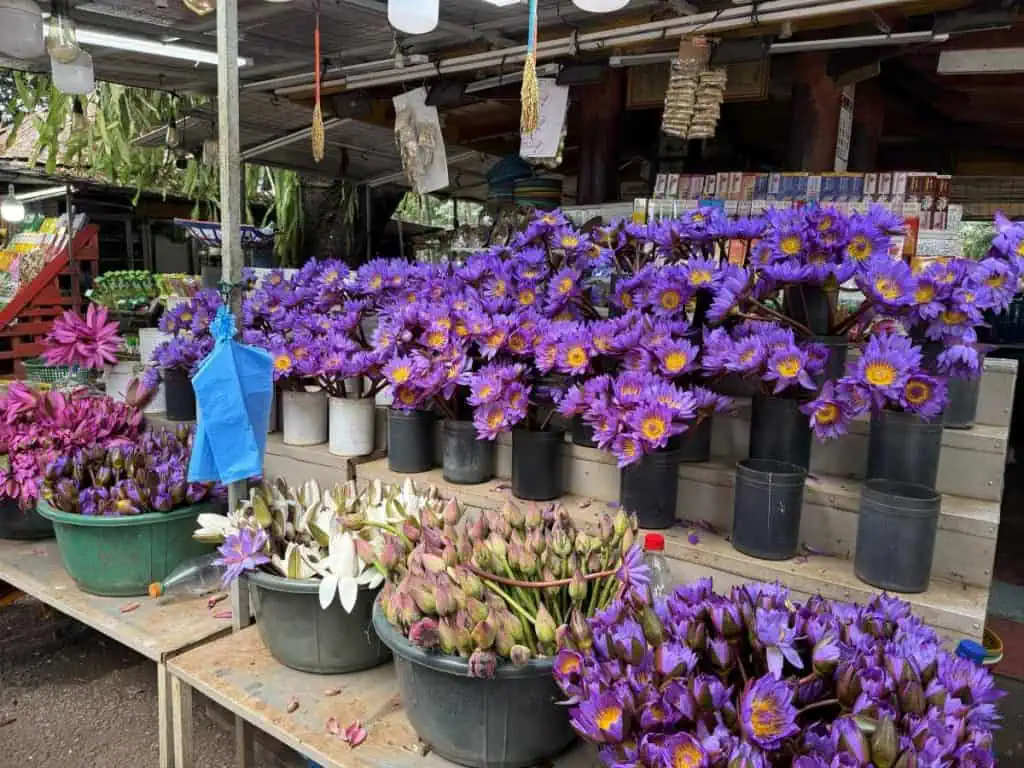
For me, the most memorable moment came immediately upon entering.
Inside one of the temple buildings lies a massive sleeping Buddha. The scale was impressive, but what stayed with me was the statue’s overwhelming sense of calm. Despite other visitors and worshippers moving quietly through the temple, the room felt peaceful and contemplative. After placing our flowers as an offering, we continued through the temple complex.
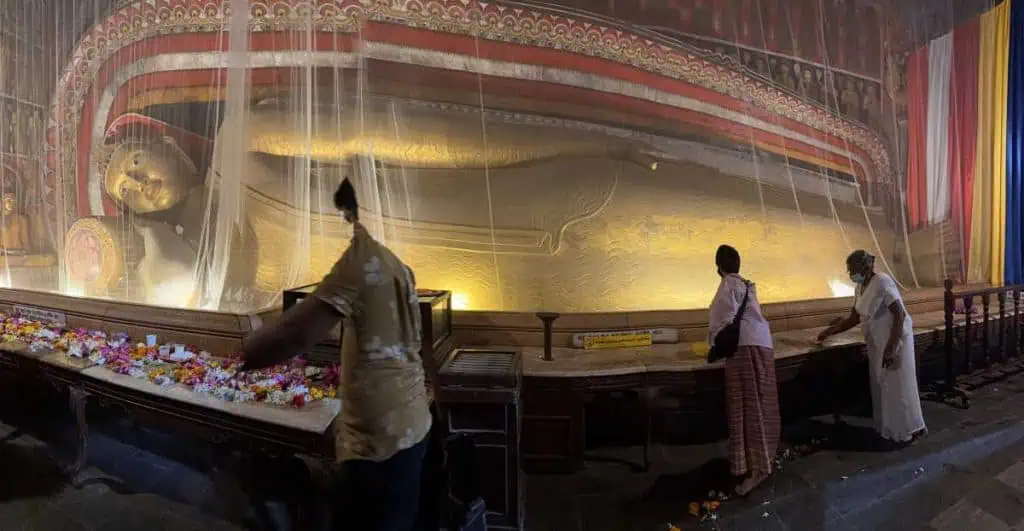
Throughout the temple, worshippers came and went, pausing to pray, meditate, or leave their offerings. Rather than feeling like a museum or historic site, the temple felt very much alive—a place where faith is practiced every day.
I was also captivated by the murals that covered many of the walls. Their colors remained remarkably vibrant, and the artwork appeared astonishingly well-preserved. Scene after scene depicted stories from Buddhist history and Sri Lankan tradition, creating a visual record that has inspired visitors for generations.
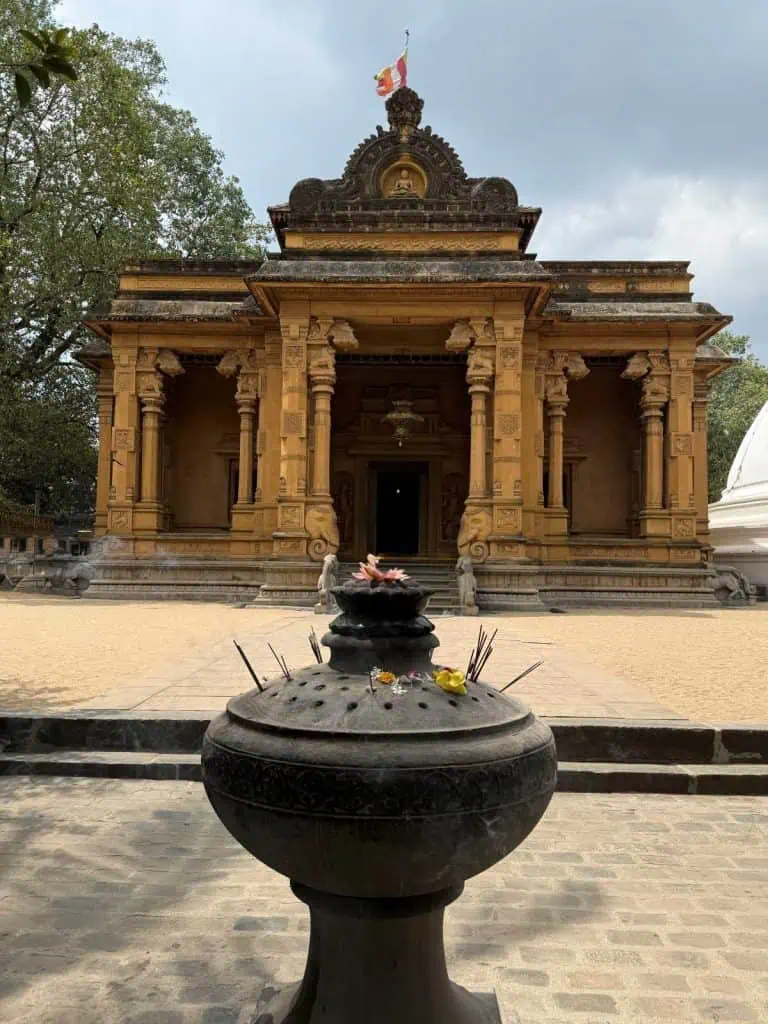
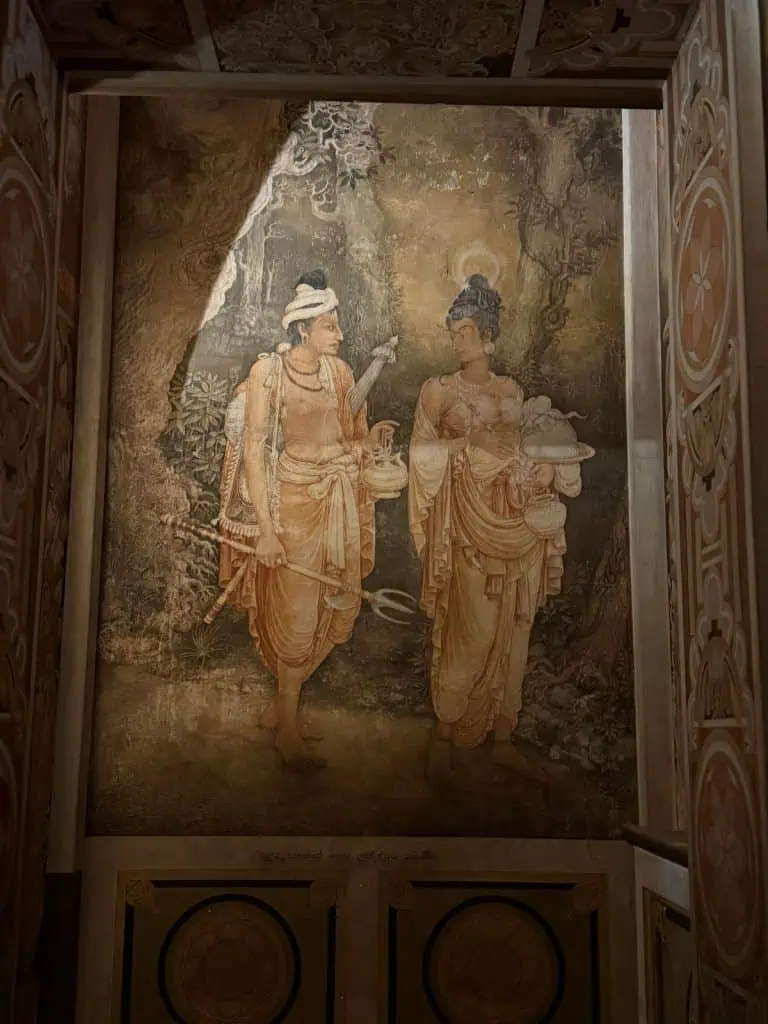
As we moved through the temple, I found myself spending as much time studying the artwork as the architecture. The murals offered an incredible window into the beliefs, stories, and cultural heritage that have shaped Sri Lanka for centuries.
Among all the places we visited in Colombo, Kelaniya Raja Maha Viharaya offered the deepest insight into the country’s spiritual heart.
Through the Markets of Pettah
Our final experience in Colombo wasn’t a formal stop but a drive through the historic Pettah district on our way back to the ship.
The neighborhood felt like a whirlwind of activity. Streets overflowed with vendors, storefronts, carts, tuk-tuks, delivery trucks, and shoppers moving in every direction. Textiles hung from storefronts, market stalls spilled onto sidewalks, and the city’s energy seemed to condense into a few crowded blocks.
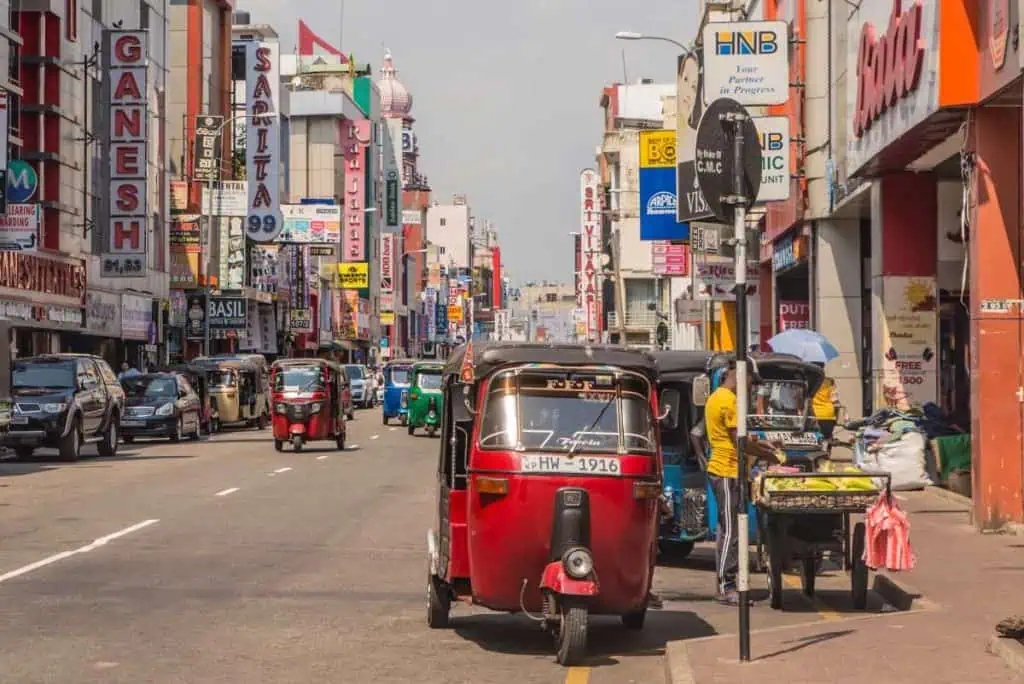
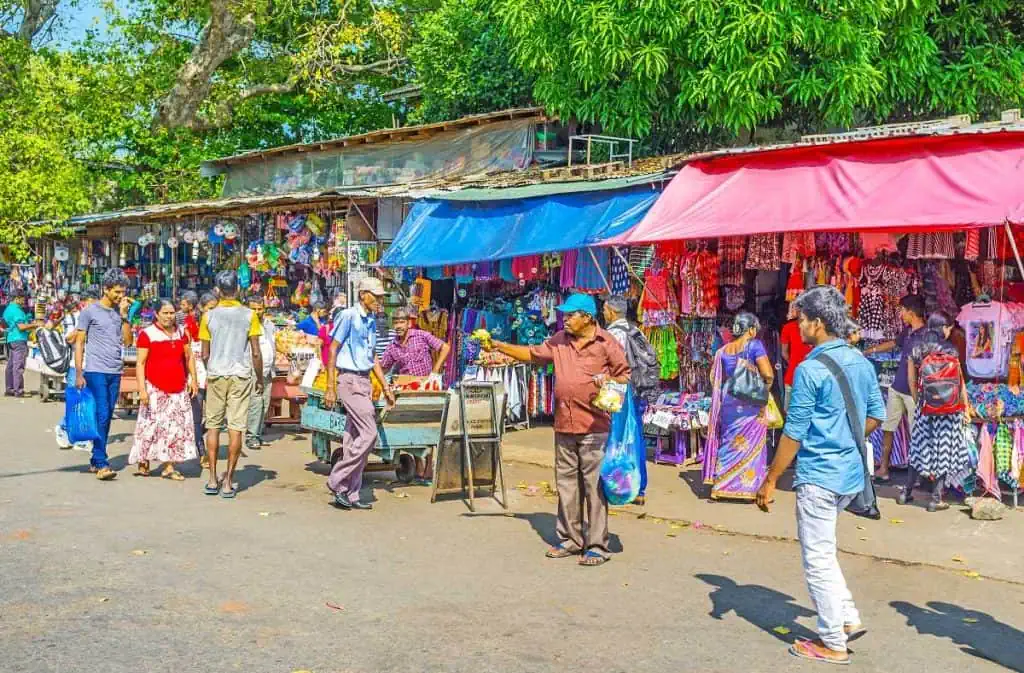
Although we only saw Pettah from the vehicle, it offered a final glimpse into daily life in Colombo.
Seeing The Balance of Old and New On Our 1 Day in Port: Colombo, Sri Lanka
What stands out most from our two days in Sri Lanka is the way the country comfortably exists in multiple eras at once.
In Negombo, we watched fishermen unload their catch much as generations before them had done. We explored a fish market, visited a spice shop, and cruised through a mangrove-lined lagoon.
The following day brought a different perspective. We walked beside Parliament, stood beneath the soaring Lotus Tower, and explored a rapidly developing capital city.
Yet neither side of Sri Lanka felt disconnected from the other. Ancient temples remain active places of worship, traditional village life is preserved and celebrated, and even Colombo’s most modern landmarks draw inspiration from centuries-old traditions.
Rather than choosing between old and new, Sri Lanka seems to embrace both—and that may be what fascinated us most.
Take Advantage of an Overnight Port Call
If your cruise includes an overnight stay in Colombo, consider splitting your time between the city and the surrounding region.
Negombo offered a completely different experience from Colombo itself, and visiting both gave us a much broader understanding of Sri Lanka than we would have gained from spending all our time in the capital.
Final Thoughts: Two Days, Two Different Sri Lankas
Before arriving, I expected Colombo to be a brief stop between India and Southeast Asia. What I didn’t expect was how much history we would encounter in 1 Day in Port: Colombo, Sri Lanka
From the busy fish market in Negombo to the quiet waters of the lagoon, from colonial churches to sacred Buddhist temples, and from traditional villages to Colombo’s modern skyline, every stop revealed a different side of the country.
If your cruise itinerary includes Colombo, my advice is simple: venture beyond the port.
Whether that means exploring the fishing communities of Negombo, visiting a sacred temple, or simply spending time observing daily life, you’ll discover that Sri Lanka offers far more than can be appreciated from the deck of a ship.
For us, it was an unforgettable introduction to a fascinating island nation — and we are not done with Sri Lanka yet. Tomorrow, we will see the countryside in Hambantota! A memorable beginning to our Southeast Asian voyage.
Practical Tips for Cruise Passengers Visiting Colombo
- Arrange Your Sri Lanka Visa in Advance
Before arriving in Sri Lanka, you must obtain an Electronic Travel Authorization (ETA). We completed the process online a few days before arrival, and it was relatively straightforward, though requirements can change. Be sure to check the latest entry requirements well before your cruise departs.
- Dress Respectfully at Religious Sites
If your itinerary includes Buddhist temples such as Kelaniya Raja Maha Viharaya, modest clothing is recommended. Shoulders and knees should be covered, and hats should be removed before entering sacred areas.
Many temples also encourage visitors to remove their shoes before entering certain buildings, so footwear that is easy to slip on and off can be helpful.
- Expect Warm, Humid Weather
Sri Lanka’s tropical climate brings warm temperatures and high humidity throughout much of the year. Lightweight clothing, sunscreen, a hat, and plenty of water will make your day more comfortable.
- Consider Hiring a Guide
One of the reasons our visit was so rewarding was our guide, Priyangi Kodithuwakku, whose knowledge of Sri Lankan history, Buddhism, and local culture added tremendous depth to our visit.
A guide also made it possible to combine destinations such as Negombo and Colombo during our overnight stay without worrying about transportation or logistics.