1 Day in Port: Chan May – Hue Vietnam’s Imperial Heartbeat

This post is part of a series on what to do when you have one day in port on a Cruise. You can find more posts from this series on my page,
How To Spend One Day In Port.
After spending a couple of “lazy” days in Halong Bay, our cruise ship anchors at Chan May Port. Chan May is a relatively quiet, industrial-style port located about halfway between Hue and Da Nang. From this port, we have scheduled an exciting full-day trip to Hue, Vietnam’s ancient Imperial capital.
First Tip for Hue: “Hue” is pronounced “Way”, not at all the way it is spelled.
Cruise ships dock at the pier in Chan May, so no tender ride is necessary. However, again, the port has limited facilities—no ATMs or currency exchange—so plan accordingly. Disembarkation began around 7:30 AM, and we met our guide soon after.
This article may contain affiliate links. We may earn a commission if you use these links to buy products or services. Please see our disclosure policy for full details. Thanks.
Our private guide, Peter Pham of Hue Private Excursions, and his ever-steady driver, Mr. Binh, greeted us with warm smiles and a spacious Toyota FourRunner. Rain tapped on the windshield as we set off—it was going to be one of those atmospheric days that give the Vietnamese countryside its mood and magic.
Country Roads, Eucalyptus Oil, And Life In The Fields
The countryside outside Hue is a blend of lush and lively fields that stretch out under the low mist. Water buffalo ambled across muddy roads, and small villages peeked through the lush greenery. Along the way, we stopped at a roadside fishing village where locals were distilling eucalyptus oil in open fires.
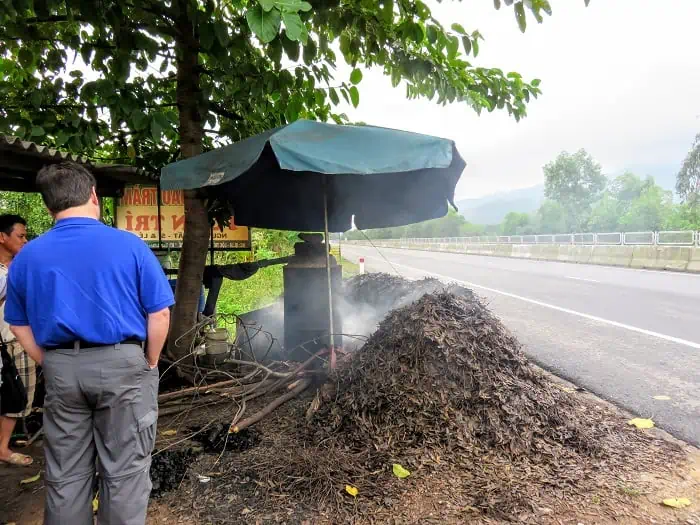
Peter explained that the oil is thought to be a cure-all: used for muscle aches, bug bites, and as a mosquito repellent. Naturally, we bought a bottle. The small bottle of eucalyptus oil was wrapped in plastic and sealed tightly. Still, its fragrance managed to fill the car with its sharp, healing scent.
Before We Get to Hue, A Taste Of Rural Vietnam
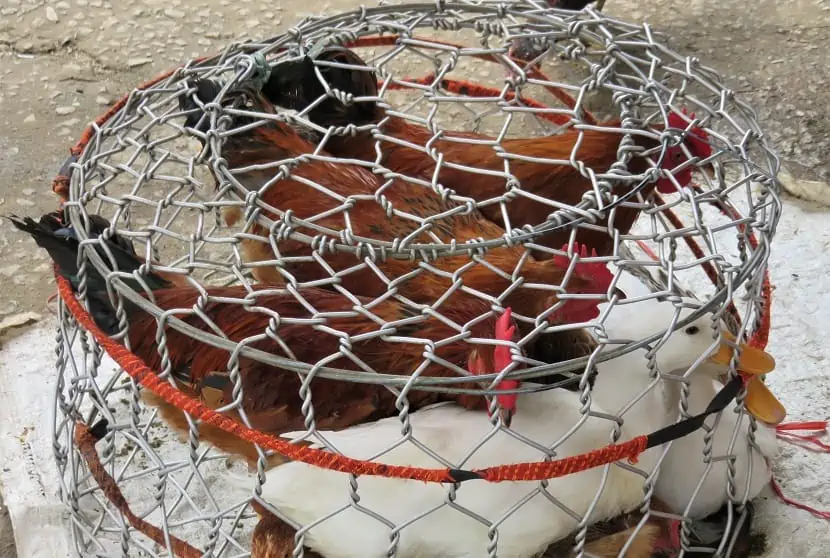
Next, we explored a local market where the morning’s catch flopped in buckets, and produce was stacked like edible rainbows. The food culture here revolves around the importance of freshness. Chickens and ducks clucked from bamboo cages, waiting to be part of someone’s dinner.
One of the most memorable stops was at a traditional art school tucked within a quiet village. Here, we met Mr. Tranh Dan Gian Lang Sing, an elderly artisan who creates stunning works using hand-carved wooden chop blocks. His technique preserves a centuries-old folk art tradition, and he graciously demonstrated his printing method to us.
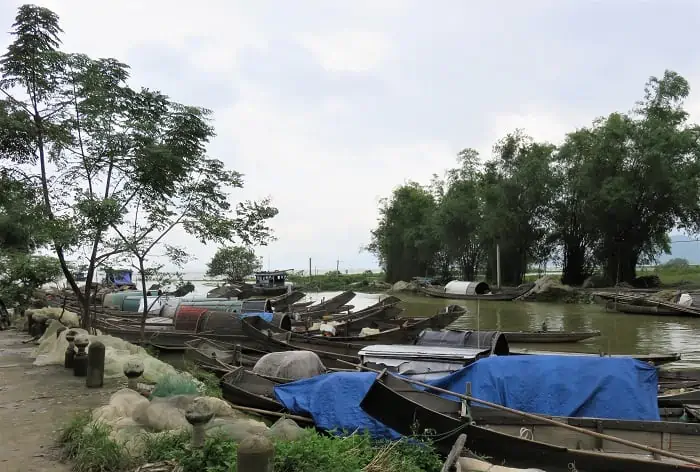
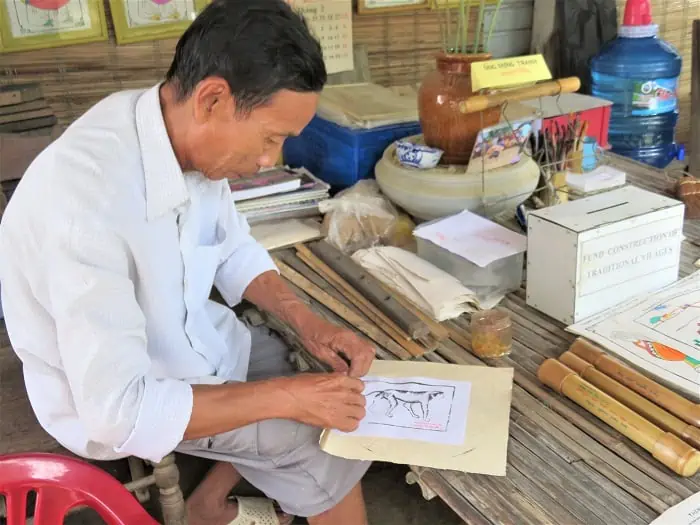
The Vietnamese government helps fund his work, and in return, he teaches local students how to carry on this vanishing craft. It was a humbling and beautiful moment to witness.
After leaving the art school, we visited a small, rural museum that serves as a living history museum, displaying traditional farming practices from the past. A lovely 70-something woman—part docent, part national treasure—demonstrated how rice was harvested, husked, and milled by hand. Life here is hard, she tells us with a grin, but full of purpose.

Before heading into Hue proper, we crossed a bridge that’s been standing since 1776. Vietnam’s history is not just in its cities—it’s embedded in its landscape.
Hue City: The Imperial Citadel And Thien Mu Pagoda
The capital of the Nguyen Dynasty from 1802 to 1945, Hue, still carries the grandeur of royalty. First stop: the Imperial Citadel, Vietnam’s answer to Beijing’s Forbidden City. The Citadel is part of the Complex of Hue Monuments. These monuments have been recognized as a UNESCO World Heritage Site since 1993 for their cultural and architectural significance.
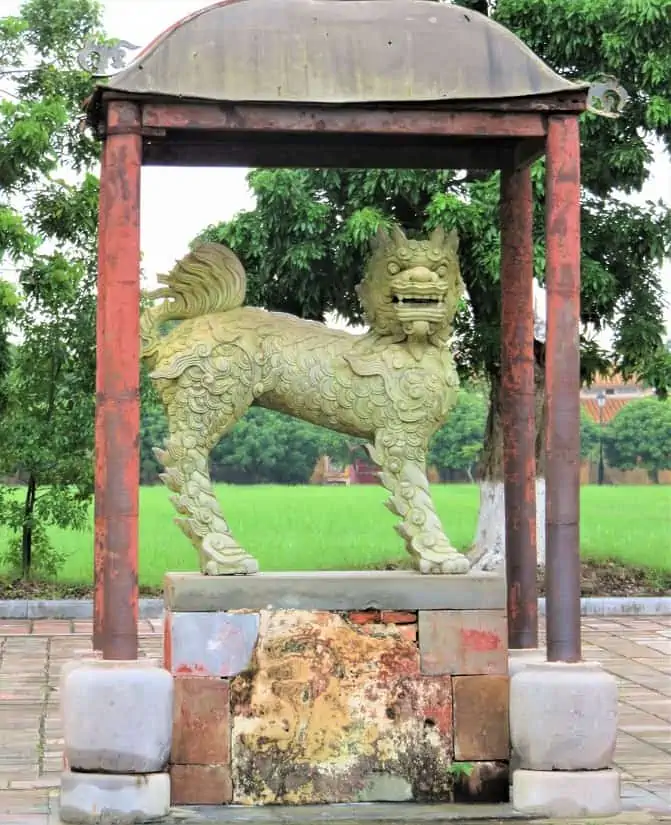
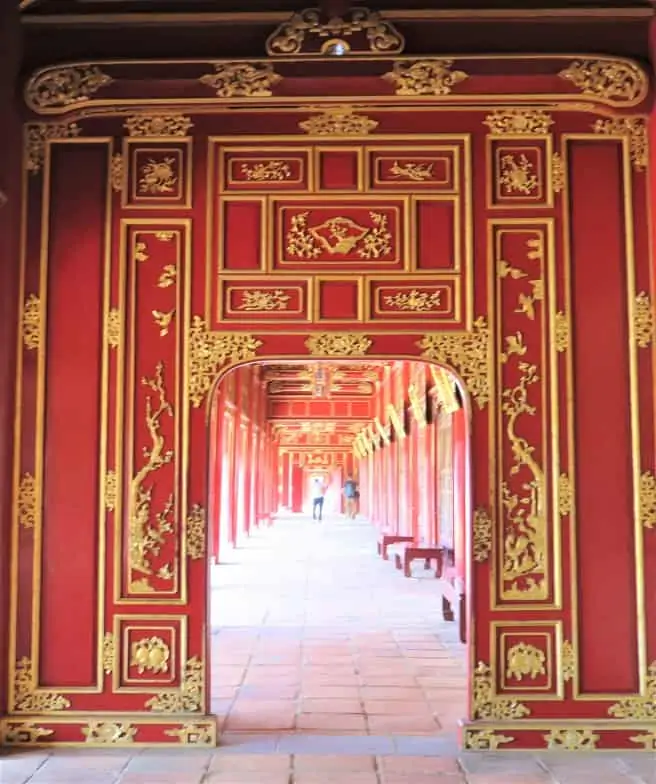
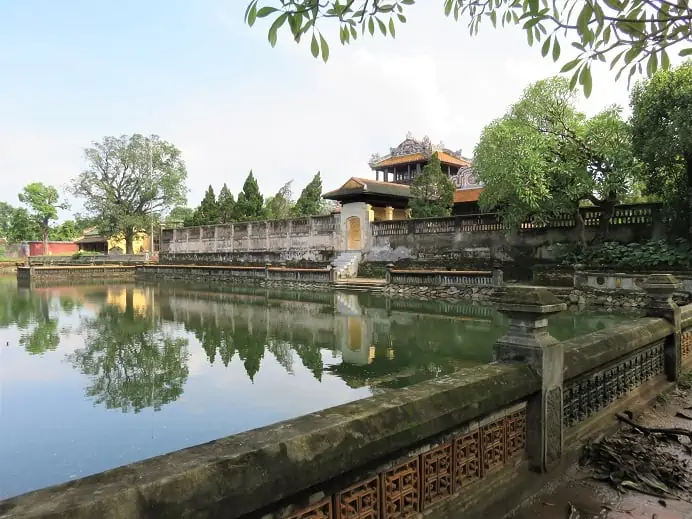
We entered through the Ngo Mon Gate, flanked by lotus ponds and watchtowers, and made our way through moss-covered courtyards and palace ruins. The Thai Hoa Palace, once used for imperial ceremonies, still stands, its red columns and intricate gold details intact. War damage from the 1968 Tet Offensive left scars, but restoration efforts are ongoing, and the grandeur remains undeniable.
You can spend hours roaming the moss-covered walls, red lacquered gates, and royal courtyards. Even in the rain, or maybe especially in the rain, it’s beautiful.
After soaking in the history of the Citadel, we made our way to a nearby restaurant housed in a charming French colonial-style building in the heart of Hue. There, we were treated to a delicious lunch of traditional Vietnamese cuisine—delicate spring rolls, savory pork dishes, and perfectly balanced noodle bowls. The atmosphere was elegant yet relaxed, making it the perfect midday pause before continuing our cultural exploration.
River Views And Reflections Of Hue
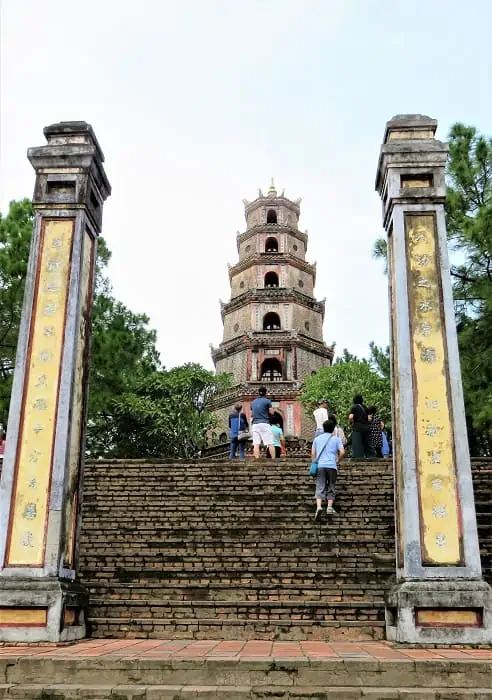
Across the Perfume River—named for the fragrant blossoms that used to drift down from upriver orchards—we visited the Thien Mu Pagoda, one of Vietnam’s most iconic temples. Its elegant seven-story tower and peaceful grounds are maintained by monks, exuding a serene energy. Dating back to 1601, it feels timeless.


On the grounds of the pagoda sits a blue 1956 Austin A95 Saloon car made famous when, in 1963, a resident monk, Thich Quang Duc, drove the vehicle to what was then Saigon and committed the act of self-immolation to protest against the southern regime.
The photo of his martyrdom was captured and is one of the most well-known images of the war. The car is displayed at the pagoda as a symbol of the monk’s sacrifice and the struggle for religious freedom.
To close out the day, at the foot of the steps leading up to the pagoda, we board a traditional dragon boat for a slow cruise along the Perfume River. Mist clung to the water, and the city shimmered in the distance. Mr. Binh met us on the other side to whisk us back to the ship.
With the right guide, a great driver, and a bit of planning, you can pack a rich tapestry of Vietnamese history, art, and countryside charm into a single day in port. We arrived back at our ship with a deeper understanding of the people of Vietnam. Tired, yes—but in the best way.
Sample Timeline: Your Day in Hue from Chan May
- 7:30 AM – Disembark ship at Chan May Port
- 8:00 AM – Depart with a guide via private vehicle
- 9:00 AM – Impromptu Visit local village and eucalyptus oil distillery
- 10:00 AM – Explore the market and small rural museum
- 11:30 AM – Arrive at Hue Imperial Citadel
- 1:00 PM – Enjoy lunch at a French colonial-style restaurant with traditional Vietnamese cuisine
- 2:00 PM – Visit Thien Mu Pagoda
- 3:00 PM – Boat cruise along Perfume River
- 4:00 PM – Return to Chan May Port
Optional Sites to Consider (Time Permitting)
If you have more time or skip one of the stops above, consider adding:
- Tomb of Khai Dinh – A blend of Eastern and Western architecture
- Tomb of Tu Duc – A lakeside mausoleum designed by dedicated to Emperor Tu Duc
- Dong Ba Market – The traditional market in Hue for more that a hundred years.
- An Dinh Palace – The royal palace of the Nguyen Dynasty, Vietnam’s last Feudal Dynasty.
Practical Tips for Visiting Hue from Chan May Port:
- Allow for the drive time from Chan May—It is approximately 1 hour each way.
- Book a private guide for deeper local insights. We used Hue Private Excursions.
- Pack rain gear. The weather can be inclement, so bring a light-weight rain jacket or umbrella.
- Visit the Citadel early—this way, you may avoid larger tour groups.
- Explore the local markets—they offer an authentic experience in Vietnam.
- Ask about local dishes. Hue is known for its imperial cuisine and bún bò Huế (spicy beef noodle soup).
Next, our final stop in Vietnam: 1 Day in Saigon – Motorbikes, Markets, and French Colonial Majesty