
6 Days in Seoul: Royal Palaces, Korean BBQ, Hanbok, and the Unforgettable DMZ

After six wonderful days exploring Taiwan, we took a short flight to Seoul for the second half of our Asian adventure. While Taiwan had charmed us with its laid-back atmosphere and night markets, Seoul felt bigger, faster, and more energetic the moment we arrived.
During our 6 Days in Seoul, we explored royal palaces, wandered through traditional markets, learned the art of Korean barbecue, wore Hanbok, and even experienced a Korean scalp spa. We took a day trip to Suwon, stood inside a North Korean infiltration tunnel, and looked across the border into one of the world’s most isolated countries.
What surprised us most was not any single attraction but the variety of experiences packed into one city. In Seoul, centuries-old palaces stand beside soaring skyscrapers, traditional tea houses share neighborhoods with cutting-edge design centers, and history feels alive in everyday life.
If you’re planning your first visit to South Korea, here’s how we spent six memorable days exploring Seoul and beyond.
This article may contain affiliate links. We may earn a commission if you use these links to buy products or services. Please see our disclosure policy for full details. Thanks.
📍 Location: Seoul, South Korea
🗓️ Length of Stay: 6 Days
🏨 Where We Stayed: The Plaza Seoul – Autograph Collection
⭐ Don’t Miss: A day trip to the DMZ and the Third Infiltration Tunnel
🍴 Best Food Experience: Traditional Korean BBQ with endless banchan
🚶 Best For: Travelers interested in food, history, culture, and modern city life
💡 Good To Know: Seoul’s subway system is clean, affordable, and one of the easiest in Asia to navigate
Exploring Royal Seoul and Gwangjang Market
We met our guide, Katie, at our hotel and set off on foot toward Seoul’s historic heart. One of the best ways to understand Seoul is to experience both its royal history and modern energy in a single day.
Despite the rain, we wandered through the courtyards of Gyeongbokgung Palace, sampled traditional foods at Gwangjang Market, learned to navigate Seoul’s remarkably efficient subway system, and ended the afternoon beneath the skyscrapers surrounding Lotte World Tower.
Touring Gyeongbokgung Palace
From the hotel near Gwanghwamun Square, we headed to Gyeongbokgung Palace, the largest and most important of Seoul’s five grand palaces. Built in 1395 during the Joseon Dynasty, it served as Korea’s primary royal residence for centuries.
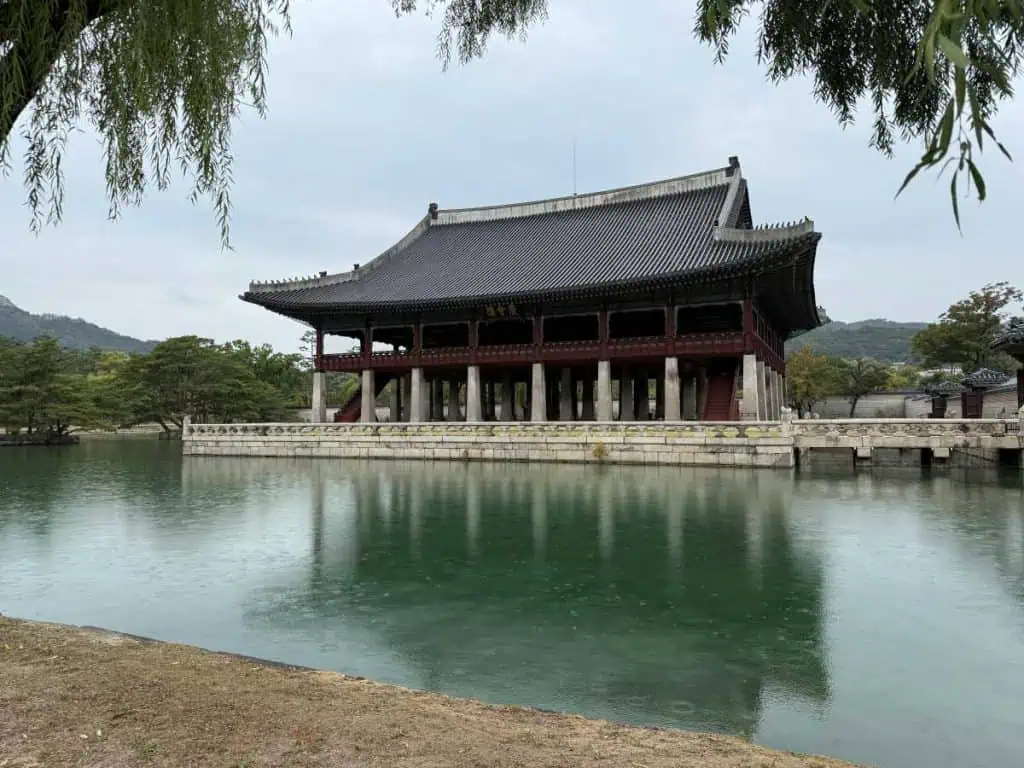
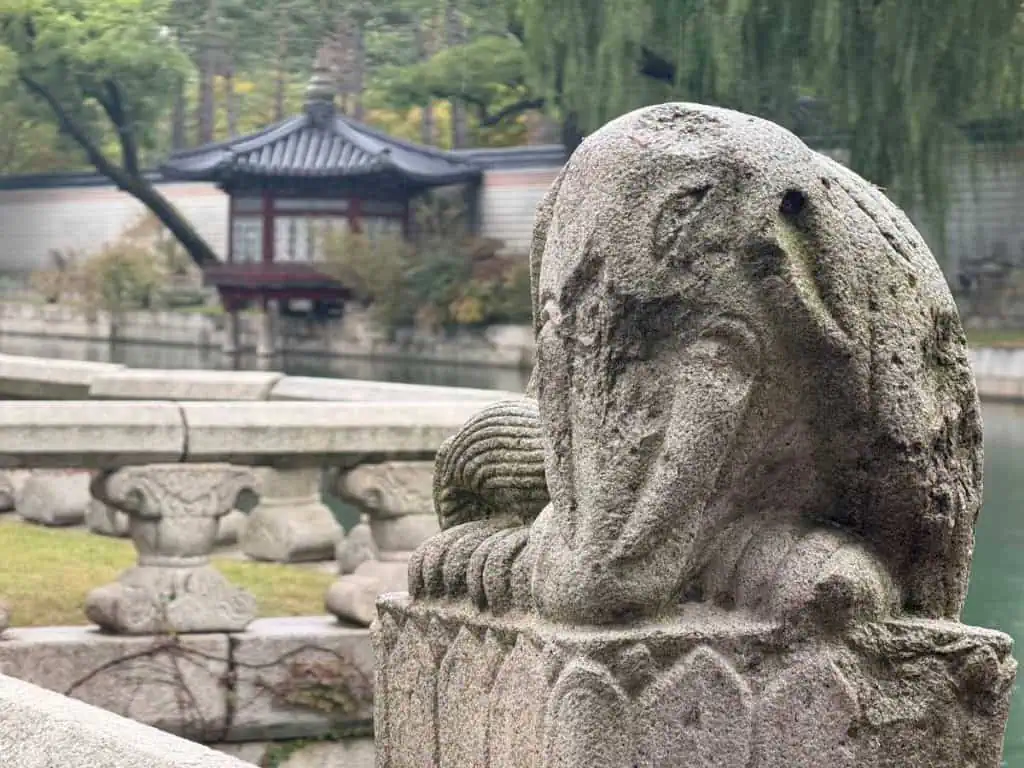
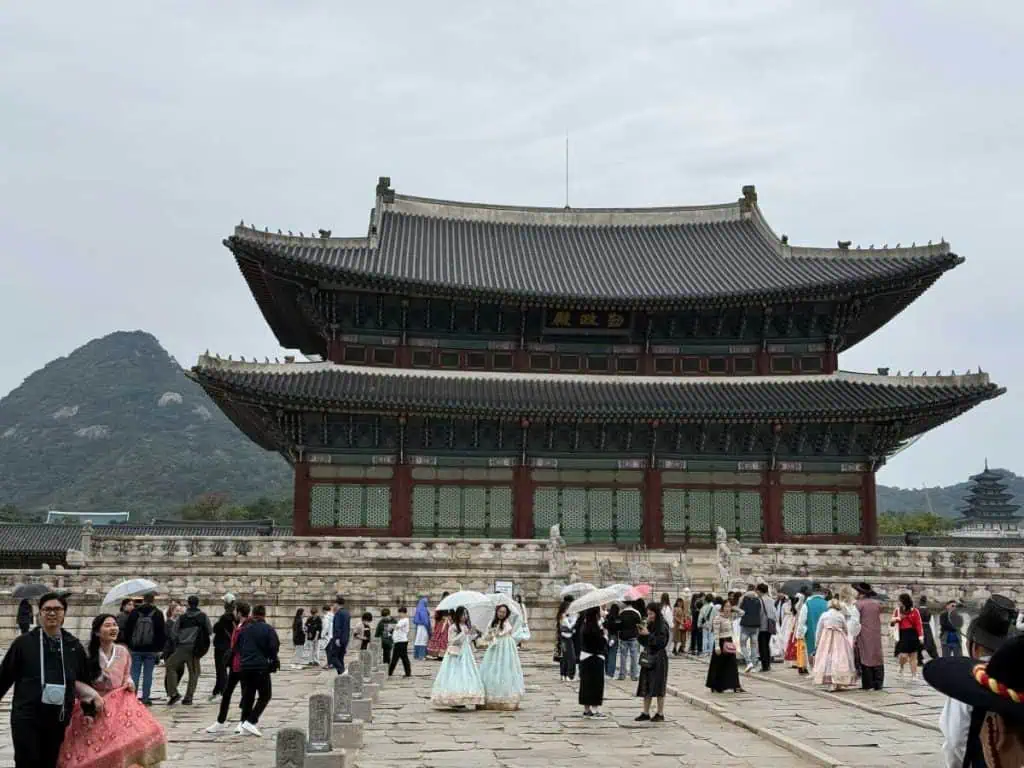
The sweeping courtyards, colorful pavilions, and ornate gates offered an impressive introduction to Korean history. What struck us most was the view beyond the palace walls, where modern office towers rise above centuries-old architecture—a reminder that in Seoul, history is never far from the present.
Gwangjang Market – Inside Seoul’s Oldest Foodie Market
As the rain intensified, Katie suggested changing plans and hailed a taxi to Gwangjang Market, one of Seoul’s oldest and most famous traditional markets. The moment we stepped inside, we were surrounded by activity.
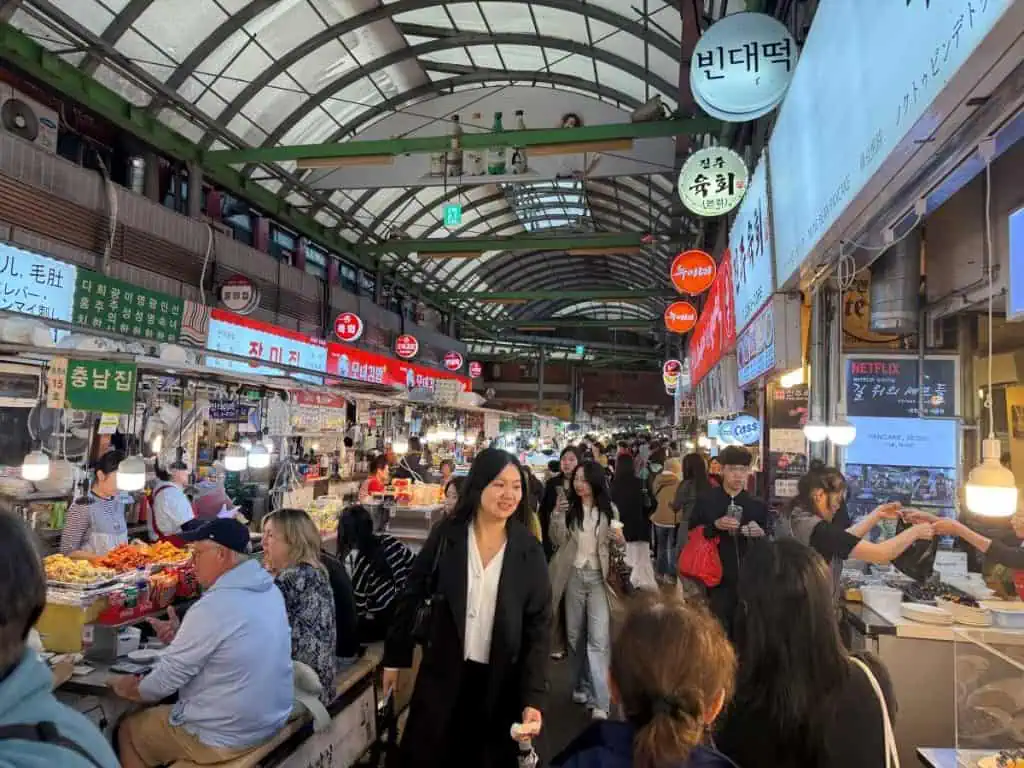
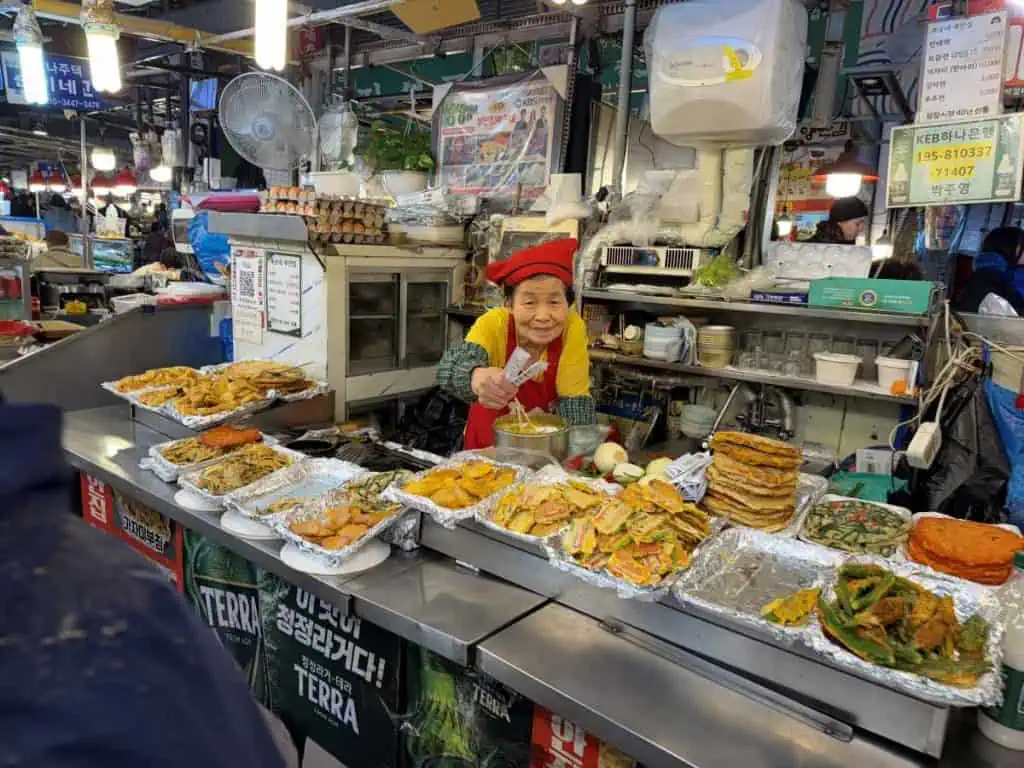
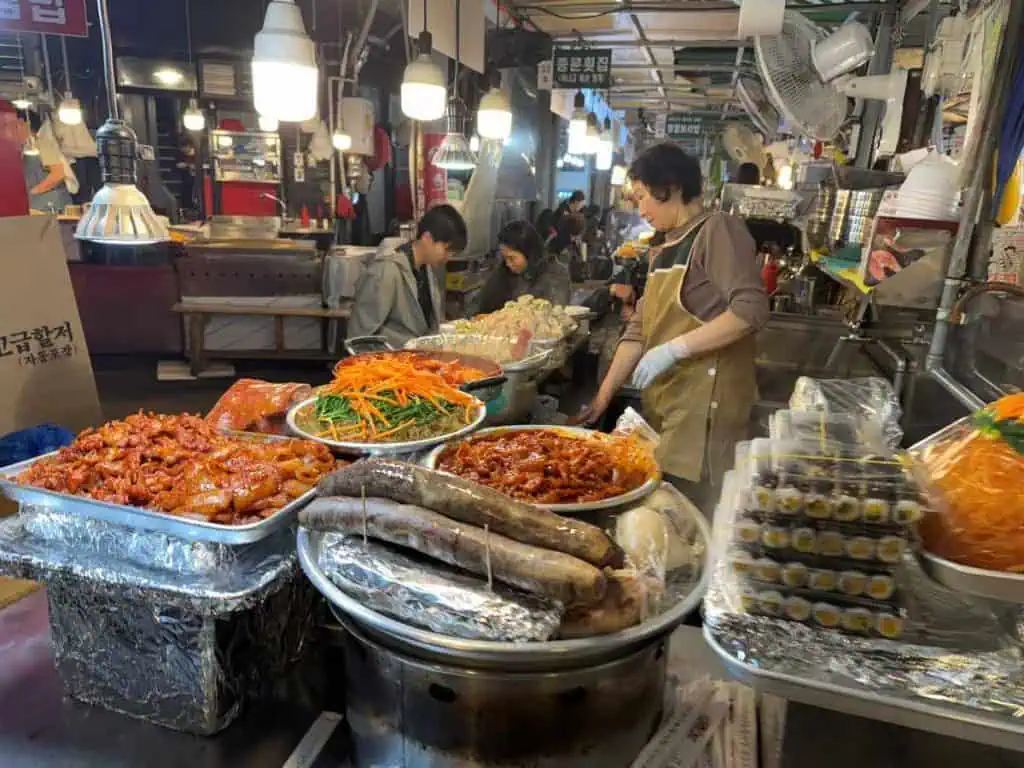
Vendors sold everything from seafood and produce to textiles and household goods, while food stalls filled the air with the aromas of grilled meats, noodles, and fried snacks.
Markets are one of our favorite ways to experience a destination because they offer a glimpse into everyday life. After wandering through the crowded aisles, we settled into a small restaurant for our first traditional Korean lunch. The table quickly filled with banchan—the assortment of small side dishes that accompany most Korean meals—and our introduction to Korean dining culture began.
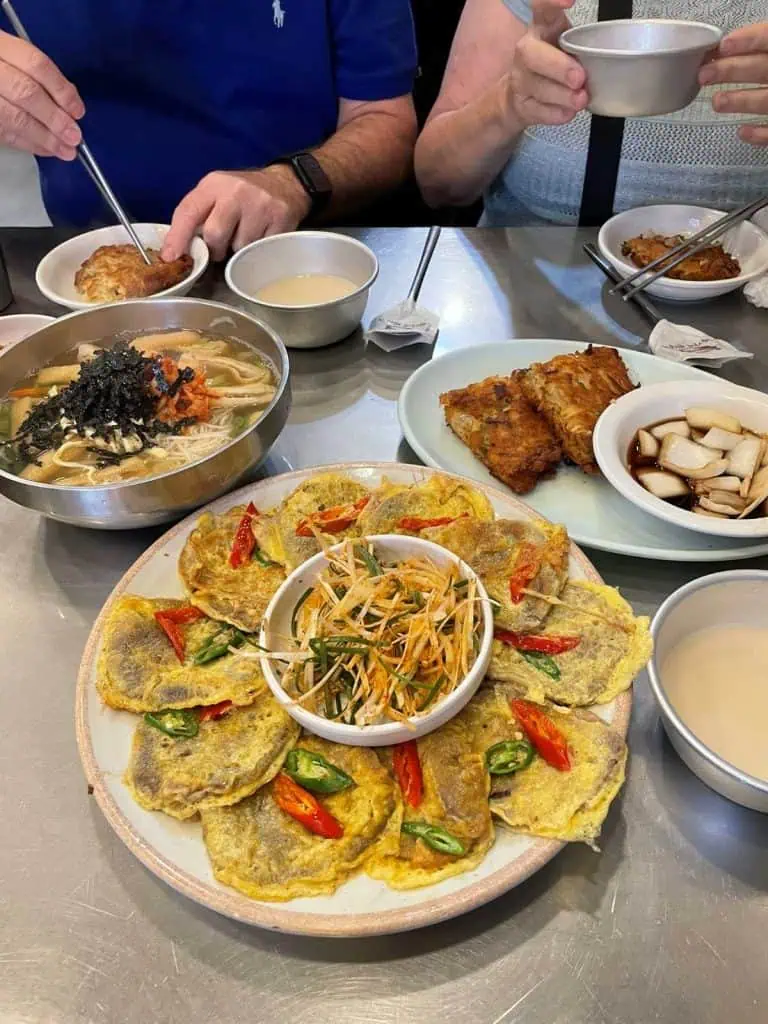
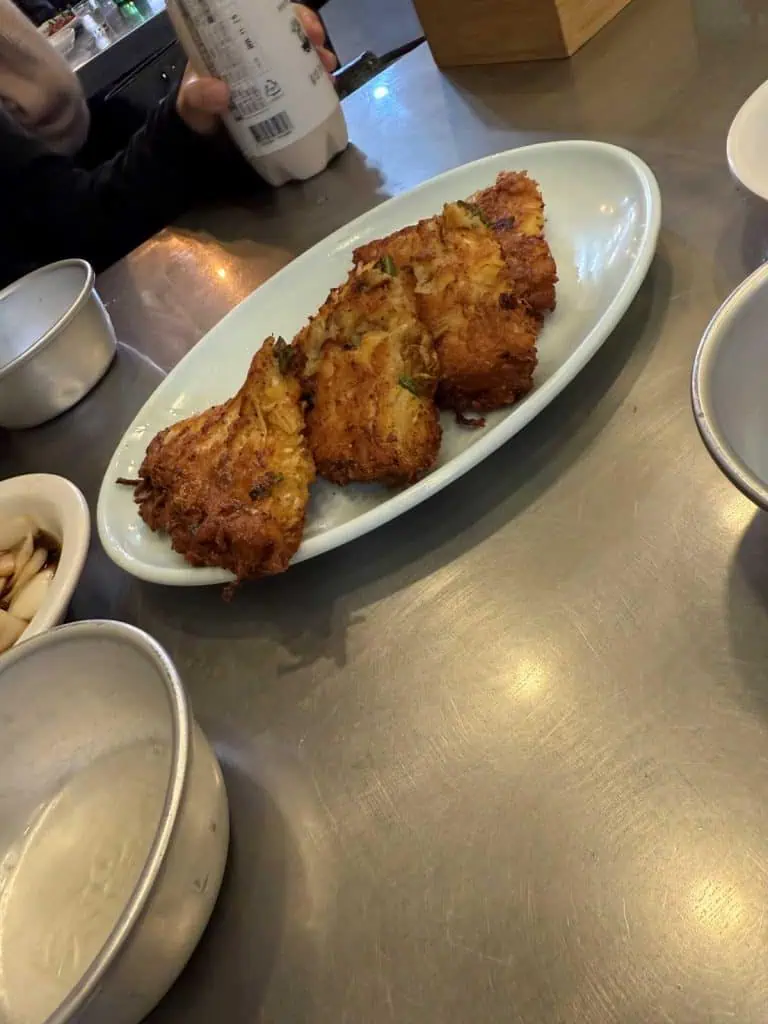
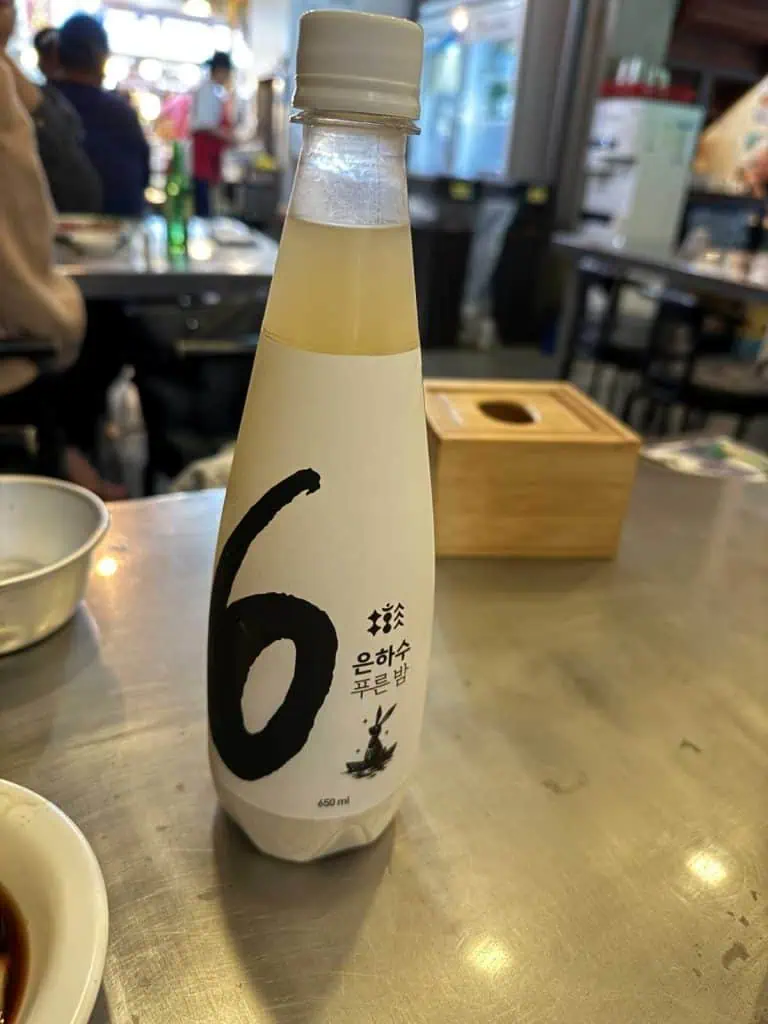
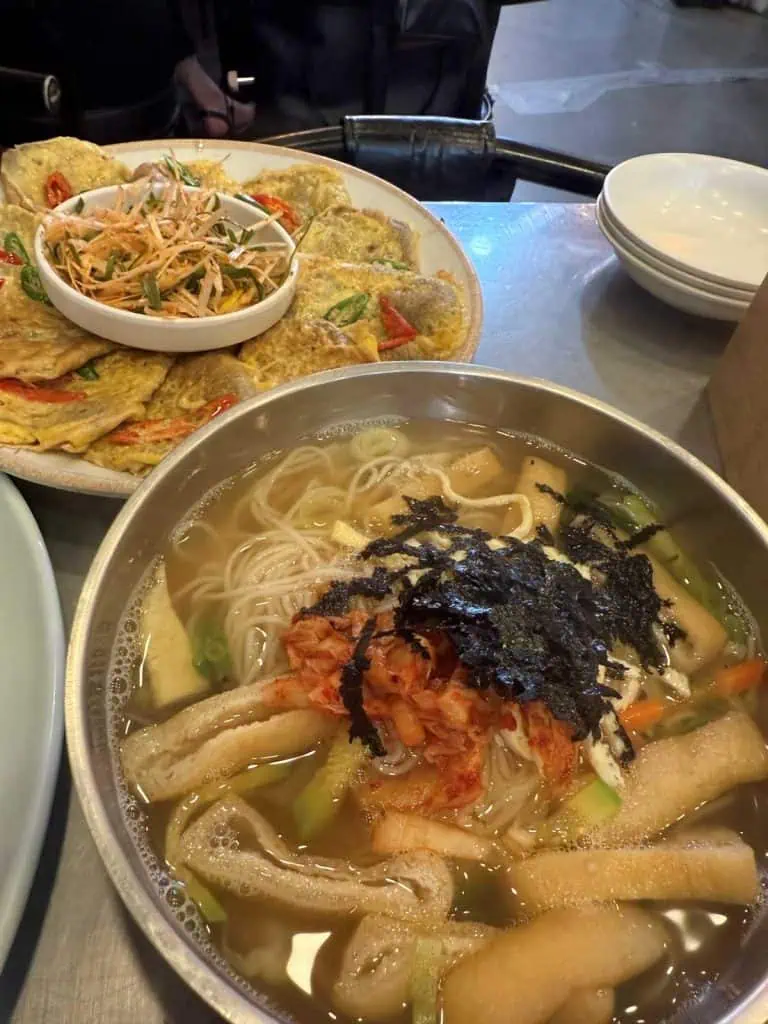
After lunch, it was time to tackle something every visitor to Seoul should experience: the metro. We quickly learned that Seoul’s subway system is one of the easiest we’ve ever used.
Lotte World Tower and Seokchon Lake
Our final stop of the day was the area around Lotte World Tower. Rising 123 stories above the city, Lotte World Tower is South Korea’s tallest building and a striking symbol of modern Seoul.
After a morning spent exploring royal palaces and traditional markets, the sleek skyscraper and luxury shopping center felt like a completely different side of Seoul.
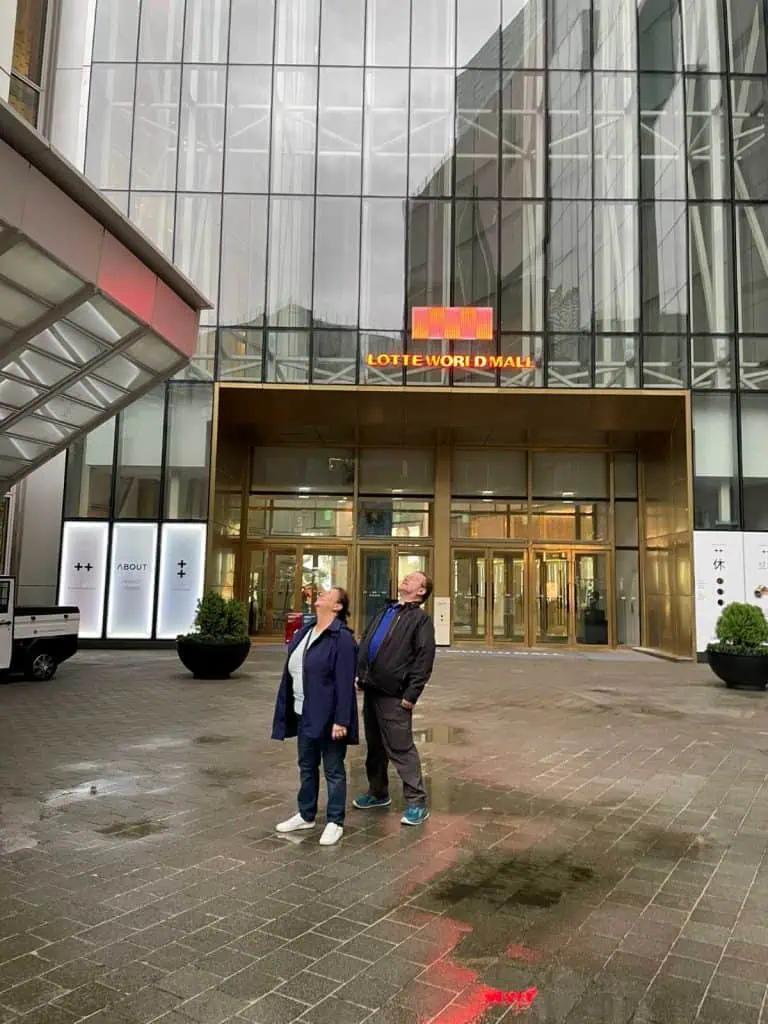
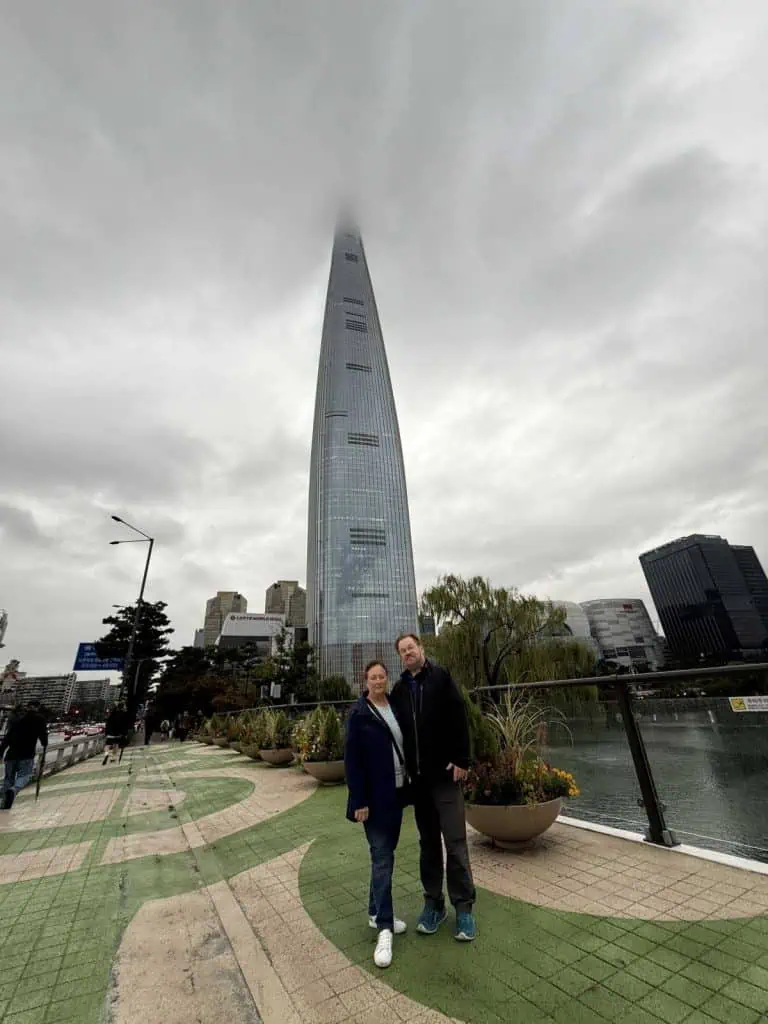
Before heading back to the hotel, we took a leisurely walk around nearby Seokchon Lake. Despite the lingering drizzle, locals filled the lakeside paths, and the peaceful setting offered a welcome break from the city’s fast pace. It was the perfect way to end a day that had introduced us to many sides of Seoul.
Seoul Tower, City Views, and a Korean Scalp Spa
On our second day, we were introduced to distinctly Korean experiences. We rode the Namsan Cable Car to Seoul Tower for panoramic city views, enjoyed one of the most unusual sightseeing attractions we’ve encountered—a restroom with a skyline view—and later spent the afternoon at a Korean scalp spa. This experience was both relaxing and surprisingly fascinating.
Riding the Namsan Cable Car
Rather than hiking to the top of Namsan Mountain, we took the cable car, one of the easiest and most scenic ways to reach Seoul Tower. As the car climbed above the city, apartment towers, office buildings, and distant mountains gradually came into view, offering a preview of the panoramic vistas awaiting us at the summit.
Views from Seoul Tower
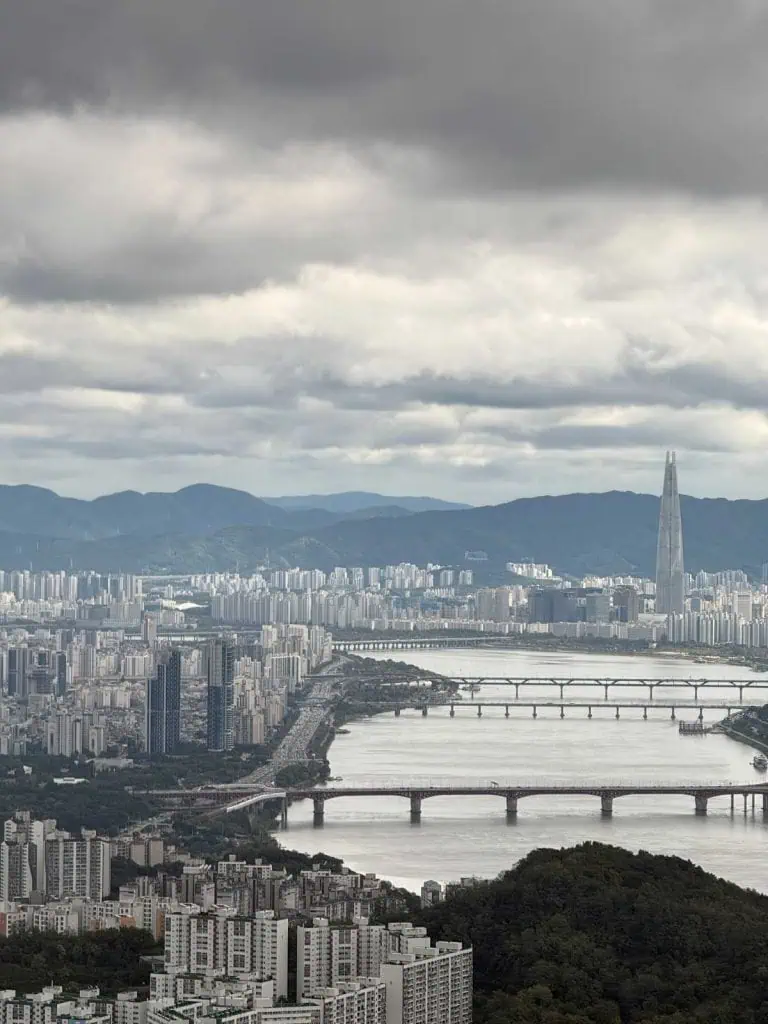
Before heading up to the observation deck, we caught a traditional guard performance near the tower, another reminder of how proudly South Korea celebrates its heritage. After a quick elevator ride, we were enjoying spectacular 360-degree views across Seoul. From above, the city’s sheer scale became apparent, with clusters of skyscrapers stretching toward the surrounding mountains.
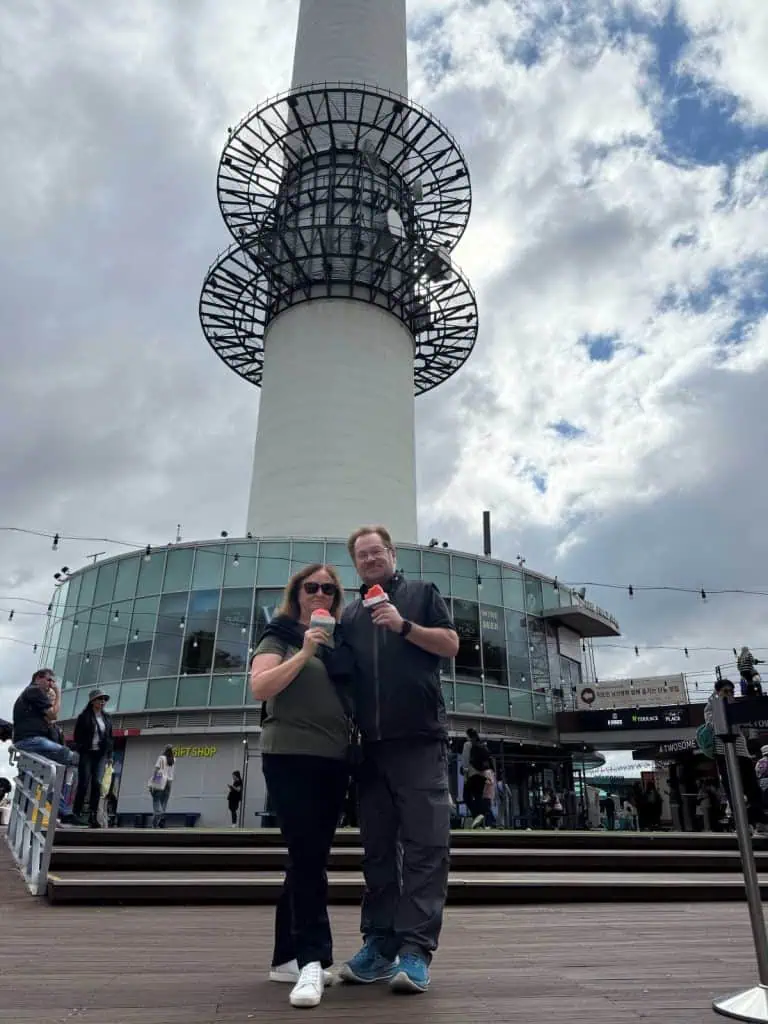
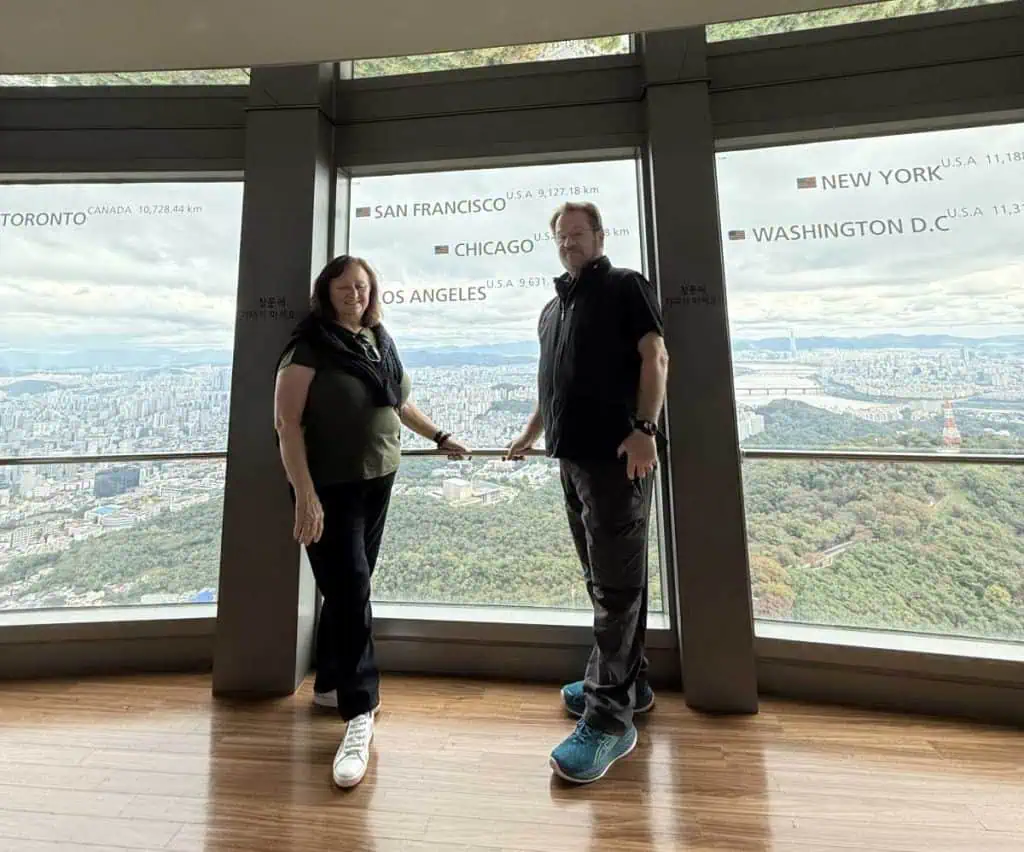
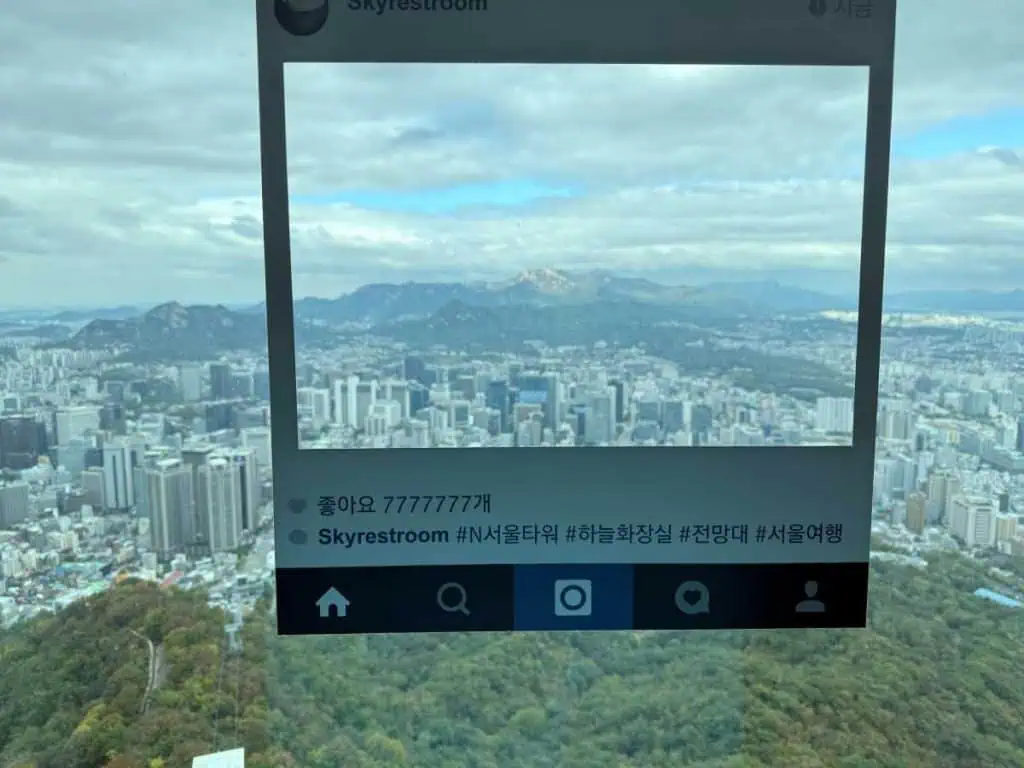
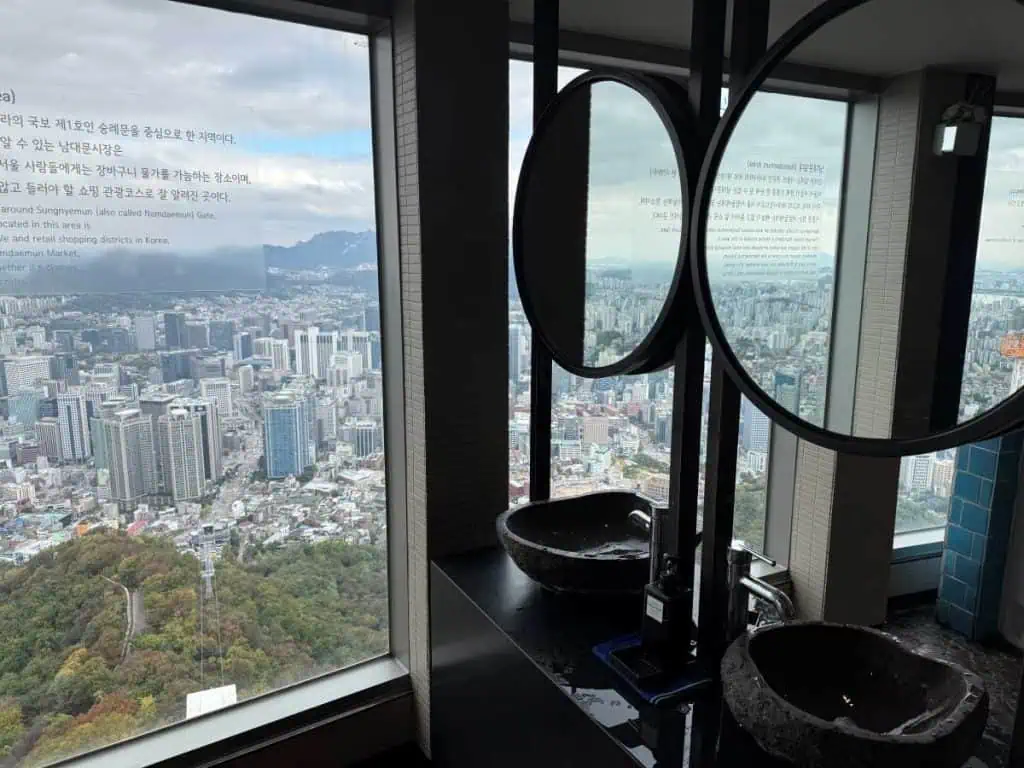
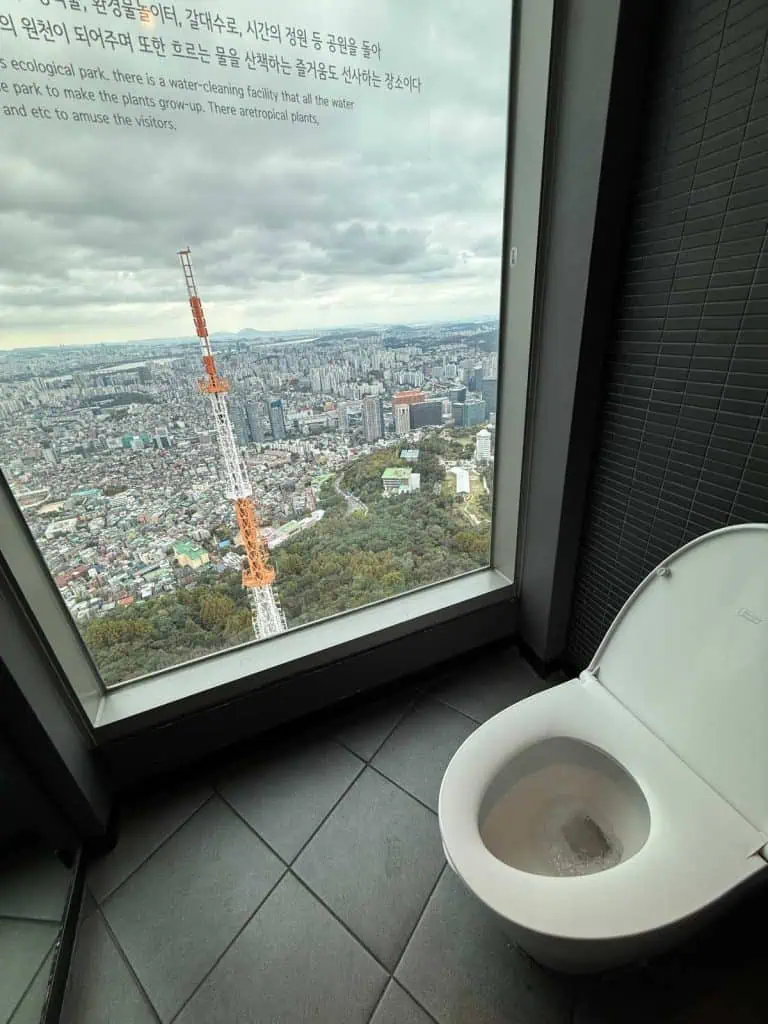
One of the tower’s most unexpected attractions was the Skyrestroom. Few places in the world can claim that even a restroom break offers panoramic views of an entire city. It quickly became one of those travel moments we still laugh about today.
A Korean Scalp Spa Experience
After leaving Seoul Tower, we headed to one of the most unusual experiences of our trip: a Korean scalp spa treatment. South Korea is renowned for its beauty and wellness culture, but until this visit, I had never even heard of a scalp spa.
The appointment began with a microscopic examination of our scalps and hair follicles. Seeing a magnified view of your scalp is both fascinating and a little humbling. Before treatment began, the clinicians captured “before” images to compare with the final results.
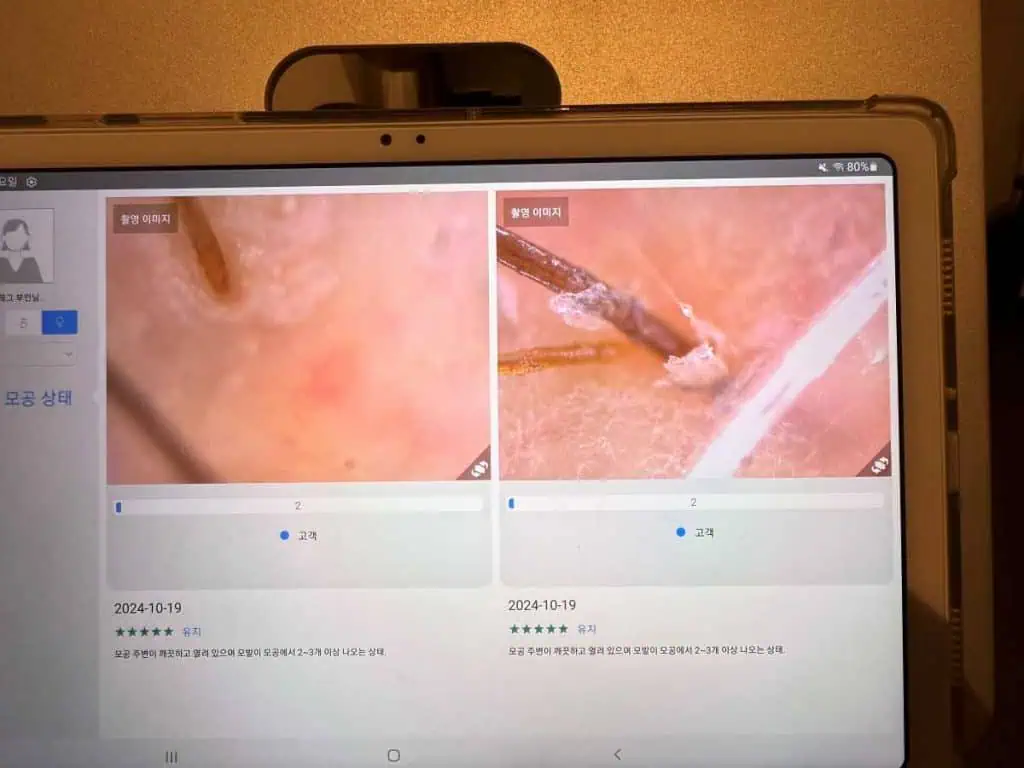
Although my husband and I were placed in separate treatment rooms, the staff eventually opened a movable wall between us and recorded part of the process on my iPhone. With our hair covered in cleansing products and water flowing through the treatment stations, we looked absolutely ridiculous. It remains one of our favorite travel memories.
The 90-minute session included deep-cleansing treatments, a scalp massage, and a wonderfully relaxing neck and shoulder massage. At the end, the clinicians repeated the microscopic examination and showed us side-by-side before-and-after images. The difference was surprisingly noticeable, with much of the buildup removed and our scalps looking considerably cleaner.
Whether the benefits lasted long term is hard to say, but our hair and scalps felt fantastic afterward.” Our 90-minute treatment cost approximately 715,989 KRW (about $468 USD at the time of our visit).”
Our First Korean BBQ Dinner
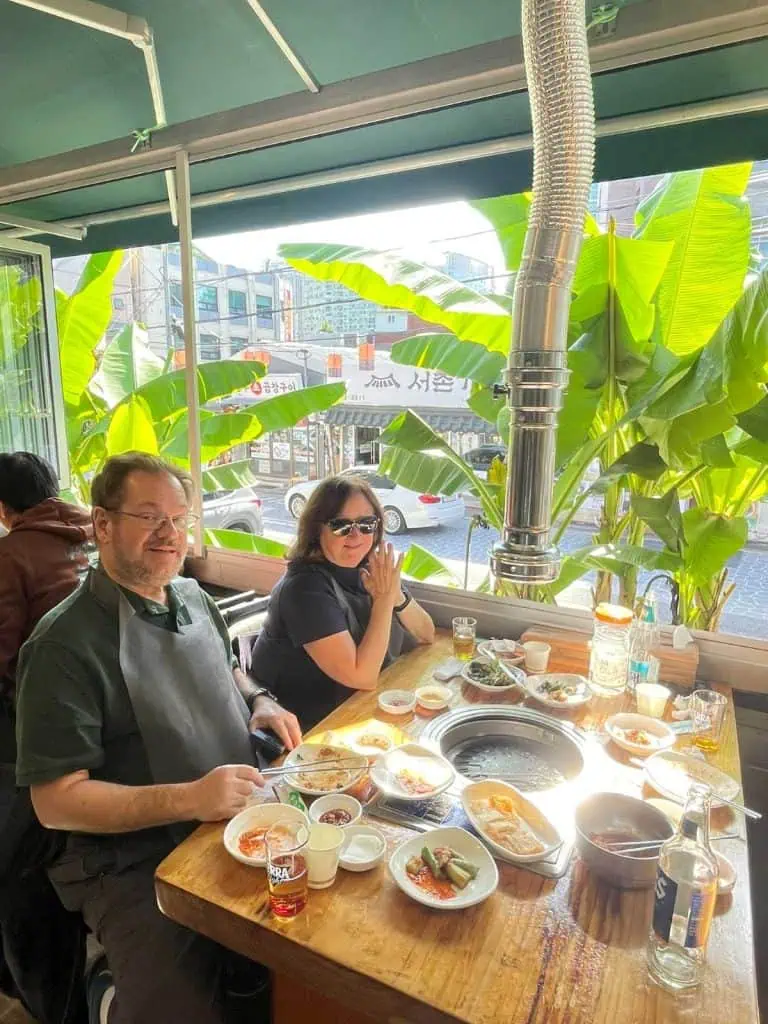
That evening, we enjoyed our first traditional Korean barbecue meal. A family-owned neighborhood restaurant introduced us to the Korean ritual of grilling meat at the table and pairing it with an endless variety of banchan, vegetables, and sauces. It was our first taste of a dining experience we would come to enjoy throughout our time in South Korea.
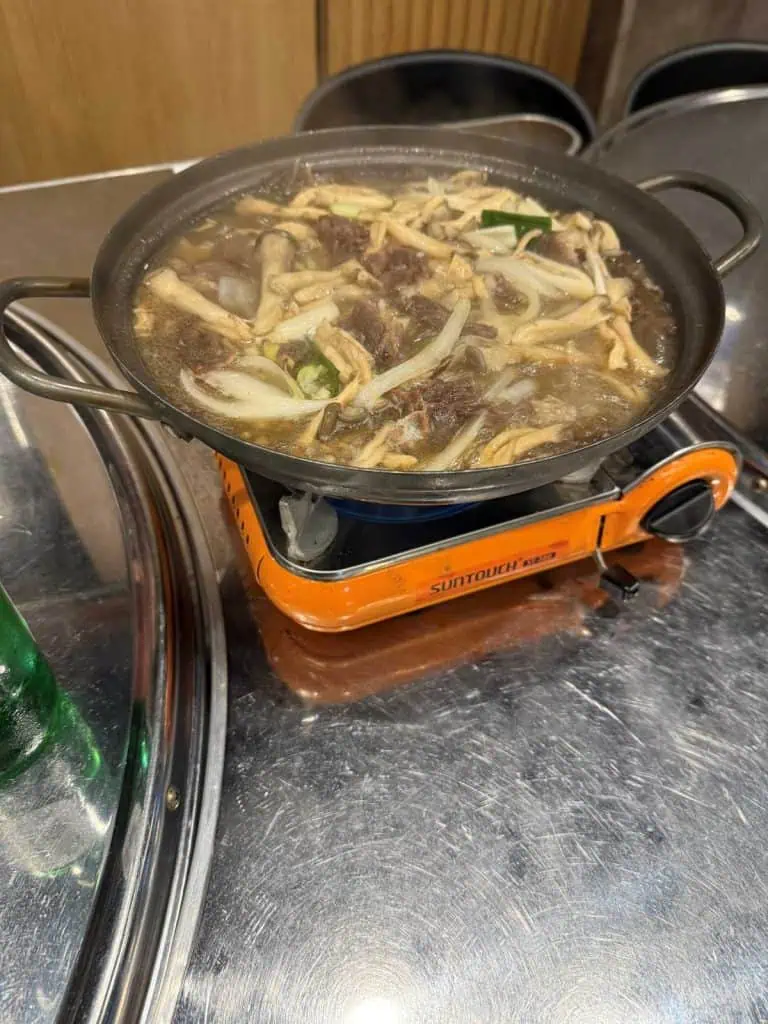
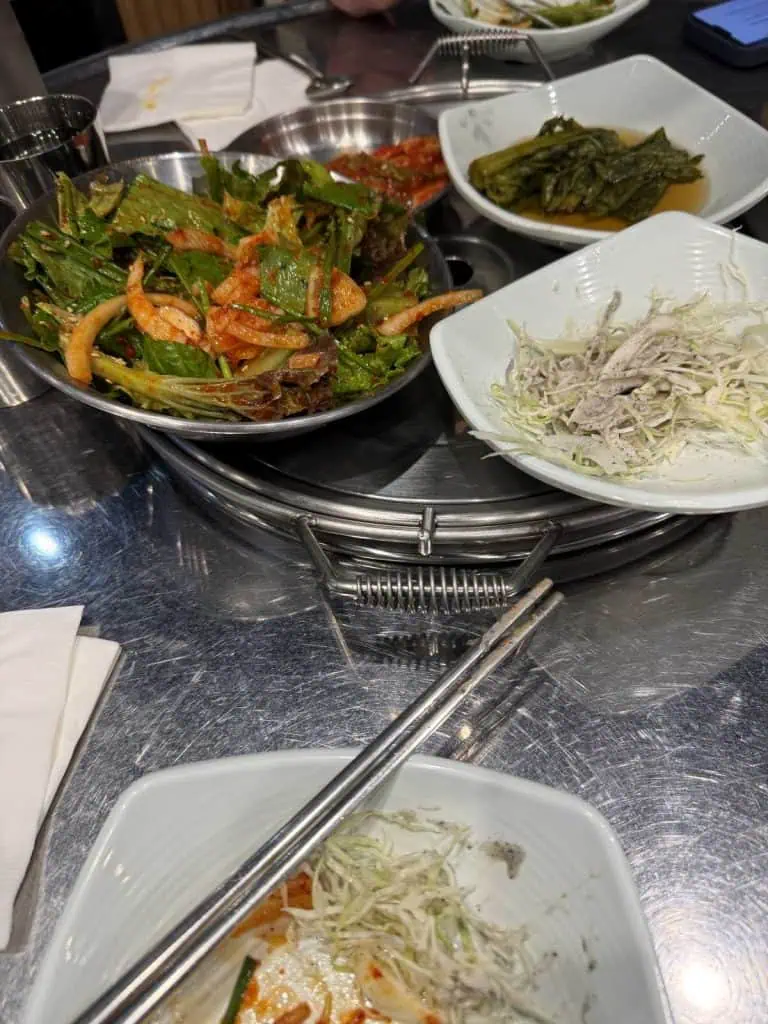
Fortunately, the owner’s son had attended school in Florida and spoke fluent English, making it easy to navigate the menu.
Renting Hanbok and Stepping Back Into Korea’s Past
Today, we experience Korean history in a more personal way.
Renting traditional Hanbok has become a popular activity for visitors, allowing them to wander Seoul’s historic districts dressed as Koreans might have centuries ago. What sounded like a fun photo opportunity turned out to be one of the most memorable experiences of our trip.
Dressed in Hanbok at Changdeokgung Palace
We met Katie in one of Seoul’s Hanbok rental districts near the royal palaces. Inside the shop, racks of colorful traditional garments lined the walls, offering everything from simple everyday styles to outfits inspired by Korean royalty. With a little guidance from the staff, we selected our Hanbok and stepped out into the streets, feeling as though we had traveled back several centuries.
One unexpected benefit of wearing Hanbok is that admission to many of Seoul’s royal palaces is free.
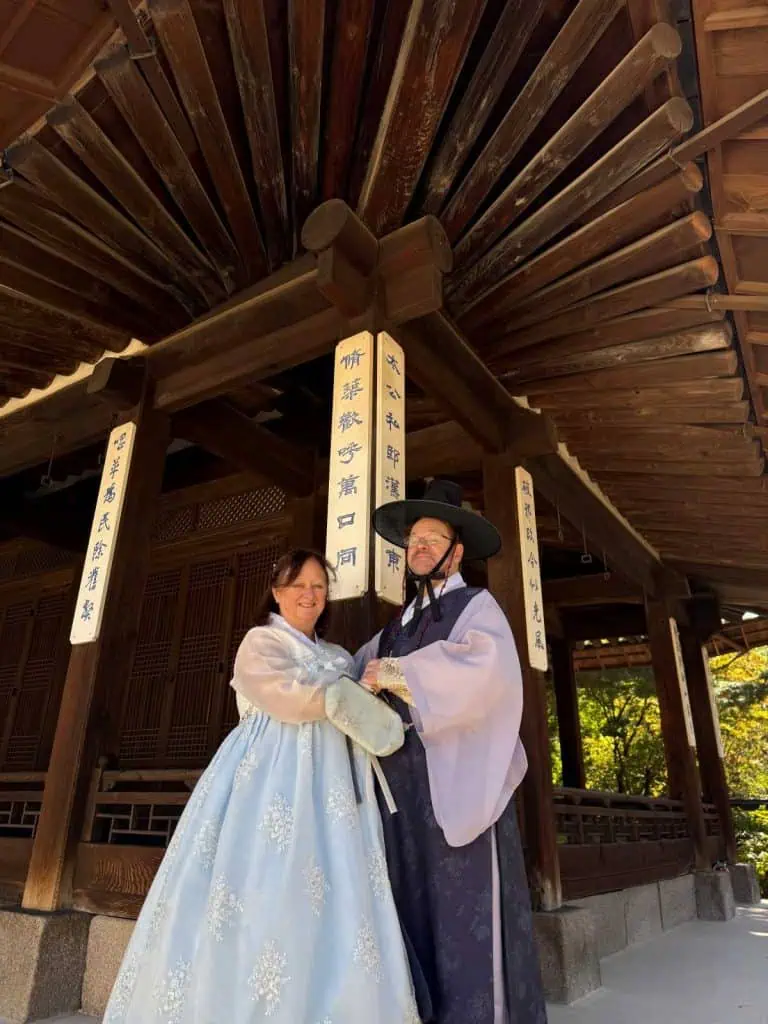
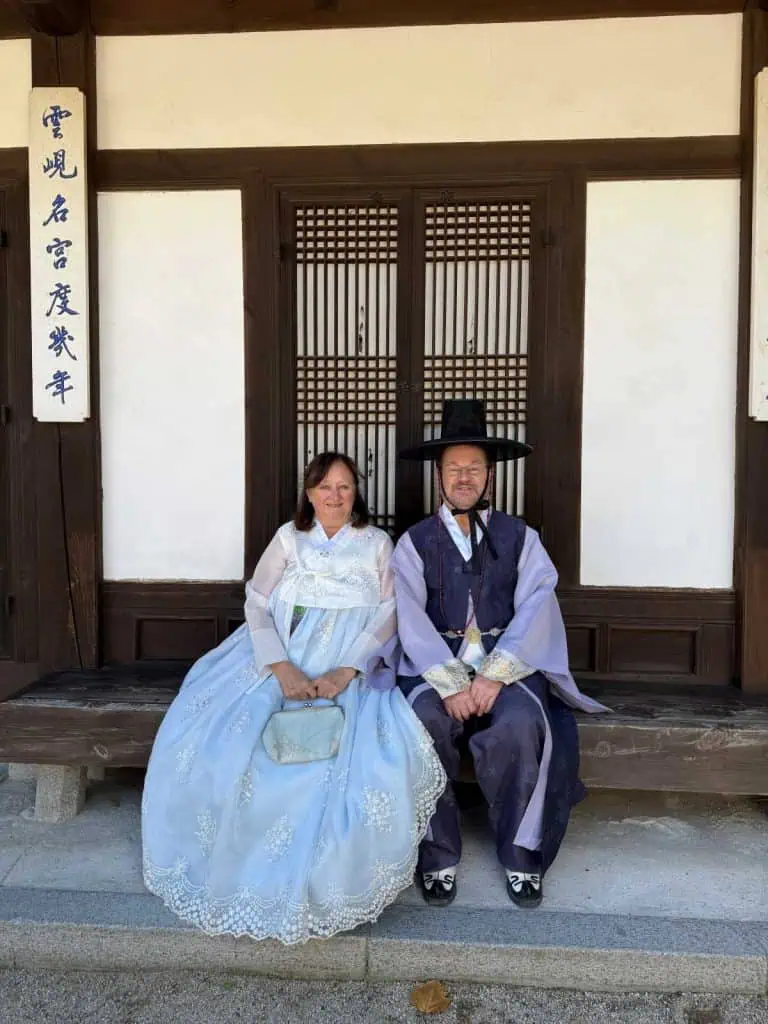
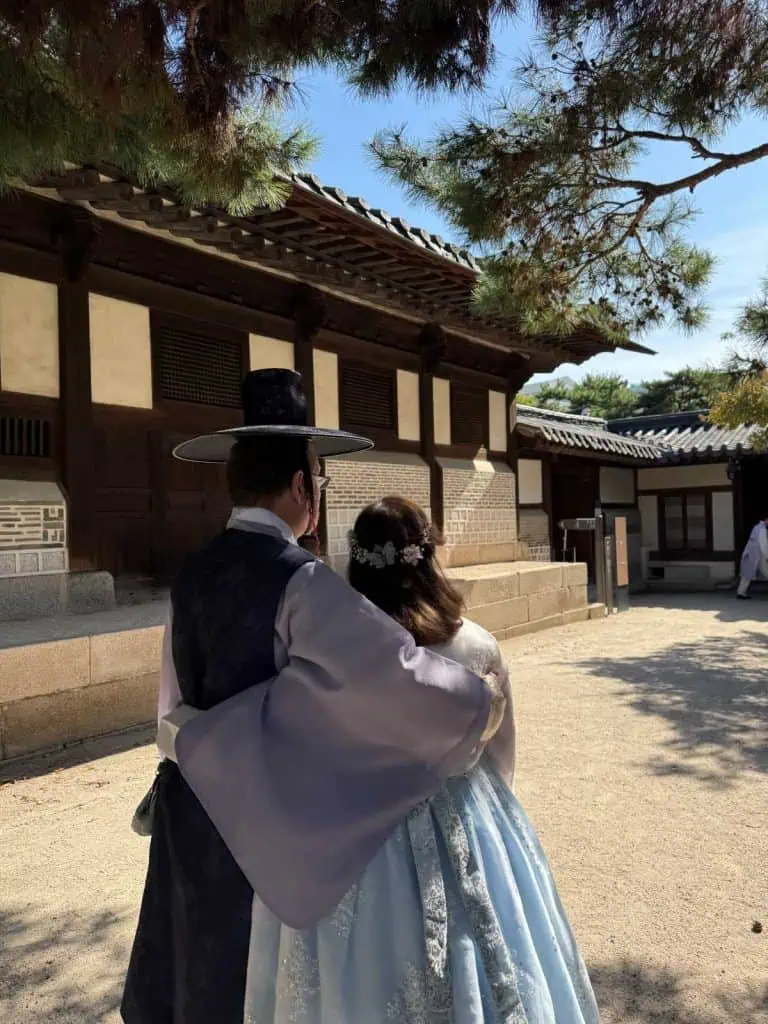
Rather than returning to the larger, busier Gyeongbokgung Palace, Katie led us to the quieter grounds of Changdeokgung Palace, a UNESCO World Heritage Site dating to the early 1400s. With its elegant courtyards, traditional architecture, and fewer crowds, it offered the perfect backdrop for photographs.
What began as a slightly awkward photo session quickly became one of the highlights of our trip. Katie, who secretly enjoys photography, enthusiastically led us through the palace grounds, capturing some of our favorite images from the entire journey.
Lunch and a Return to Gyeongbokgung Palace
After returning our Hanbok, we stopped for lunch. Then, with the weather finally cooperating, we headed back to Gyeongbokgung Palace.
The Royal Guard Ceremony
The reason for our return visit to Gyeongbokgung Palace was the Royal Guard Changing of the Guard Ceremony. With colorful uniforms, traditional weapons, music, and precise choreography, the ceremony recreates the formal guard change at the palace during the Joseon Dynasty.
Even without understanding every detail, the pageantry and attention to tradition made it easy to appreciate why the ceremony remains one of Seoul’s most popular cultural attractions.
Exploring Seoul’s Traditional Neighborhoods
After the guard ceremony, we continued exploring some of Seoul’s most traditional neighborhoods. Our first stop was Bukchon Hanok Village, where narrow lanes wind between beautifully preserved hanok homes.
Later, we visited Bongeunsa Temple, a peaceful Buddhist temple nestled in one of Seoul’s busiest districts. The contrast was striking. Inside the temple grounds, incense drifted through quiet courtyards as worshippers paused for prayer and reflection, all within sight of the surrounding office towers.
We ended the day in Insadong, one of Seoul’s most popular neighborhoods for traditional crafts, tea houses, galleries, and street food. We sampled a few snacks, browsed the shops, and soaked up the lively atmosphere before hopping on the metro and heading back to the hotel. All in all, it was one of our favorite days in Seoul.
A Day Trip to Suwon and Hwaseong Fortress
While Seoul offers enough attractions to fill a week, one of the best decisions we made was to take a day trip to Suwon. Located about an hour south of the capital, the city is best known for Hwaseong Fortress, a UNESCO World Heritage Site whose walls still encircle much of the historic center. The day gave us a chance to experience a different side of South Korea beyond Seoul’s busy streets.
Walking the Walls of Hwaseong Fortress
After a short train ride from Seoul, we arrived in Suwon and headed straight to Hwaseong Fortress. Built in the late 18th century during the Joseon Dynasty, the fortress spans the hills around the old city and offers some of the best views in the region.
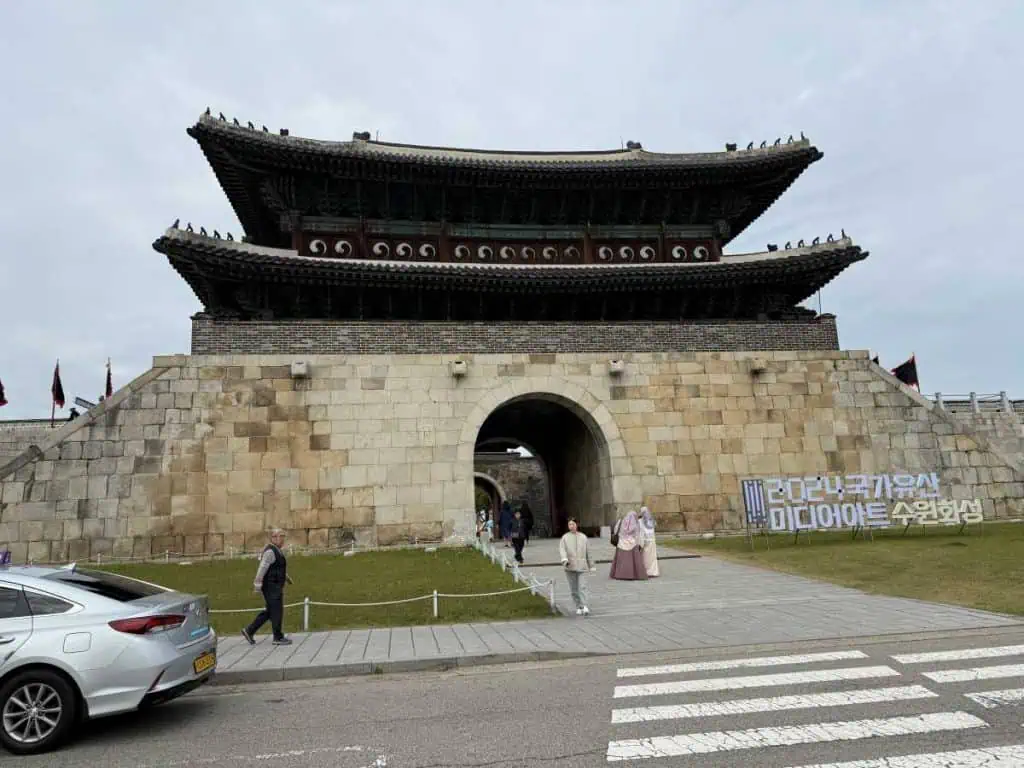
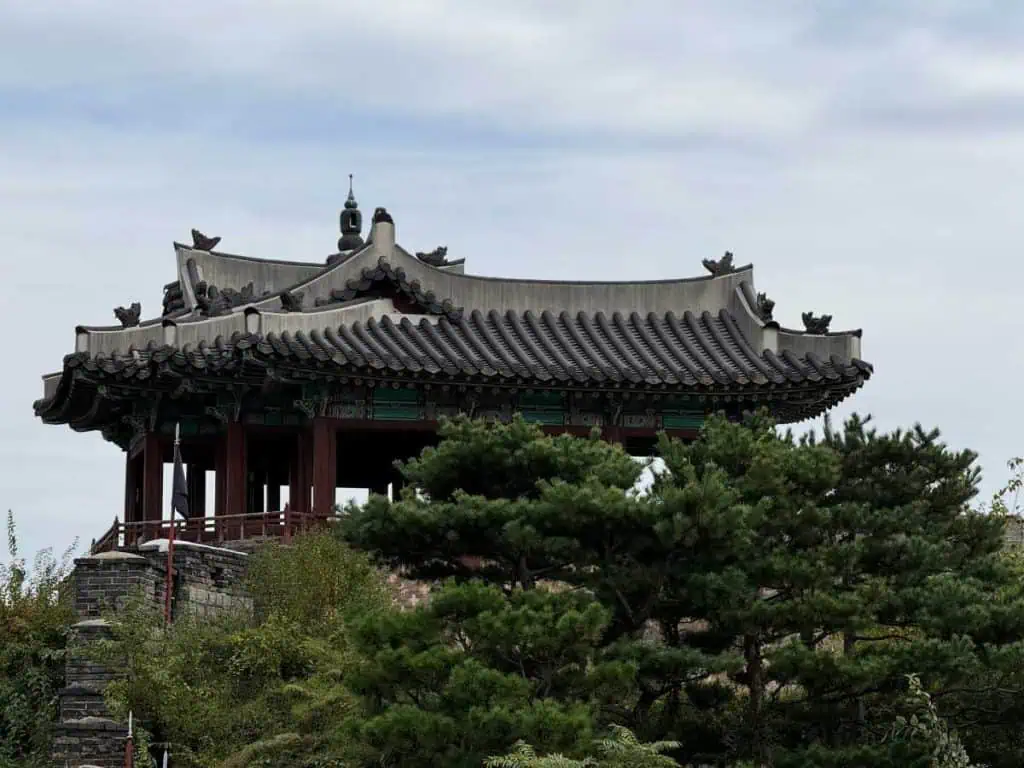
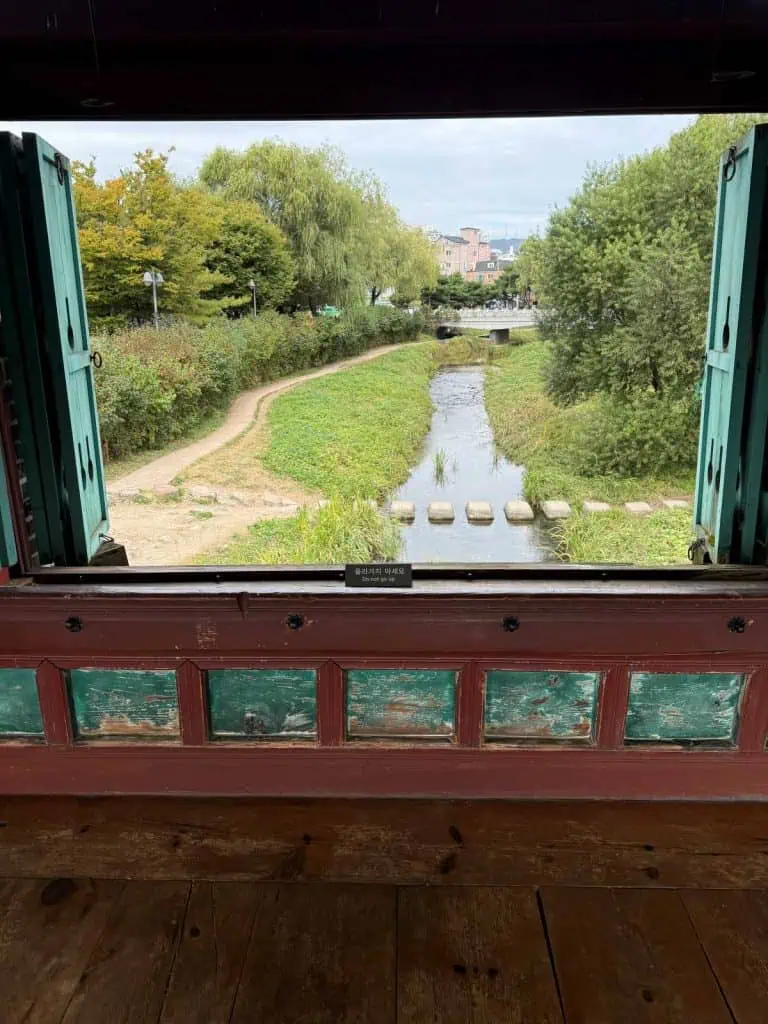
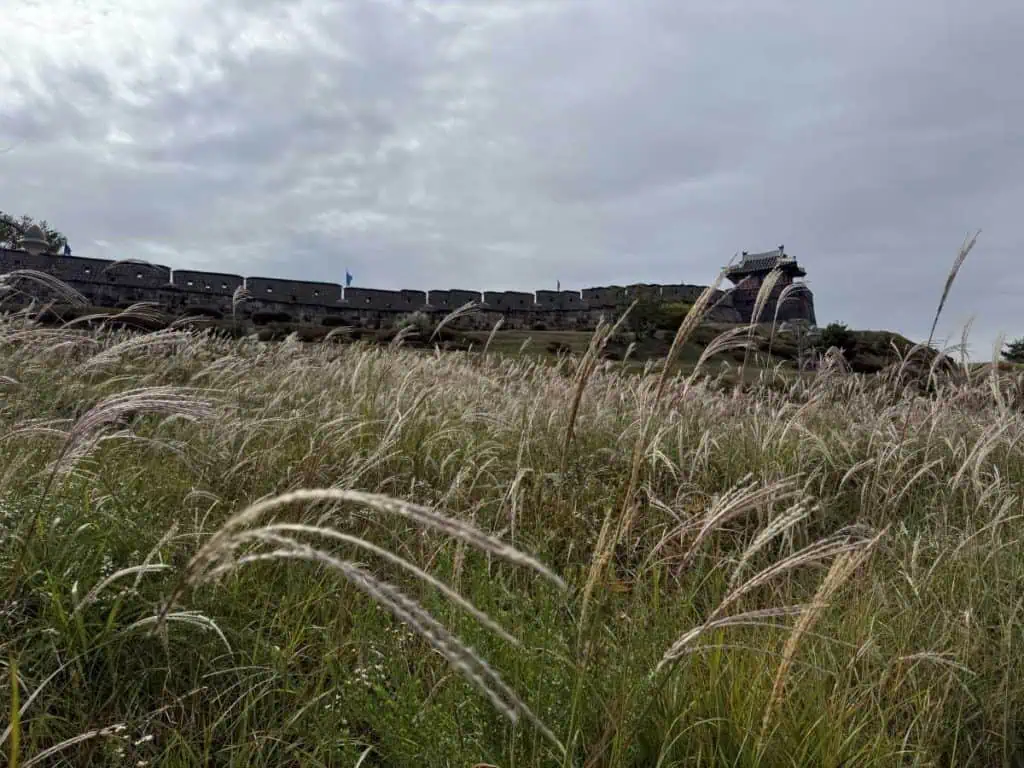
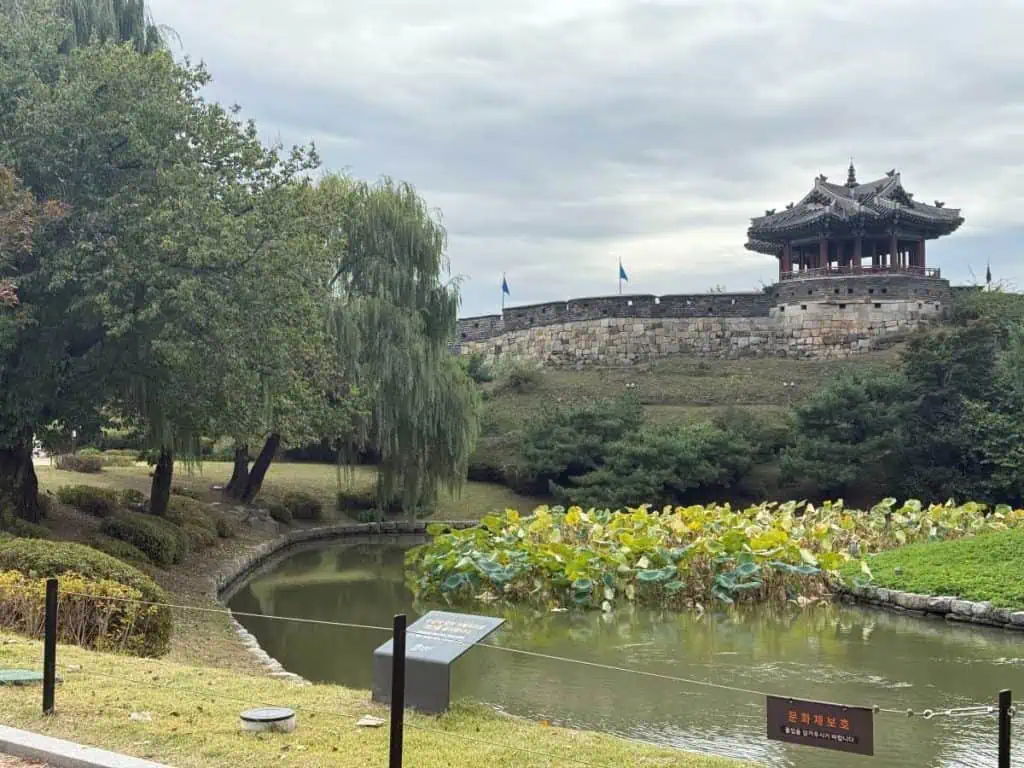
As we walked along the massive stone walls, we could see both historic and modern Korea at once. The blend of history, architecture, and sweeping views made this one of our favorite day trips from Seoul.
Food, Coffee, and a Modern Surprise
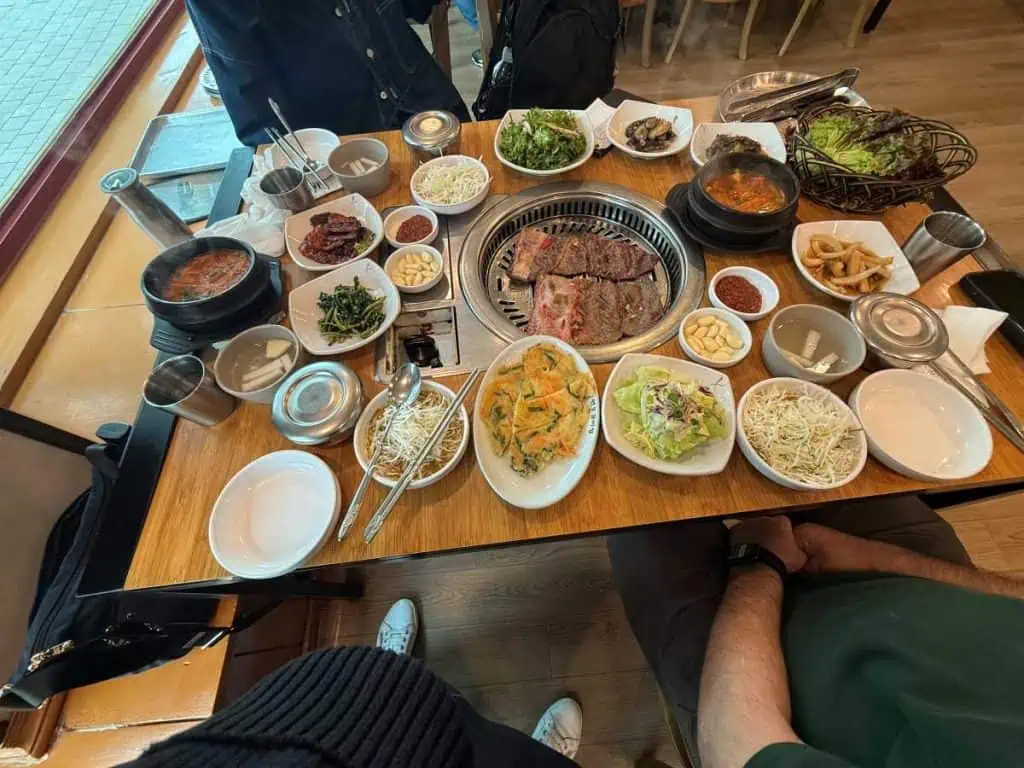
After spending the morning exploring the fortress, we were ready for lunch. Katie introduced us to a local restaurant known for its Korean barbecue and blue crab soup. By then, we were comfortable with Korean dining customs and enthusiastically assembling what Katie called the “perfect bite”—a lettuce wrap filled with rice, grilled meat, vegetables, and sauce, which we were somehow to eat in a single mouthful.
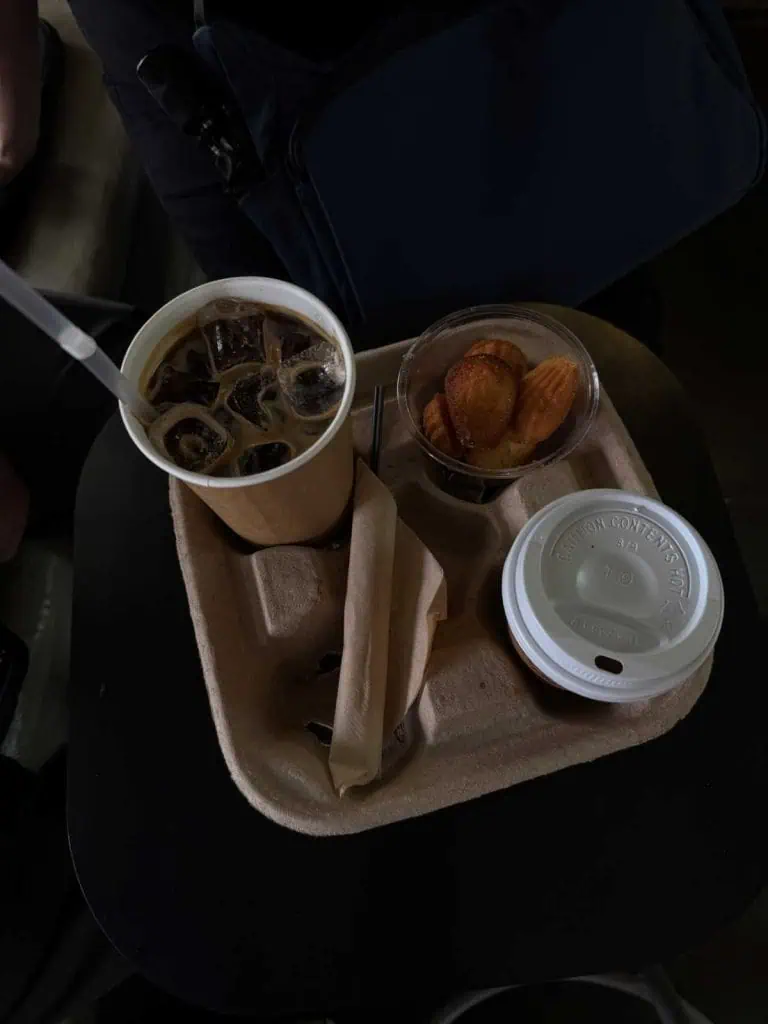
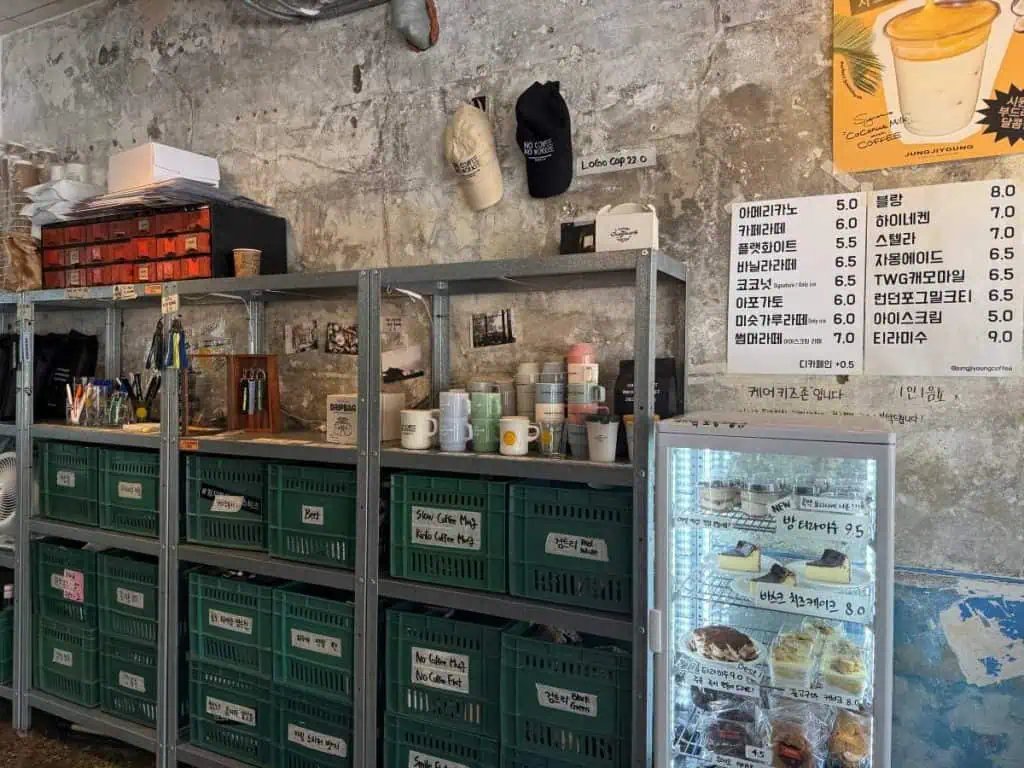
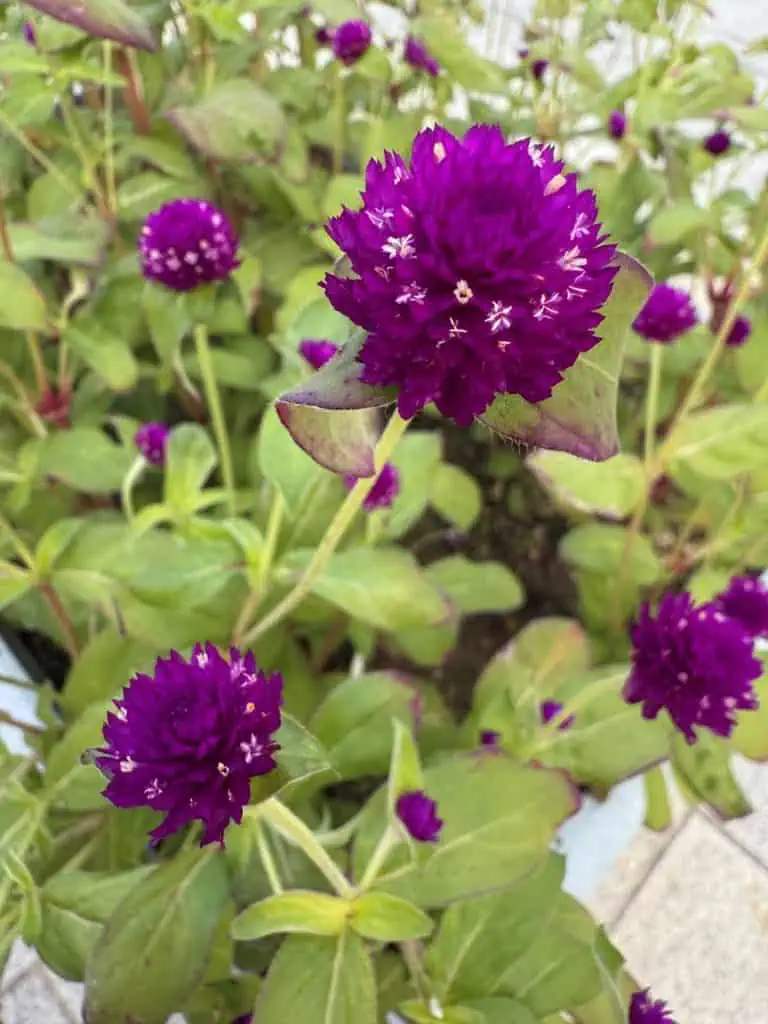
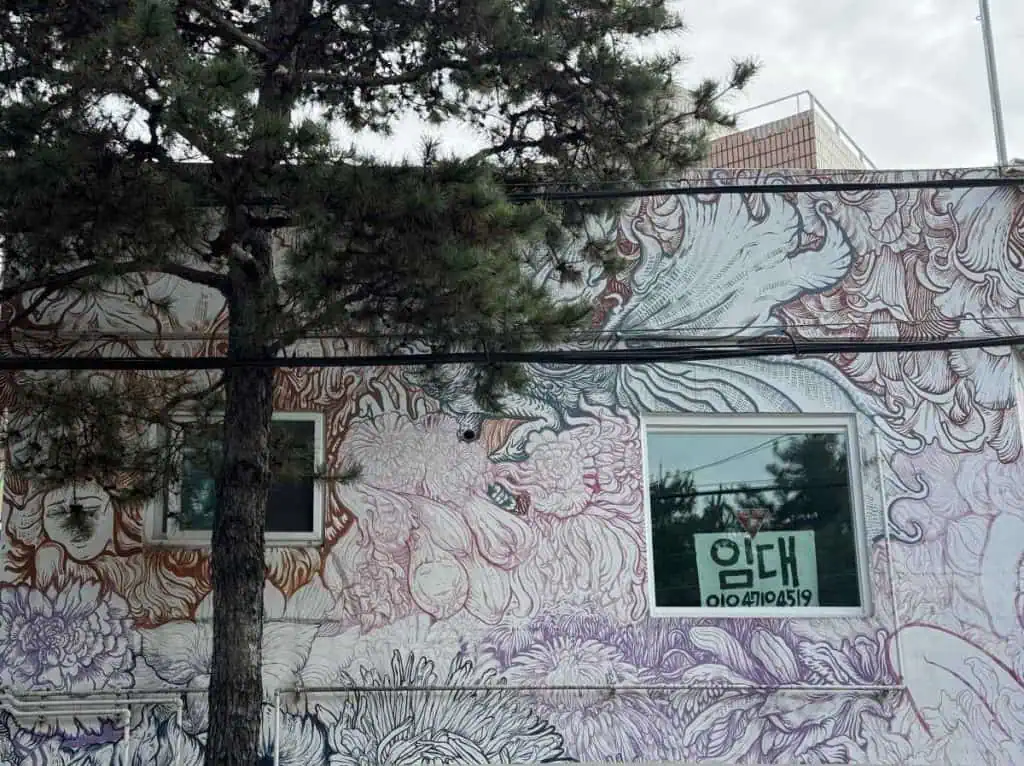
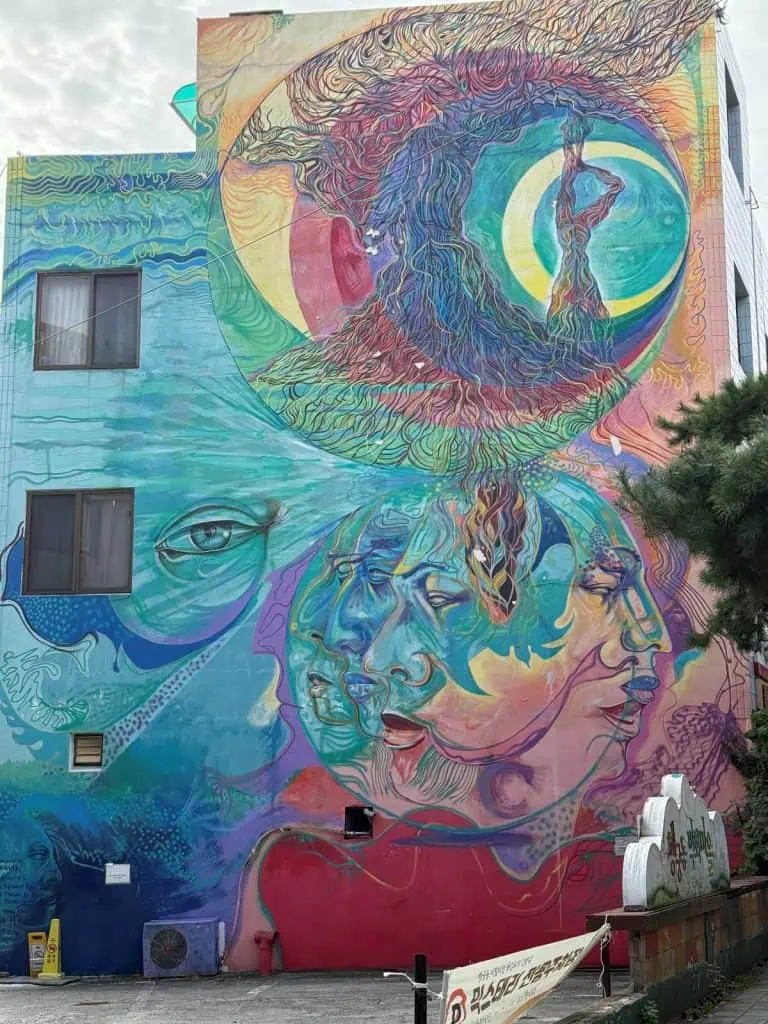
After lunch, we slowed the pace with a stop at a local coffee shop. One thing that surprised us throughout South Korea was the country’s thriving café culture. Next, we walked through Sulwan’s streets to help digest our lunch and enjoy the local street art.
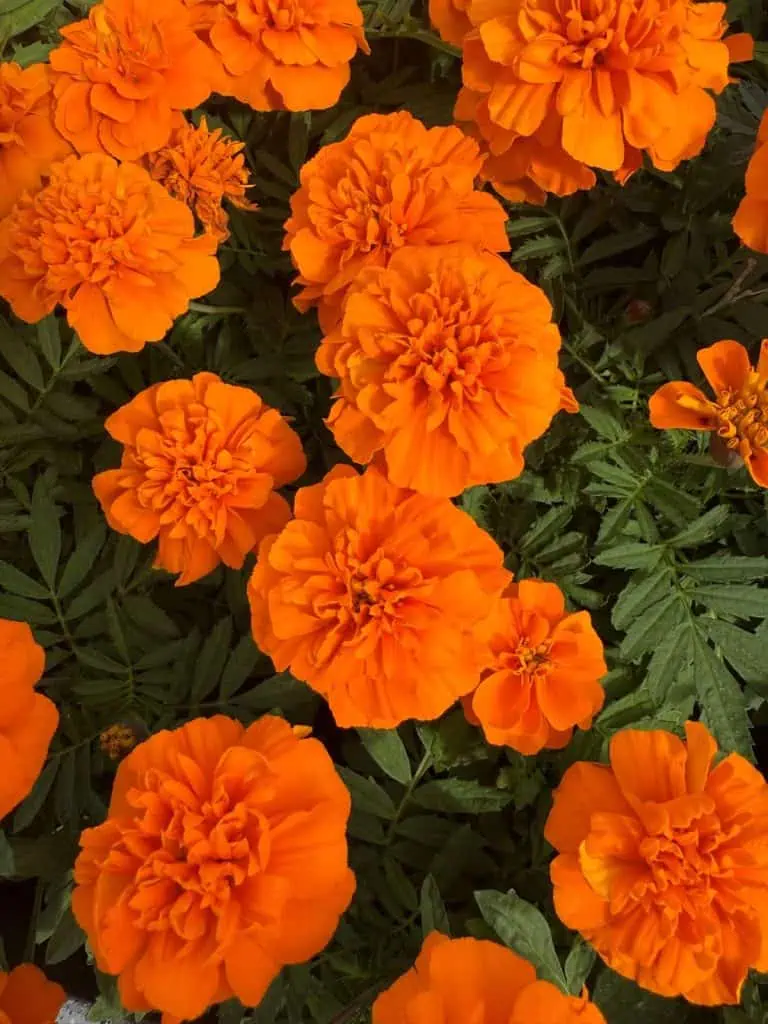
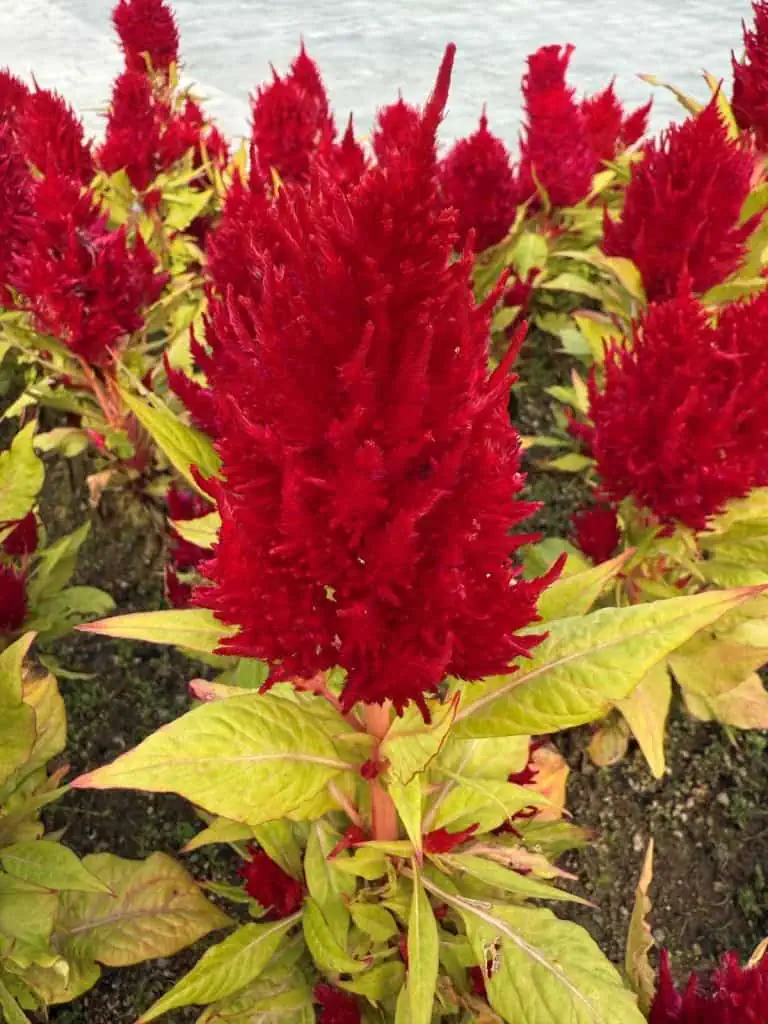
Before returning to Seoul, we made one final stop at Starfield Library. Rising through multiple floors of the shopping complex, the towering bookshelves created one of the most impressive public spaces we encountered anywhere in Asia. Part library and part architectural attraction, it felt like a fitting final stop in a country that places such a high value on education, design, and innovation.
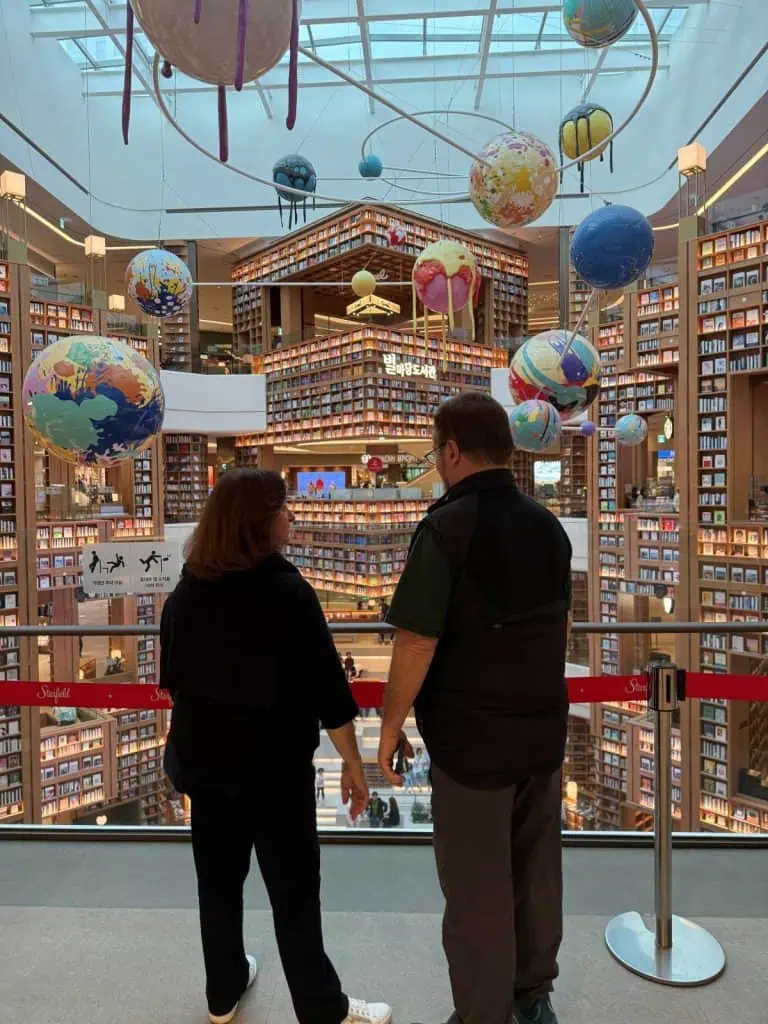
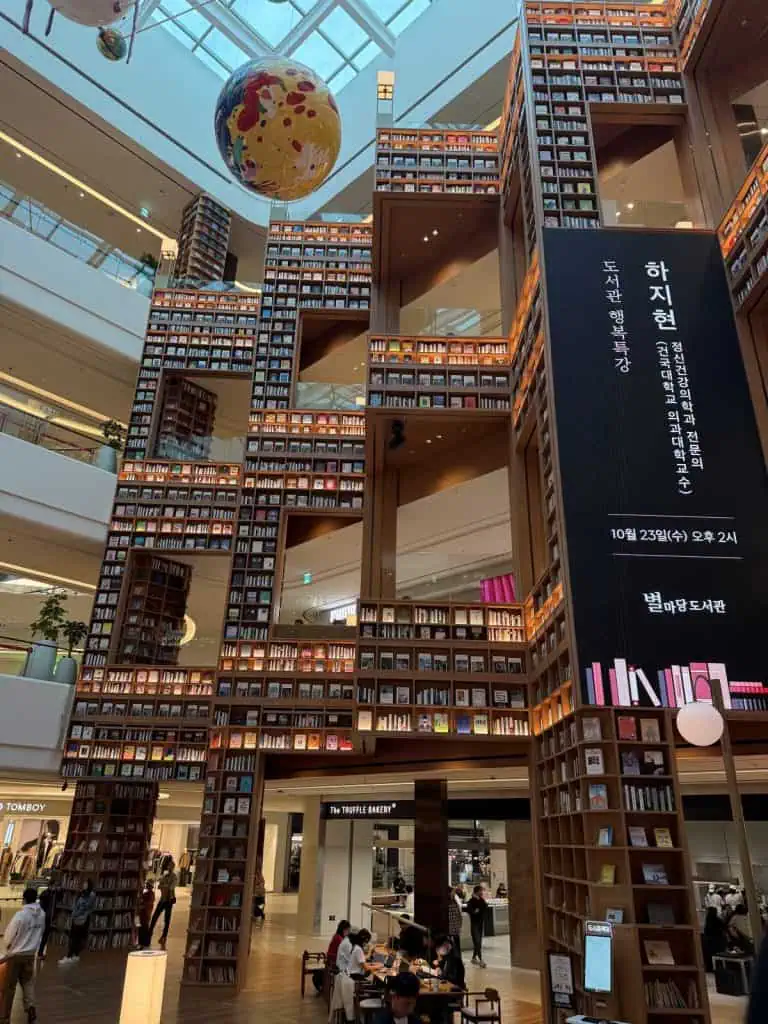
As we boarded the train back to Seoul, we talked about how much we had enjoyed stepping outside the capital. Suwon offered a deeper appreciation of Korean history and a glimpse into everyday life beyond Seoul’s famous landmarks.
Entering the World’s Most Heavily Guarded Border
Of all the experiences we had during our week in South Korea, none left a stronger impression than our visit to the Korean Demilitarized Zone, or DMZ.
Unlike our previous days in Seoul, this excursion was led by an authorized DMZ tour company. As our bus traveled north through the countryside, our guide explained the history of the Korean War and the division of the peninsula, reminding us that North and South Korea remain technically at war.
Before entering the DMZ, our tour made an unexpected stop at Gamaksan Suspension Bridge. Surrounded by misty mountains, the bright red bridge offered a peaceful contrast to the tension and history that defined the rest of the day.
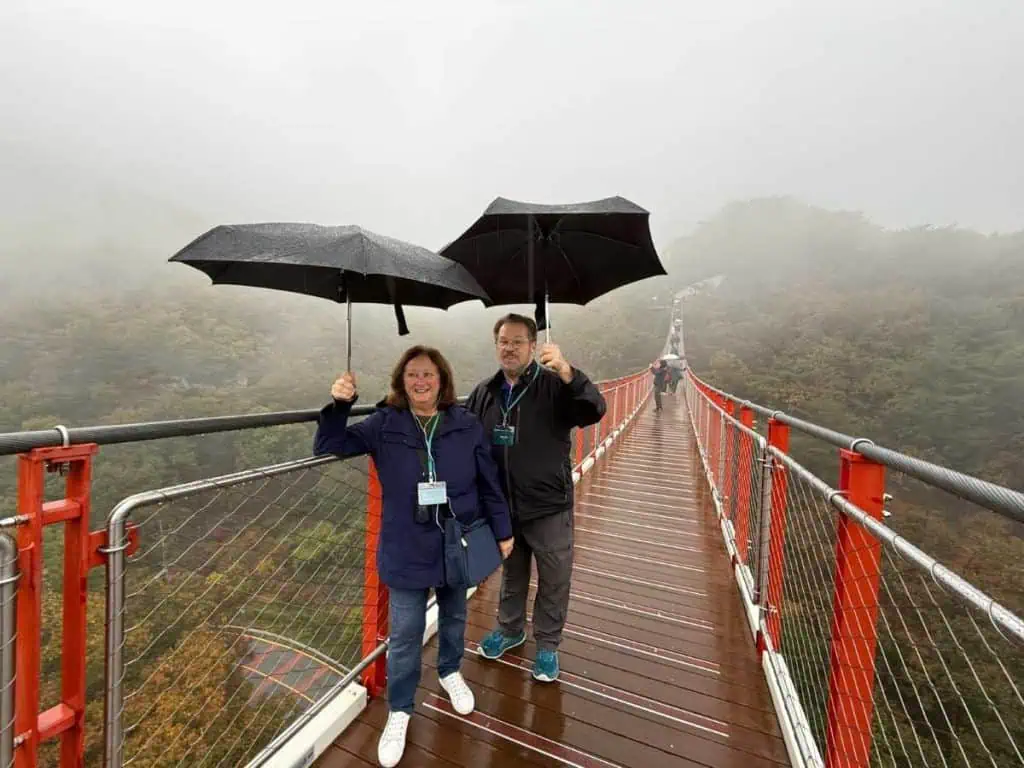
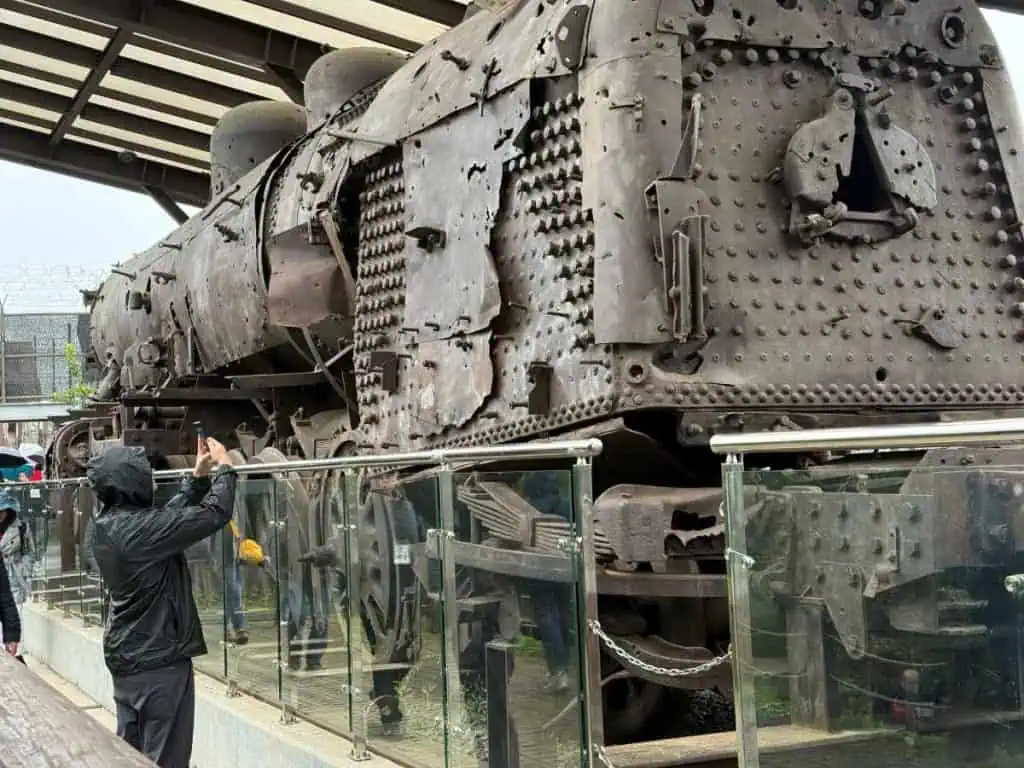
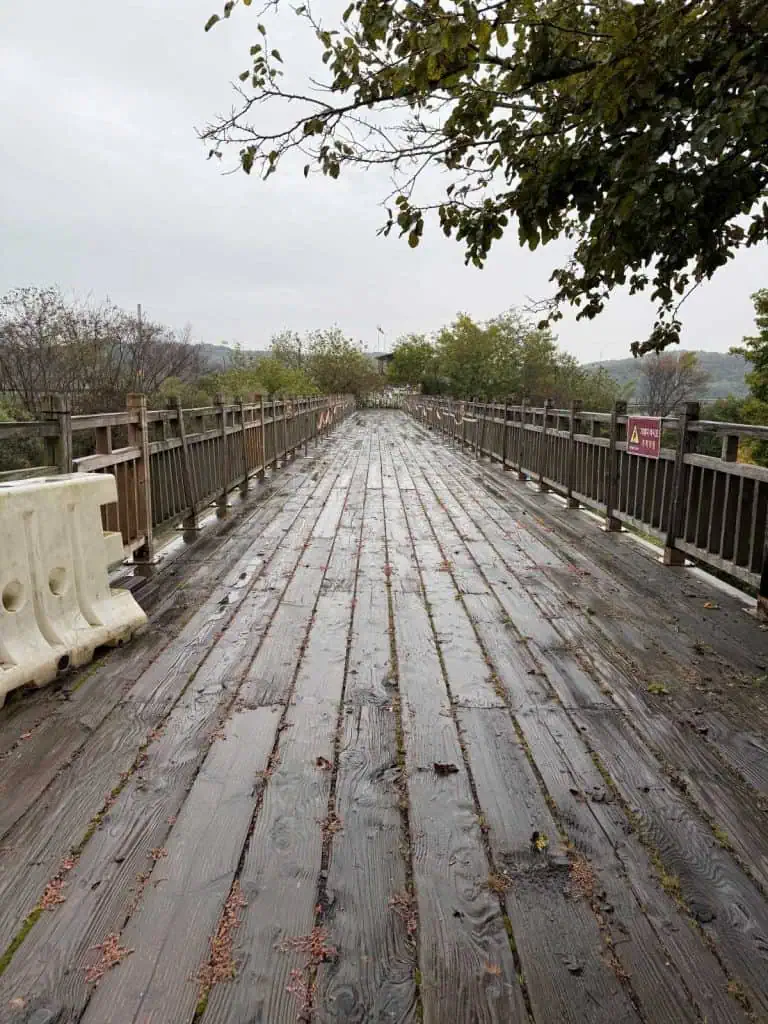
Our first introduction to the DMZ was Imjingak Pyeonghoa-Nuri Park, where symbols of Korea’s division are impossible to miss. We saw the damaged “Train of Freedom” locomotive and the remains of the Freedom Bridge, both reminders of families and communities divided by a border that still stands today.
Descending into the Third Infiltration Tunnel
The most memorable part of the day began at the Third Infiltration Tunnel.
Photography is strictly prohibited from this point forward. Cameras, phones, and other electronic devices must be secured in lockers before entering. Visitors are issued hard hats before descending underground.
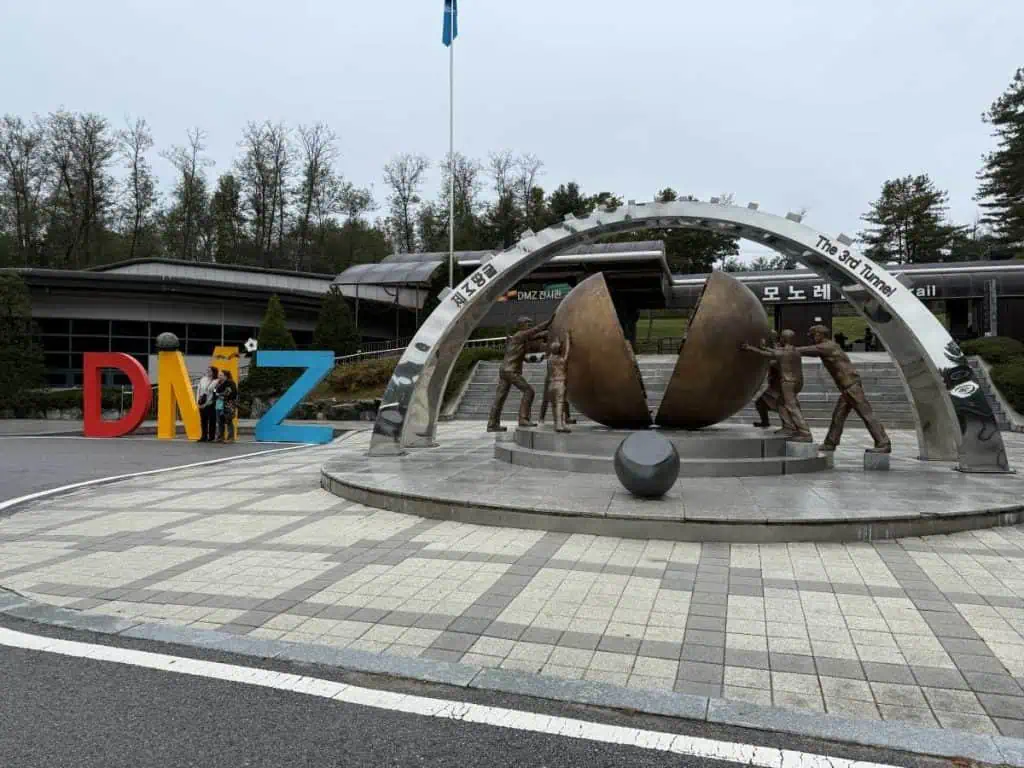
Discovered in 1978, the tunnel is one of several secret passages dug by North Korea beneath the border. As we walked deeper underground, the passageway grew narrower and lower. Even with a hard hat, taller visitors often had to duck to avoid hitting the ceiling.
The farther we descended, the more surreal the experience grew. This was not a museum exhibit or a reconstruction. We were standing inside a real military tunnel built for a potential invasion.
At the end of the accessible section, visitors reach the concrete barricades South Korea installed following the tunnel’s discovery. Beyond those barricades, the passage continues toward North Korea.
Standing deep underground beneath one of the world’s most heavily guarded borders was both fascinating and unsettling. Of all the places we visited during our week in South Korea, this was the one that made the ongoing division of the Korean Peninsula feel most tangible.
Looking Into North Korea
After leaving the tunnel, we boarded another bus for the day’s final stop: the Dora Observatory. This time, South Korean military personnel boarded the bus and inspected our passports before allowing us to continue toward the border.
The observatory offers one of the closest publicly accessible views of North Korea. From the observation deck, visitors can look across the DMZ and see roads, buildings, and even the massive North Korean flag flying in the distance.
What struck me most was how ordinary it looked.
The landscape beyond the border was neither dramatic nor intimidating. Instead, it was surprisingly peaceful—green fields stretching across the countryside, much like the scenery we had passed on our way north.
Yet just a few miles away lay one of the world’s most isolated countries, separated from South Korea by a border that has divided families and shaped the lives of millions for generations.
Standing there, looking across the border, it was impossible not to reflect on how differently two neighboring countries have developed despite sharing the same history, language, and culture.
Reflections on the DMZ
As we returned to Seoul, I reflected on how different this day had been from the rest of our trip. We had spent the week exploring royal palaces, sampling street food, taking the subway, and learning about Korean culture. The DMZ revealed another side of the story.
The division of the Korean Peninsula is not merely a chapter in a history book. Families remain separated, and a conflict that began more than seventy years ago still shapes everyday life on both sides of the border.
Standing at the DMZ deepened our appreciation for what South Korea has achieved. The vibrant cities, modern infrastructure, and prosperity we experienced throughout the week were not inevitable. They were built against the backdrop of a difficult and often painful history.
Looking into North Korea was not the most beautiful or most enjoyable moment of our trip. But it may have been the most meaningful. Long after we left Seoul, it remained one of the experiences we talked about most.
Exploring Modern Seoul: Design, Street Culture, and Korean Fried Chicken
After the emotional weight of our DMZ visit, we spent our final full day in Seoul exploring a more contemporary side of the city. From futuristic architecture to university neighborhoods filled with students, cafés, and street performers, the day offered a final glimpse of modern Korean culture.
Discovering Dongdaemun Design Plaza And Seoul’s Creative Side
Our first stop was Dongdaemun Design Plaza, often called DDP. Designed by renowned architect Zaha Hadid, the futuristic complex feels unlike anything else in Seoul. Its flowing metallic curves house rotating exhibits, public spaces, and design installations that showcase South Korea’s creativity and innovation.
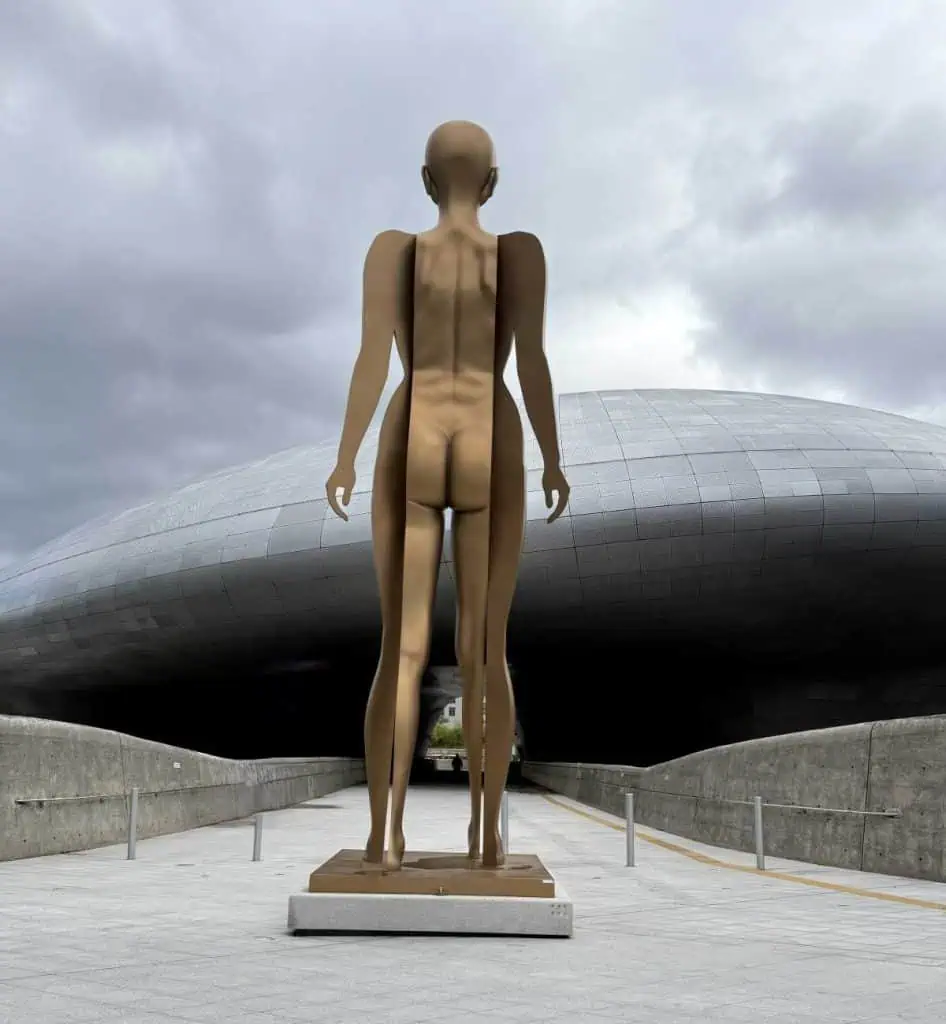
We explored a variety of exhibits featuring art, design, and interactive installations. Some exhibits invited participation, while others encouraged visitors to slow down and appreciate the creativity behind the work.
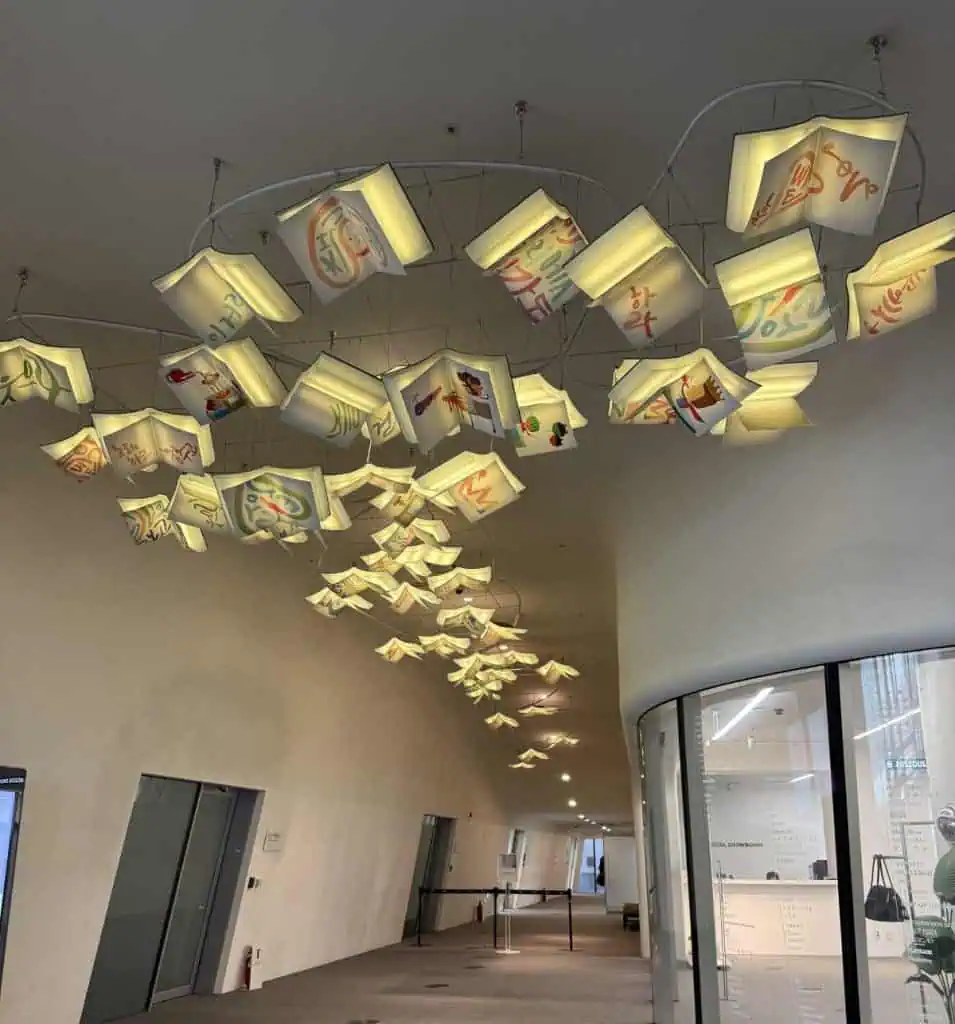
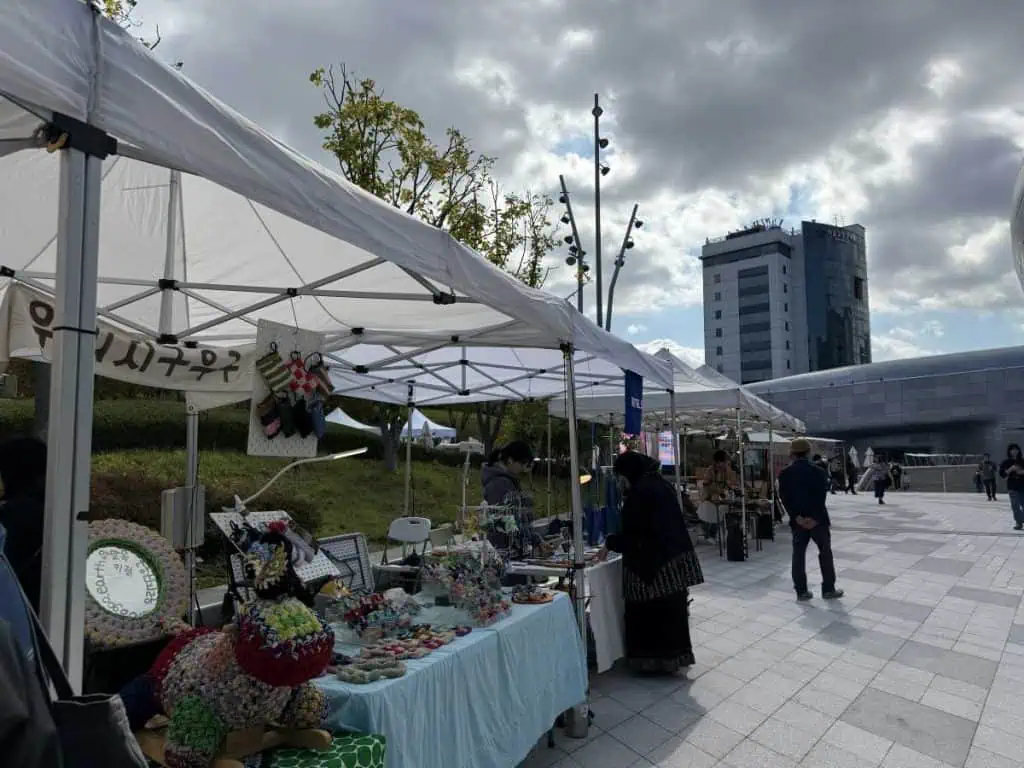
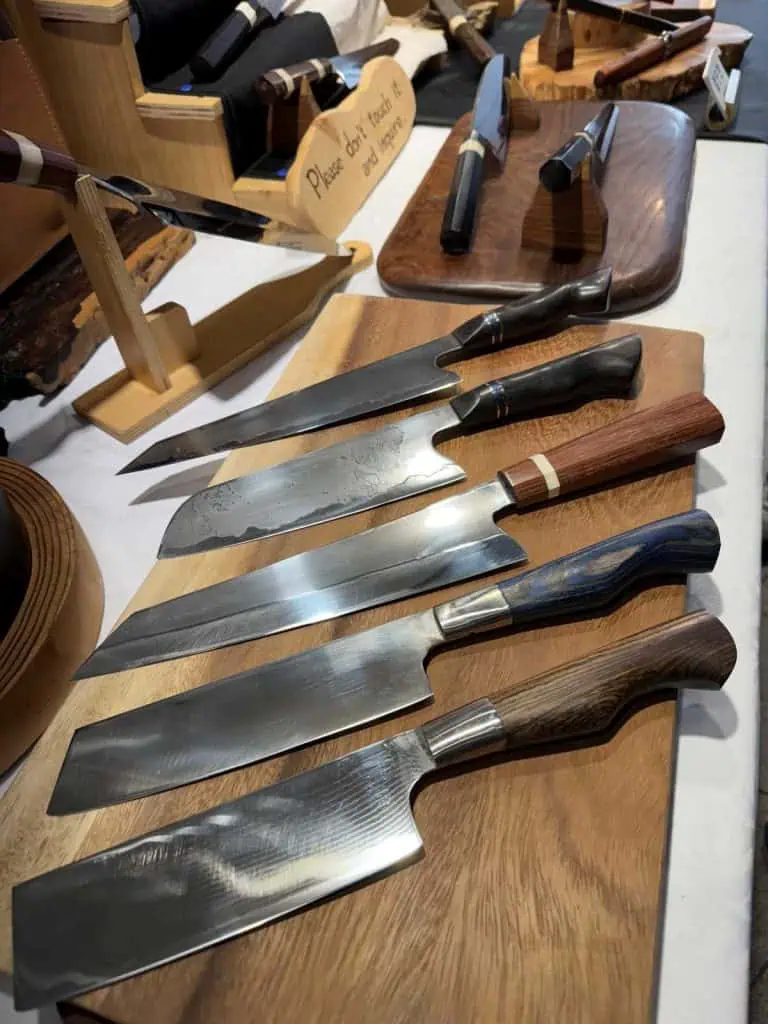
Outside, local artisans displayed handmade crafts and artwork. Together, the exhibits and the street market highlighted a side of Seoul that looks firmly toward the future while encouraging creativity and self-expression.
Korean Fried Chicken and Beer
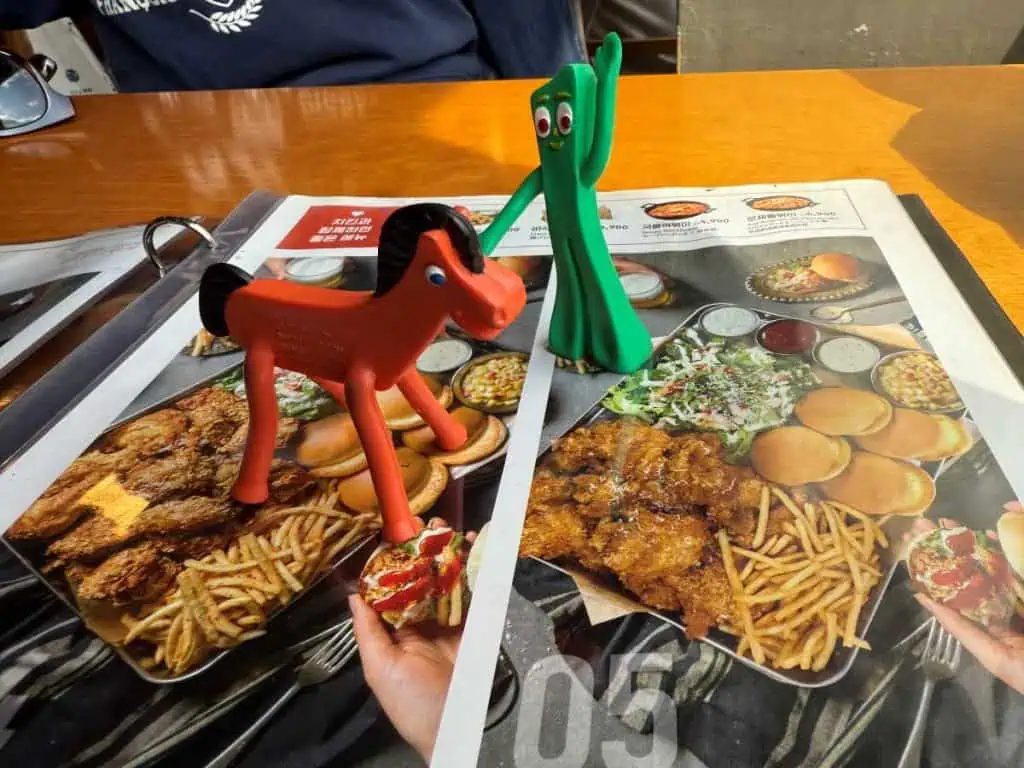
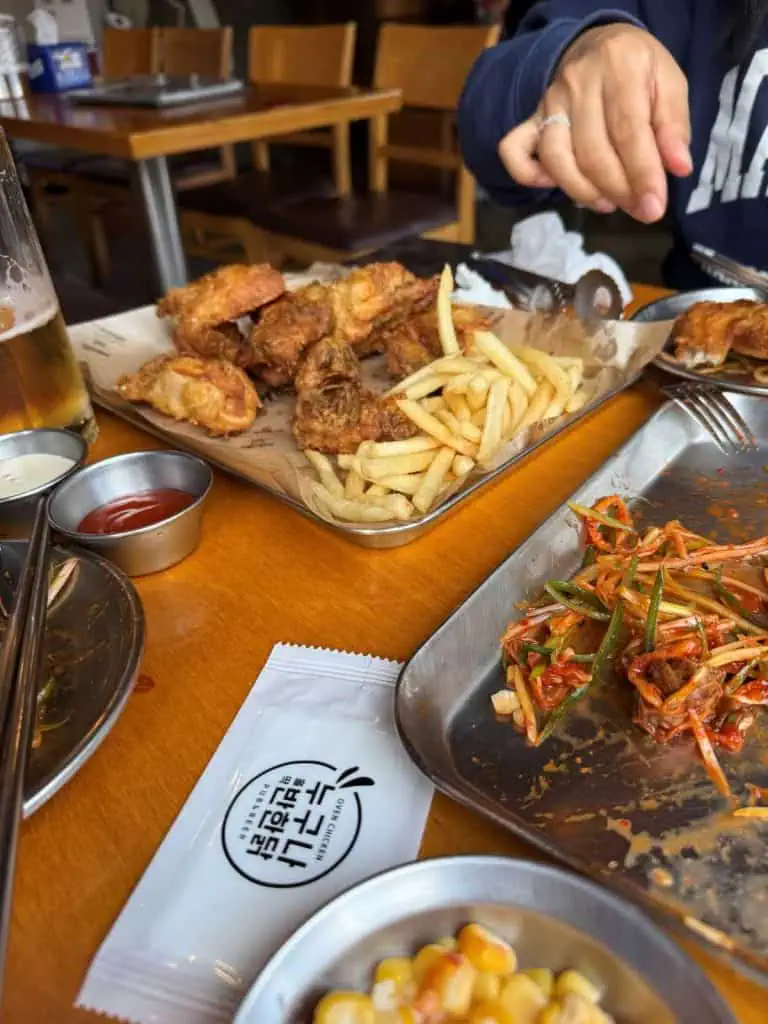
For lunch, we headed to a lively university district in Mapo, where students filled cafés, restaurants, and shops. There, we finally tried one of South Korea’s most famous comfort foods: Korean fried chicken paired with an ice-cold beer, a combination known locally as “chimaek.”
The chicken lived up to the hype—crispy, flavorful, and impossible to put down. After lunch, we spent the afternoon wandering the neighborhood, browsing shops, listening to street performers, and soaking up the youthful energy that makes this part of Seoul so popular.
As we returned to our hotel that evening, it was remarkable how many versions of Seoul we had experienced in just six days. We had explored royal palaces and Buddhist temples, wandered through traditional markets, worn Hanbok, visited the DMZ, and sampled incredible food.
Yet what stayed with us most was Seoul’s ability to embrace the future without abandoning its past—a balance that makes it one of Asia’s most fascinating cities.
6 Days In Seoul – Would We Visit Again?
Absolutely.
Before arriving, I expected Seoul to be a fascinating city of palaces, markets, and great food. What surprised me was how many different versions of Seoul we encountered in just six days.
There was the royal Seoul of Gyeongbokgung Palace and Changdeokgung. The modern Seoul of soaring skyscrapers and futuristic design centers. The peaceful Seoul of Buddhist temples and quiet hanok neighborhoods. And the reflective Seoul of the DMZ, where the history of the Korean Peninsula felt suddenly and deeply personal.
Few cities balance tradition and innovation as successfully as Seoul. Rather than replacing the past with the future, the city seems to embrace both.
Six days gave us a wonderful introduction, but they also left us wanting more. There are still neighborhoods to explore, foods to try, and day trips to take. If this was our introduction to South Korea, it was a memorable one—and one we would happily return to.