
1 Day in Saigon (Ho Chi Minh City): Best Things to Do from the Cruise Port”

This post is part of a series on what to do when you have one day in port on a Cruise. You can find more posts from this series on my page,
How To Spend One Day In Port.
Motorbikes, Markets, and Colonial Majesty
Our final port in Vietnam was Ho Chi Minh City, still affectionately called Saigon by locals—and trust me, the name fits the city’s pulse better. If Halong Bay was serene and Hue was imperial, Saigon would be bold, electric, and alive.
We disembarked early and met our guide, Diem Kieu from Charming Tourism, as well as our driver for the day. The ship docks in Phu My, which is nearly two hours outside the city. This sounds like a haul, but it’s an excellent opportunity to learn about Vietnam’s economic engine from a local perspective. Here’s what we did and saw in our 1 day in port: Saigon.
This article may contain affiliate links. We may earn a commission if you use these links to buy products or services. Please see our disclosure policy for full details. Thanks.
1 Day In Port: Saigon Is For The Senses
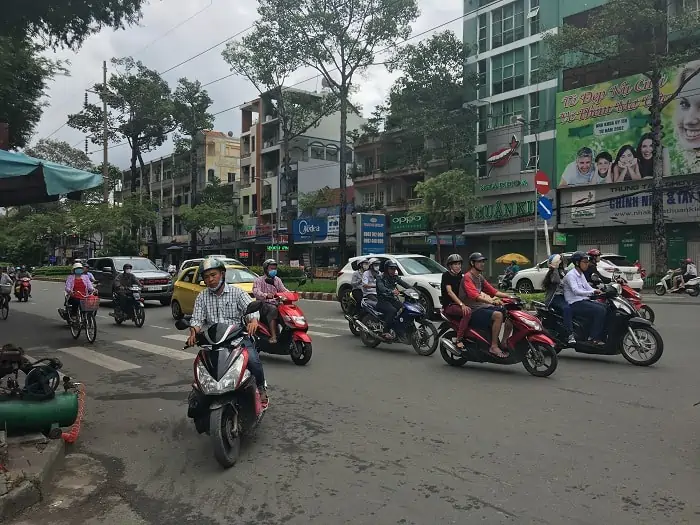
As we entered the city, the pace picked up. Motorbikes are everywhere, and the sheer number of things people manage to carry on two wheels is mind-boggling—families, crates, mattresses, and even plants. It’s a buzzing ballet of organized chaos.
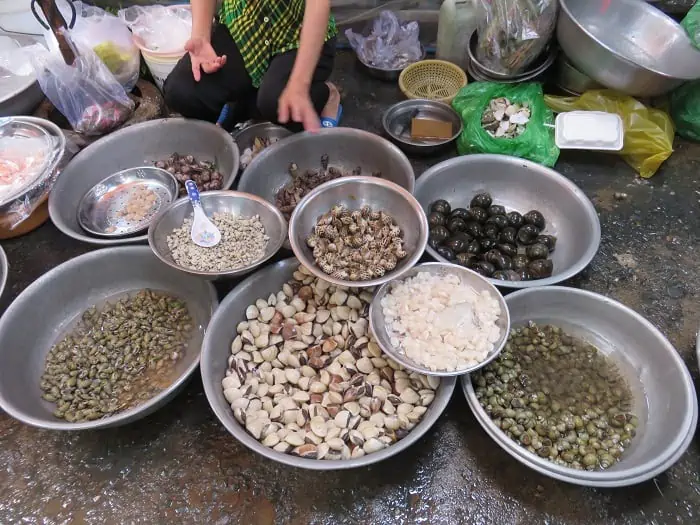
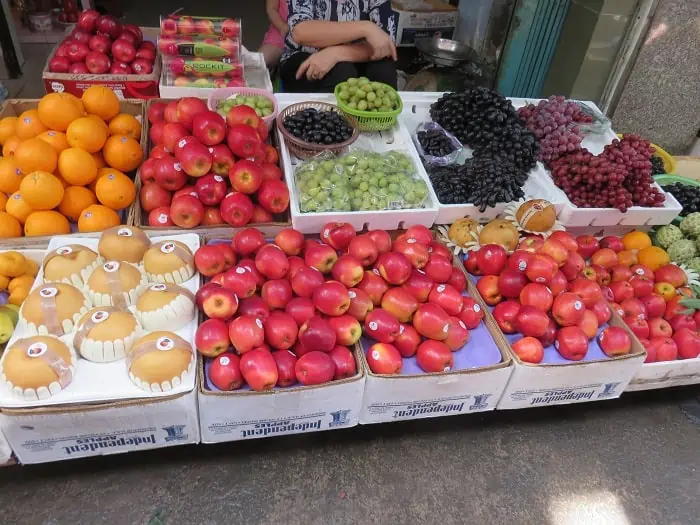
First stop: Ben Thanh Market. The main area of the market is more commercialized (touristy), but the streets surrounding the market are the real deal. There is nothing staged here. This is where Saigon lives and breathes—fresh fish flopping in buckets, herbs piled high, and, yes, even brains on display. It’s intense, raw, and completely captivating.

Next on our tour through the old town is Ba Thein Hau Temple in Chinatown (Chinatown, also known as Cho Lon). This Buddhist temple provides a serene haven in the otherwise hectic city center. However, be aware that this is an active place of prayer, and in Asia, praying is often accompanied by the burning of incense. The smoke is very thick inside the temple, and if you have breathing problems, this may be difficult for you.


At the back of the temple, Diem guides us to the “Happy Room,” a Western-style bathroom. It’s been several hours since we left the ship, so this is a welcome stop. If I haven’t mentioned it before, please note that you typically need to purchase or bring your own toilet paper. Diem shows us the location for the supplies, as these are not in the toilet stalls.
Pedicab Parade Through Old Saigon
As we exit the temple complex, Diem ushers us up to a row of pedicabs and tells us this is our next adventure. This may have been my favorite experience of the day: a pedicab tour through old Saigon. We each got our own pedal-powered ride through the streets of Old Saigon while our guide zipped around us on a motorbike, snapping photos like paparazzi.


There’s no windshield, no barrier—just the wind in your hair and the blur of scooters, street vendors, and colonial buildings flying by. It’s exhilarating and a little insane, in the best way.
Being from the San Francisco Bay Area, we are very familiar with Asian cuisine, and I have a particular fondness for Vietnamese food. I was thrilled when, after this crazy ride, we finally stopped for lunch at a local shop in the downtown area. As you can see, we ate heartily!

French Footprints And War Echoes In Ho Chi Minh
In the afternoon, we took a slow-driving tour of the city’s architecture. Along the way, we made a few stops.
The Saigon Central Post Office – Constructed between 1886 and 1891, the post office is a grand colonial structure with Gothic and Renaissance influences. This beautiful building is a classic example of the colonization of Vietnam.
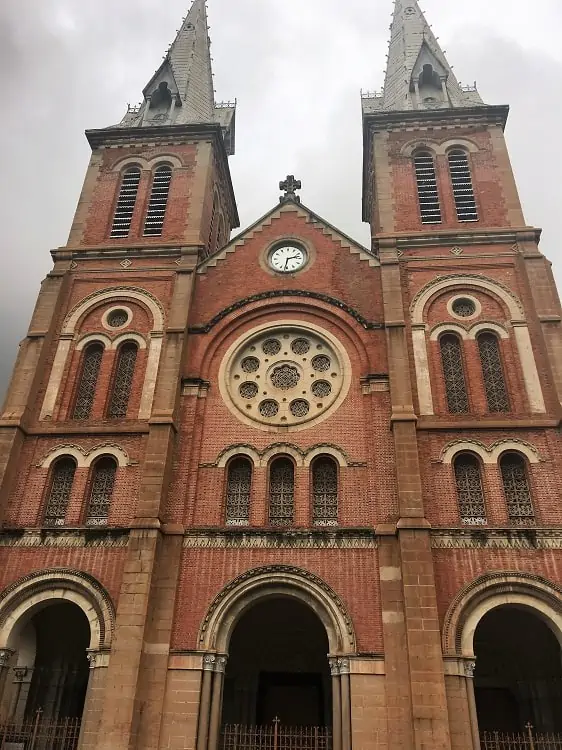
Another notable building we see is the Notre Dame Cathedral Basilica of Saigon. The Basilica was constructed when Vietnam was part of French Indochina in the late 1800s. The architect Jules Bourard’s plan for the church was to mirror the Famous Notre Dame de Paris form in the French Gothic and Romanesque styles.
Both the Basilica and the Post Office are excellent examples of French influence on the architecture of that era, which is evident when visiting Vietnam.

Just a few blocks away is the US Consulate General, the former US Embassy that gained notoriety during the Fall of Saigon. The historic helicopter evacuations in April 1975 took place here—an image etched in American memory.
Most Americans remember this site from the many newscasts in the spring of 1975 as Saigon fell to the North Vietnamese.
Starting on April 28, 1975, and continuing for more than 48 hours, there were ongoing helicopter evacuations of American citizens (978) and South Vietnamese and third-country nationals (1,120) from the compound. More than 682 sorties were flown throughout the area during this time.
* Information on the Fall of Saigon and the US Embassy, taken from Wikipedia

Practical Tips for Your 1 Day in Port: Saigon
- Expect a long drive (approximately 2 hours each way) from the port to the city.
- Book a pedicab tour—it’s an unforgettable way to see Old Saigon.
- Visit early to beat the heat and traffic.
- Ask for bathroom breaks—clean Western-style facilities can be rare.
- Embrace the chaos—it’s part of the charm.
Stops We Missed, But May Be On Your List Of Saigon (Ho Chi Minh City’s) Must-Sees!
We only had 1 day in Saigon. If you have extra time in port or plan to return to Saigon on a more extended trip, there are several cultural and historical highlights worth exploring:
- War Remnants Museum – One of Vietnam’s most visited museums, it offers a sobering and deeply affecting look at the Vietnam War from the Vietnamese perspective. The exhibits include photographs, military equipment, and survivor accounts.
- The Independence Palace (also known as the Reunification Palace) – A time capsule of 1960s architecture and Cold War intrigue, this was the former presidential residence of South Vietnam. The building is preserved just as it was when tanks broke through its gates in 1975.
- Museum of Ho Chi Minh City – Located in a grand colonial-era building, this museum tells the story of Saigon’s transformation over the centuries through artifacts, dioramas, and archival photos.
- Dragon Wharf (Nha Rong Wharf) – A French colonial port building where Ho Chi Minh famously departed Vietnam in 1911. The building is now a museum dedicated to the life and revolutionary journey of Ho Chi Minh
- Saigon River Cruise – For a peaceful contrast to the hustle and bustle of Saigon’s busy streets, consider an evening or daytime cruise on the Saigon River. A trip along the river offers a different vantage point on the cityscape.
- Cu Chi Tunnels (Full-Day Trip) – Located approximately 90 minutes outside Saigon, Cu Chi is part of the massive network of interconnected tunnels that lie under much of the Country used by Viet Cong soldiers during the Vietnam War. A 75-mile section of tunnels has been preserved by the government and turned into a war memorial park. A visit provides a hands-on experience of wartime survival and strategy.
These sites provide a deeper insight into Vietnam’s complex history and culture. If you miss them on a port day, they are strong reasons to come back.
A City That Stays With You
Saigon doesn’t ease you in—it sweeps you up. It’s honking motorbikes and tangled wires, incense smoke and sizzling street food, colonial relics, and bold new skylines. It’s a place that refuses to sit still, and you won’t want to either.
In just one day, we whizzed through centuries of history, from French cathedrals to Cold War battlefields. We tasted tradition in the food we ate, felt the chaos in the streets from our pedicab ride, and saw a city pushing forward without letting go of its past.
If you’re cruising through Vietnam, don’t skip Saigon. Come prepared for sensory overload, bring your curiosity, and let the city draw you into its story. Whether it’s your first time in Vietnam or your fifth, Saigon delivers an unforgettable chapter.
Save this post for your future Southeast Asia cruise plans—and if you’ve already been to Saigon, let us know your must-see spots in the comments below. We’re always ready for round two.
Coming next: Cruising Vietnam – What You Need to Know Before You Go